Vol. 3 Núm. 3 (2026) 
Vol. 3 Núm. 2 (2026) 

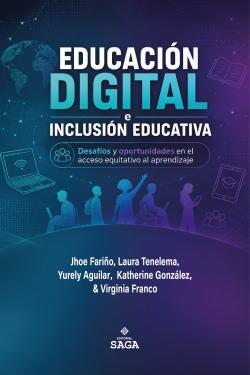
La obra Educación digital e inclusión educativa: desafíos y oportunidades en el acceso equitativo al aprendizaje presenta una reflexión académica sobre la transformación de los procesos educativos mediante tecnologías digitales, con énfasis en la construcción de experiencias formativas orientadas a la equidad, la accesibilidad y la participación de estudiantes con necesidades, trayectorias y características diversas. El contenido desarrolla un análisis de políticas públicas, innovación pedagógica, alfabetización digital, inteligencia artificial, recursos educativos abiertos y modelos de gestión institucional capaces de fortalecer la calidad educativa desde una perspectiva interdisciplinaria, articulando evidencia científica, referentes internacionales y propuestas metodológicas dirigidas a distintos niveles de enseñanza. Cada capítulo integra aportes conceptuales y aplicaciones vinculadas con el diseño universal para el aprendizaje, la evaluación accesible, la ciudadanía digital, el bienestar tecnológico y la formación docente, favoreciendo una comprensión amplia de los factores que inciden en la reducción de desigualdades educativas. La argumentación mantiene una visión prospectiva centrada en la sostenibilidad de ecosistemas digitales capaces de ampliar las posibilidades de acceso al conocimiento, fortalecer la colaboración entre instituciones y comunidades, promover decisiones fundamentadas en evidencia y consolidar prácticas educativas orientadas al desarrollo humano, la innovación responsable y la garantía del derecho a una educación de calidad para todas las personas.
Alam, M. (2022). Blockchain technology: A tool to solve the challenges of the education sector in developing countries. Education and Information Technologies. https://arxiv.org/abs/2211.11562
Alotaibi, S. A. (2026). Systematic review: Inclusivity and sustainability in educational spaces through technology. Frontiers in Computer Science, 8. https://doi.org/10.3389/fcomp.2026.1805171
Altamimi, R., & Abu Al-Haija, A. (2026). Integration of artificial intelligence competencies into a holistic digital literacy framework for middle school education. Scientific Reports, 16, 17910. https://doi.org/10.1038/s41598-026-47133-1
Aziz, M. A., Ayob, N. H., Ayob, N. A., Ahmad, Y., & Abdulsomad, K. (2026). Strategies for overcoming digital divide in higher education institutions: A systematic literature review. Education Policy Analysis Archives, 34. https://doi.org/10.14507/epaa.34.9074
Cabero-Almenara, J., & Palacios-Rodríguez, A. (2022). Digital competence frameworks for teachers: A systematic review. Education Sciences, 12(5), 324. https://doi.org/10.3390/educsci12050324
Castaño-Muñoz, J., et al. (2022). Accessible digital assessment in higher education: A systematic review. Education Sciences, 12(9), 620. https://doi.org/10.3390/educsci12090620
Chan, C. K. Y. (2023). A comprehensive AI policy education framework for university teaching and learning. Smart Learning Environments, 10. https://doi.org/10.1186/s40561-023-00236-z
Choi, M., Glassman, M., & Cristol, D. (2021). Digital citizenship for the future: A systematic review. Educational Technology Research and Development, 69(6), 3161–3185. https://doi.org/10.1007/s11423-021-10044-1
Dhouib, A., Hijab, M. H. F., Chemnad, K., Al-Thani, D., Othman, A., et al. (2025). Advancing inclusive smart learning environments: A systematic review of technologies, challenges, and best practices for students with disabilities. Smart Learning Environments, 12, Article 70. https://doi.org/10.1186/s40561-025-00416-y
Ifenthaler, D., & Yau, J. Y.-K. (2022). Utilising learning analytics for evidence-informed educational decision-making. The Internet and Higher Education, 54, 100852. https://doi.org/10.1016/j.iheduc.2022.100852
Kamalov, F., Santandreu Calonge, D., & Gurrib, I. (2023). New era of artificial intelligence in education: Towards a sustainable multifaceted revolution. Sustainability, 15(16), 12427. https://doi.org/10.3390/su151612427
Kim, J., & Asbury, K. (2022). ‘Like a rug had been pulled from under you’: The importance of school–family partnerships in digital education. Educational Review, 74(5), 789–806. https://doi.org/10.1080/00131911.2021.1892682
Li, X., et al. (2025). Generative artificial intelligence in secondary education: Applications and effects on students’ innovation skills and digital literacy. PLOS ONE, 20(5), e0323349. https://doi.org/10.1371/journal.pone.0323349
Martin, F., Sun, T., & Westine, C. D. (2022). A systematic review of research on online and hybrid learning. Educational Technology Research and Development, 70(2), 647–673. https://doi.org/10.1007/s11423-021-10079-4
Mukhwana, M., Bika, S. L., Kaur, M., & Parmar, P. (2026). Innovative pedagogies for inclusive education: A systematic literature review of assistive technology within the Universal Design for Learning framework. Disability and Rehabilitation: Assistive Technology. https://doi.org/10.1080/17483107.2026.2676788
OECD. (2023). Digital education policy and practice: Recent evidence. OECD Education Working Papers. https://doi.org/10.1787/19939019
Radianti, J., Majchrzak, T. A., Fromm, J., & Wohlgenannt, I. (2022). A systematic review of immersive virtual reality applications for higher education: Design elements, lessons learned, and research agenda. Computers & Education, 147, 103778. https://doi.org/10.1016/j.compedu.2019.103778
Sailer, M., & Homner, L. (2022). The gamification of learning: A meta-analysis. Educational Psychology Review, 34(1), 77–112. https://doi.org/10.1007/s10648-021-09609-y
Shah, M., et al. (2025). Generative AI to bridge the educational divide: Personalized learning and challenges. Social Sciences & Humanities Open, 12, 102140. https://doi.org/10.1016/j.ssaho.2025.102140
Simui, F., & Ngubane, S. A. (2026). Addressing the digital divide in remote learning through a systematic review of global approaches and evidence from the pre-pandemic to post-pandemic era. Discover Education. https://doi.org/10.1007/s44217-026-01722-4
Tian, X., & Boyer, K. E. (2023). A review of digital learning environments for teaching natural language processing in K–12 education. arXiv. https://arxiv.org/abs/2310.01603
Tikva, C., & Tambouris, E. (2021). A systematic mapping study on computational thinking in K–12 education. Education and Information Technologies, 26(4), 4489–4515. https://doi.org/10.1007/s10639-021-10450-7
Tlili, A., Burgos, D., Huang, R., et al. (2023). Open educational resources and generative artificial intelligence: Innovations and implications for open education. Smart Learning Environments, 10. https://doi.org/10.1186/s40561-023-00257-8
Utami, I. S., Ghufron, A., & Ishartiwi. (2025). Universal Design for Learning in online education: A systematic review of evidence-based practice for supporting students with disabilities. International Journal of Learning, Teaching and Educational Research. https://ijlter.org/index.php/ijlter/article/view/12618
Vanden Abeele, M. M. P. (2021). Digital wellbeing as a dynamic construct. Computers in Human Behavior Reports, 4, 100120. https://doi.org/10.1016/j.chbr.2021.100120
Viberg, O., Hatakka, M., Bälter, O., & Mavroudi, A. (2021). The current landscape of learning analytics in higher education: Predictive models for student success. The Internet and Higher Education, 50, 100790. https://doi.org/10.1016/j.iheduc.2021.100790
Voukelatou, G., et al. (2025). Fostering transversal skills through open schooling supported by the CARE-KNOW-DO pedagogical model and the UNESCO AI Competencies Framework. International Journal of Artificial Intelligence in Education. https://doi.org/10.1007/s40593-025-00458-w
Yang, J., Shi, G., Zhu, W., et al. (2025). Intelligent technologies in smart education: A comprehensive review of transformative pillars and their impact on teaching and learning methods. Humanities and Social Sciences Communications, 12, 1239. https://doi.org/10.1057/s41599-025-05444-0
Zhang, Y., et al. (2026). Unpacking the impact mechanism of generative AI-based learning analytics technology on student learning engagement: The mediating role of community of inquiry and the moderating role of digital literacy. International Journal of Educational Technology in Higher Education, 23. https://doi.org/10.1186/s41239-026-00591-z
Vol. 3 Núm. 3 (2026)
Vol. 3 Núm. 2 (2026)










 10 de agosto 232 entre Almendros y Mangos, Cdla. Alborada sector 2, Machala, Ecuador
 editorialsaga.ec@gmail.com
 +593962679148