Vol. 3 Núm. 3 (2026) 
Vol. 3 Núm. 2 (2026) 

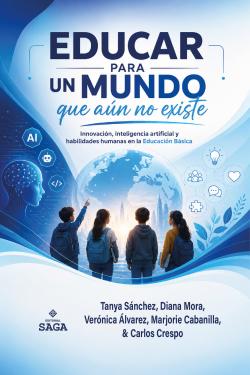
Educar para un mundo que aún no existe examina la transformación de la Educación Básica ante la expansión de la inteligencia artificial, la automatización y las nuevas formas de producción del conocimiento, situando en el centro la formación integral del estudiante y la renovación de la práctica docente. Desde una perspectiva académica, interdisciplinaria y humanista, la obra articula aportes pedagógicos, tecnológicos, éticos y socioemocionales destinados a comprender las modificaciones que atraviesan la enseñanza, el aprendizaje y la evaluación en sociedades caracterizadas por cambios acelerados. Sus capítulos abordan la reconfiguración pedagógica de la escuela, la alfabetización en inteligencia artificial, el pensamiento crítico, la creatividad, la autorregulación, la comunicación multimodal, el aprendizaje basado en problemas y proyectos, la cultura maker, la gamificación, la evaluación auténtica, la analítica del aprendizaje y el Diseño Universal para el Aprendizaje. La reflexión académica se vincula con propuestas aplicables a la Educación Básica, reconociendo al docente como diseñador de experiencias, investigador de su práctica y mediador responsable entre tecnología, conocimiento y desarrollo humano. El libro propone una educación capaz de formar personas autónomas, éticas, colaborativas y creativas, preparadas para aprender permanentemente, tomar decisiones fundamentadas y participar responsablemente en sociedades mediadas por sistemas inteligentes, con responsabilidad y sensibilidad.
Acar, S., Ogurlu, U., & Zorychta, A. (2022). Creativity training programs in primary education: A systematic review and meta-analysis. Thinking Skills and Creativity, 46, 101172. https://doi.org/10.1016/j.tsc.2022.101172
Adams, C., Pente, P., Lemermeyer, G., & Rockwell, G. (2023). Ethical principles for artificial intelligence in K-12 education. Computers and Education: Artificial Intelligence, 4, 100131. https://doi.org/10.1016/j.caeai.2023.100131
Almeqdad, Q. I., Alodat, A. M., Alquraan, M. F., Mohaidat, M. A., & Al-Makhzoomy, A. K. (2023). The effectiveness of universal design for learning: A systematic review of the literature and meta-analysis. Cogent Education, 10(1), 2218191. https://doi.org/10.1080/2331186X.2023.2218191
Atchley, P., Pannell, H., Wofford, K., Hopkins, M., & Atchley, R. A. (2024). Human and AI collaboration in the higher education environment: Opportunities and concerns. Cognitive Research: Principles and Implications, 9, 20. https://doi.org/10.1186/s41235-024-00547-9
Benavides, C., & Ruíz, A. (2022). Critical thinking in education: A systematic review. Revista Innova Educación, 4(2), 62–79. https://doi.org/10.35622/j.rie.2022.02.004
Bermúdez Mendieta, J. (2021). El aprendizaje basado en problemas para mejorar el pensamiento crítico: Revisión sistemática. INNOVA Research Journal, 6(2), 77–89. https://doi.org/10.33890/innova.v6.n2.2021.1681
Casal-Otero, L., Catala, A., Fernández-Morante, C., Taboada, M., Cebreiro, B., & Barro, S. (2023). AI literacy in K-12: A systematic literature review. International Journal of STEM Education, 10, 29. https://doi.org/10.1186/s40594-023-00418-7
Chaudhry, M. A., & Kazim, E. (2022). Artificial intelligence in education (AIEd): A high-level academic and industry note 2021. AI and Ethics, 2, 157–165. https://doi.org/10.1007/s43681-021-00074-z
Cipriano, C., Strambler, M. J., Naples, L. H., Ha, C., Kirk, M., Wood, M., Sehgal, K., Zieher, A. K., Eveleigh, A., McCarthy, M., Funaro, M., Ponnock, A., Chow, J. C., & Durlak, J. (2023). The state of evidence for social and emotional learning: A contemporary meta-analysis of universal school-based SEL interventions. Child Development, 94(5), 1181–1204. https://doi.org/10.1111/cdev.13968
Davies, S., & Seitamaa-Hakkarainen, P. (2025). Research on K-12 maker education in the early 2020s: A systematic literature review. International Journal of Technology and Design Education, 35, 763–788. https://doi.org/10.1007/s10798-024-09921-6
Erdem, C. (2024). A comparative meta-analysis of the effects of problem-based learning model on K-12 students’ cognitive outputs. Educational Studies, 50(6), 1498–1519. https://doi.org/10.1080/03055698.2022.2103650
Ferrero, M., Vadillo, M. A., & León, S. P. (2021). Is project-based learning effective among kindergarten and elementary students? A systematic review. PLOS ONE, 16(4), e0249627. https://doi.org/10.1371/journal.pone.0249627
Gao, X., Li, P., Shen, J., & Sun, H. (2023). Reviewing assessment of student learning in interdisciplinary STEM education. International Journal of STEM Education, 10, 24. https://doi.org/10.1186/s40594-023-00409-8
Ge, J., Cheng, J., Liang, X., & Zhang, J. (2026). Place-based learning in K-12 science education: A systematic review. Educational Review, 100826. https://doi.org/10.1016/j.edurev.2026.100826
González-Calatayud, V., Prendes-Espinosa, P., & Roig-Vila, R. (2021). Artificial intelligence for student assessment: A systematic review. Applied Sciences, 11(12), 5467. https://doi.org/10.3390/app11125467
Gouseti, A., James, F., Fallin, L., & Burden, K. (2025). The ethics of using AI in K-12 education: A systematic literature review. Technology, Pedagogy and Education, 34(2), 161–182. https://doi.org/10.1080/1475939X.2024.2428601
Guo, L. (2022). Using metacognitive prompts to enhance self-regulated learning and learning outcomes: A meta-analysis of experimental studies in computer-based learning environments. Journal of Computer Assisted Learning, 38(3), 811–832. https://doi.org/10.1111/jcal.12650
Hauk, D., & Gröschner, A. (2022). How effective is learner-controlled instruction under classroom conditions? A systematic review. Learning and Motivation, 80, 101850. https://doi.org/10.1016/j.lmot.2022.101850
Heikkinen, S., Saqr, M., Malmberg, J., & Tedre, M. (2023). Supporting self-regulated learning with learning analytics interventions: A systematic literature review. Education and Information Technologies, 28, 3059–3088. https://doi.org/10.1007/s10639-022-11281-4
Hernández-de-Menéndez, M., Morales-Menendez, R., Escobar, C. A., & McGovern, M. (2022). Learning analytics: State of the art. International Journal on Interactive Design and Manufacturing, 16, 1209–1230. https://doi.org/10.1007/s12008-022-00930-0
Humanism and subjectivity in an artificial intelligence-led education. (2024). Tabanque. Revista Pedagógica, 36, 39–48. https://doi.org/10.24197/trp.36.2024.39-48
Humble, N., & Mozelius, P. (2022). The threat, hype, and promise of artificial intelligence in education. Discover Artificial Intelligence, 2, 22. https://doi.org/10.1007/s44163-022-00039-z
Kim, D., Lim, J. H., & An, J. (2022). The quality and effectiveness of social-emotional learning intervention studies in Korea: A meta-analysis. PLOS ONE, 17(6), e0269996. https://doi.org/10.1371/journal.pone.0269996
Kim, J., Lee, H., & Cho, Y. H. (2022). Learning design to support student-AI collaboration: Perspectives of leading teachers for AI in education. Education and Information Technologies, 27, 6069–6104. https://doi.org/10.1007/s10639-021-10831-6
Lee, S. S., & Moore, R. L. (2024). Harnessing generative AI (GenAI) for automated feedback in higher education: A systematic review. Online Learning, 28(3). https://doi.org/10.24059/olj.v28i3.4593
Li, T., & Zhan, Z. (2022). A systematic review on design thinking integrated learning in K-12 education. Applied Sciences, 12(16), 8077. https://doi.org/10.3390/app12168077
Lopes, L. F., Medeiros, L. F. de, & Bartelle, L. B. (2024). Educación humanística en la era de la inteligencia artificial. Acta Scientiarum. Human and Social Sciences, 46(3), e70112. https://doi.org/10.4025/actascihumansoc.v46i3.70112
Mariappan, V., & Osman, K. (2023). A systematic literature review of authentic assessment in K-12 ESL/EFL education. Malaysian Journal of Social Sciences and Humanities, 8(5). https://doi.org/10.47405/mjssh.v8i5.2303
McLure, F. I., Tang, K. S., & Williams, P. J. (2022). What do integrated STEM projects look like in middle school and high school classrooms? A systematic literature review of empirical studies of iSTEM projects. International Journal of STEM Education, 9, 73. https://doi.org/10.1186/s40594-022-00390-8
Mevarech, Z. R., & Paz-Baruch, N. (2022). Meta-creativity: What is it and how does it relate to creativity? Metacognition and Learning, 17, 427–441. https://doi.org/10.1007/s11409-022-09290-2
Muncer, G., Higham, P. A., Gosling, C. J., Cortese, S., Wood-Downie, H., & Hadwin, J. A. (2022). A meta-analysis investigating the association between metacognition and math performance in adolescence. Educational Psychology Review, 34, 301–334. https://doi.org/10.1007/s10648-021-09620-x
Pérez Gracia, E., Serrano Rodríguez, R., & Pontes Pedrajas, A. (2022). Teachers’ professional identity construction: A review of the literature. Profesorado, Revista de Currículum y Formación del Profesorado, 26(1), 371–393. https://doi.org/10.30827/profesorado.v26i1.13211
Polat, S., & Aydın, E. (2022). A bibliometric and content analysis of critical thinking in primary education. Thinking Skills and Creativity, 44, 101029. https://doi.org/10.1016/j.tsc.2022.101029
Rüdian, S., & Pinkwart, N. (2024). Prompt engineering zur Generierung von Sprachlerninhalten. Informatik Spektrum, 47, 60–68. https://doi.org/10.1007/s00287-024-01571-1
Rusconi, L., & Squillaci, M. (2023). Effects of a Universal Design for Learning (UDL) training course on the development teachers’ competences: A systematic review. Education Sciences, 13(5), 466. https://doi.org/10.3390/educsci13050466
Rushton, E. A. C., Smith, R., Steadman, S., & Towers, E. (2023). Understanding teacher identity in teachers’ professional lives: A systematic review of the literature. Review of Education, 11(2), e3417. https://doi.org/10.1002/rev3.3417
Sokhanvar, Z., Salehi, K., & Sokhanvar, F. (2021). Advantages of authentic assessment for improving the learning experience and employability skills of higher education students: A systematic literature review. Studies in Educational Evaluation, 70, 101030. https://doi.org/10.1016/j.stueduc.2021.101030
Steinbauer, G., Kandlhofer, M., Chklovski, T., Heintz, F., & Koenig, S. (2021). A differentiated discussion about AI education K-12. KI – Künstliche Intelligenz, 35, 131–137. https://doi.org/10.1007/s13218-021-00724-8
Urdanivia Alarcon, D. A., Talavera-Mendoza, F., Rucano Paucar, F. H., Cayani Caceres, K. S., & Machaca Viza, R. (2023). Science and inquiry-based teaching and learning: A systematic review. Frontiers in Education, 8, 1170487. https://doi.org/10.3389/feduc.2023.1170487
Van Schoors, R., Elen, J., Raes, A., & Depaepe, F. (2021). An overview of 25 years of research on digital personalised learning in primary and secondary education: A systematic review of conceptual and methodological trends. British Journal of Educational Technology, 52, 1798–1822. https://doi.org/10.1111/bjet.13148
Walter, Y. (2024). Embracing the future of artificial intelligence in the classroom: The relevance of AI literacy, prompt engineering, and critical thinking in modern education. International Journal of Educational Technology in Higher Education, 21, 15. https://doi.org/10.1186/s41239-024-00448-3
Wang, L. H., Chen, B., Hwang, G. J., Guan, J. Q., & Wang, Y. Q. (2022). Effects of digital game-based STEM education on students’ learning achievement: A meta-analysis. International Journal of STEM Education, 9, 26. https://doi.org/10.1186/s40594-022-00344-0
Weiss, K. A., McDermott, M. A., & Hand, B. (2022). Characterising immersive argument-based inquiry learning environments in school-based education: A systematic literature review. Studies in Science Education, 58(1), 15–47. https://doi.org/10.1080/03057267.2021.1897931
Wohlfart, O., & Wagner, I. (2023). Teachers’ role in digitalizing education: An umbrella review. Educational Technology Research and Development, 71, 339–365. https://doi.org/10.1007/s11423-022-10166-0
Xu, W., & Ouyang, F. (2022). The application of AI technologies in STEM education: A systematic review from 2011 to 2021. International Journal of STEM Education, 9, 59. https://doi.org/10.1186/s40594-022-00377-5
Yemini, M., Engel, L., & Ben Simon, A. (2025). Place-based education: A systematic review of literature. Educational Review, 77(2), 640–660. https://doi.org/10.1080/00131911.2023.2177260
Yoon, S. H. (2023). Effects of design thinking interventions on educational outcomes: A meta-analysis. Canadian Journal of Educational and Social Studies, 3(1). https://doi.org/10.53103/cjess.v3i1.108
Zhang, Q., & Yu, Z. (2022). Meta-analysis on investigating and comparing the effects on learning achievement and motivation for gamification and game-based learning. Education Research International, 2022, 1519880. https://doi.org/10.1155/2022/1519880
Zhang, X., Tlili, A., Shubeck, K., Hu, X., Huang, R., & Zhu, L. (2021). Teachers’ adoption of an open and interactive e-book for teaching K-12 students artificial intelligence: A mixed methods inquiry. Smart Learning Environments, 8, 34. https://doi.org/10.1186/s40561-021-00176-5
Vol. 3 Núm. 3 (2026)
Vol. 3 Núm. 2 (2026)










 10 de agosto 232 entre Almendros y Mangos, Cdla. Alborada sector 2, Machala, Ecuador
 editorialsaga.ec@gmail.com
 +593962679148