Vol. 3 Núm. 3 (2026) 
Vol. 3 Núm. 2 (2026) 

Del Aula Tradicional al Aprendizaje Activo: Metodologías y Herramientas para una Educación Innovadora presenta una visión académica y aplicada de la transformación pedagógica orientada hacia experiencias donde el estudiante participa, investiga, argumenta, crea y regula su aprendizaje. La obra analiza la evolución desde modelos transmisivos hacia propuestas centradas en la participación, la autonomía y la construcción compartida del conocimiento, vinculando evidencia científica con decisiones educativas susceptibles de aplicación. A lo largo de cinco capítulos se abordan aprendizaje basado en proyectos, resolución de problemas, aula invertida, aprendizaje cooperativo, pensamiento de diseño y aprendizaje-servicio, junto con tecnologías digitales, inteligencia artificial generativa, gamificación, realidad aumentada y ambientes inmersivos. También se examinan personalización, Diseño Universal para el Aprendizaje, pensamiento crítico, creatividad, integración STEAM y organización flexible de ambientes educativos. La evaluación ocupa una posición articuladora mediante retroalimentación, rúbricas, portafolios, analítica del aprendizaje, metacognición y autorregulación. El profesorado adquiere una función renovada como diseñador y mediador de experiencias formativas. Con una perspectiva reflexiva, el libro relaciona innovación, investigación educativa y mejora continua para orientar prácticas capaces de responder a diversas trayectorias de aprendizaje, fortalecer la participación estudiantil y favorecer una educación pertinente, inclusiva, ética y transformadora.
Al-Ansi, A. M. (2022). Reinforcement of student-centered learning through social e-learning and e-assessment. SN Social Sciences, 2, Article 194. https://doi.org/10.1007/s43545-022-00502-9
Awidi, I. T., & Paynter, M. (2024). An evaluation of the impact of digital technology innovations on students’ learning: Participatory research using a student-centred approach. Technology, Knowledge and Learning, 29, 65–89. https://doi.org/10.1007/s10758-022-09619-5
Baars, M., Khare, S., & Ridderstap, L. (2022). Exploring students’ use of a mobile application to support their self-regulated learning processes. Frontiers in Psychology, 13, Article 793002. https://doi.org/10.3389/fpsyg.2022.793002
Baek, C., Tate, T. P., & Warschauer, M. (2024). “ChatGPT seems too good to be true”: College students’ use and perceptions of generative AI. Computers and Education: Artificial Intelligence, 7, Article 100294. https://doi.org/10.1016/j.caeai.2024.100294
Bani Orabah, S. S., Bijani, H., & Ismail, S. M. (2022). Assessing English language teachers’ understanding and practices of student-centered learning in Oman. Language Testing in Asia, 12, Article 41. https://doi.org/10.1186/s40468-022-00184-3
Blanco Cano, E., & García-Martín, J. (2021). El impacto del aprendizaje-servicio en diversas variables psicoeducativas del alumnado universitario: Las perspectivas de revisión. Revista Complutense de Educación, 32(4), 639–649. https://doi.org/10.5209/rced.70939
Bölek, K. A., De Jong, G., & Henssen, D. (2021). The effectiveness of the use of augmented reality in anatomy education: A systematic review and meta-analysis. Scientific Reports, 11, Article 15292. https://doi.org/10.1038/s41598-021-94721-4
Bonastre, C., Camilli, C., García-Gil, D., & Cuervo, L. (2021). Implicaciones educativas y sociales del aprendizaje-servicio con métodos mixtos a través de un meta-análisis. Revista Española de Pedagogía, 79(279). https://doi.org/10.22550/REP79-1-2021-02
Bredow, C. A., Roehling, P. V., Knorp, A. J., & Sweet, A. M. (2021). To flip or not to flip? A meta-analysis of the efficacy of flipped learning in higher education. Review of Educational Research, 91(6), 878–918. https://doi.org/10.3102/00346543211019122
Brod, G. (2021). How can we make active learning work in K–12 education? Considering prerequisites for a successful construction of understanding. Psychological Science in the Public Interest, 22(1), 1–7. https://doi.org/10.1177/1529100621997376
Cevikbas, M., & Kaiser, G. (2022). Promoting personalized learning in flipped classrooms: A systematic review study. Sustainability, 14(18), Article 11393. https://doi.org/10.3390/su141811393
Chang, H.-Y., Binali, T., Liang, J.-C., Chiou, G.-L., Cheng, K.-H., Lee, S. W.-Y., & Tsai, C.-C. (2022). Ten years of augmented reality in education: A meta-analysis of (quasi-)experimental studies to investigate the impact. Computers & Education, 191, Article 104641. https://doi.org/10.1016/j.compedu.2022.104641
Coban, M., Bolat, Y. I., & Goksu, I. (2022). The potential of immersive virtual reality to enhance learning: A meta-analysis. Educational Research Review, 36, Article 100452. https://doi.org/10.1016/j.edurev.2022.100452
Coelho, M., & Menezes, I. (2021). University social responsibility, service learning, and students’ personal, professional, and civic education. Frontiers in Psychology, 12, Article 617300. https://doi.org/10.3389/fpsyg.2021.617300
Cruz, S., Viseu, F., & Lencastre, J. A. (2022). Project-based learning methodology as a promoter of learning math concepts: A scoping review. Frontiers in Education, 7, Article 953390. https://doi.org/10.3389/feduc.2022.953390
Cumming, T. M., & Rose, M. C. (2022). Exploring universal design for learning as an accessibility tool in higher education: A review of the current literature. The Australian Educational Researcher, 49, 1025–1043. https://doi.org/10.1007/s13384-021-00471-7
Dunbar, K., & Yadav, A. (2022). Shifting to student-centered learning: Influences of teaching a summer service learning program. Teaching and Teacher Education, 110, Article 103578. https://doi.org/10.1016/j.tate.2021.103578
Enriquez Canto, Y., Zapater Ferrer, E., & Díaz Gervasi, G. M. (2021). Disposición, habilidades de pensamiento crítico y éxito académico en estudiantes universitarios: Meta-análisis. Revista Complutense de Educación, 32(4), 525–536. https://doi.org/10.5209/rced.70748
Esparza, D., Lynch-Arroyo, R. L., & Olimpo, J. T. (2022). Empowering current and future educators: Using a scalable action research module as a mechanism to promote high-quality teaching and learning in STEM. Frontiers in Education, 6, Article 754097. https://doi.org/10.3389/feduc.2021.754097
Ferrero, M., Vadillo, M. A., & León, S. P. (2021). Is project-based learning effective among kindergarten and elementary students? A systematic review. PLOS ONE, 16(4), Article e0249627. https://doi.org/10.1371/journal.pone.0249627
Gambo, Y., & Shakir, M. Z. (2021). Review on self-regulated learning in smart learning environment. Smart Learning Environments, 8, Article 12. https://doi.org/10.1186/s40561-021-00157-8
Goyal, M., Gupta, C., & Gupta, V. (2022). A meta-analysis approach to measure the impact of project-based learning outcome with program attainment on student learning using fuzzy inference systems. Heliyon, 8(8), Article e10248. https://doi.org/10.1016/j.heliyon.2022.e10248
Griful-Freixenet, J., Struyven, K., & Vantieghem, W. (2021). Toward more inclusive education: An empirical test of the Universal Design for Learning conceptual model among preservice teachers. Journal of Teacher Education, 72(3). https://doi.org/10.1177/0022487120965525
Gruenhagen, J. H., Sinclair, P. M., Carroll, J.-A., Baker, P. R. A., Wilson, A., & Demant, D. (2024). The rapid rise of generative AI and its implications for academic integrity: Students’ perceptions and use of chatbots for assistance with assessments. Computers and Education: Artificial Intelligence, 7, Article 100273. https://doi.org/10.1016/j.caeai.2024.100273
Guaman-Quintanilla, S., Everaert, P., Chiluiza, K., & Valcke, M. (2023). Impact of design thinking in higher education: A multi-actor perspective on problem solving and creativity. International Journal of Technology and Design Education, 33, 217–240. https://doi.org/10.1007/s10798-021-09724-z
Han, F., Vaculíková, J., & Juklová, K. (2022). The relations between Czech undergraduates’ motivation and emotion in self-regulated learning, learning engagement, and academic success in blended course designs: Consistency between theory-driven and data-driven approaches. Frontiers in Psychology, 13, Article 1001202. https://doi.org/10.3389/fpsyg.2022.1001202
Hew, K. F., Bai, S., Dawson, P., & Lo, C. K. (2021). Meta-analyses of flipped classroom studies: A review of methodology. Educational Research Review, 33, Article 100393. https://doi.org/10.1016/j.edurev.2021.100393
Huijboom, F., Van Meeuwen, P., Rusman, E., & Vermeulen, M. (2021). Professional learning communities as learning environments for teachers: An in-depth examination of the development of seven PLCs and influencing factors. Learning, Culture and Social Interaction, 31, Article 100566. https://doi.org/10.1016/j.lcsi.2021.100566
Ilishkina, D. I., de Bruin, A. B. H., Podolskiy, A. I., Volk, M. I., & van Merriënboer, J. J. G. (2022). Understanding self-regulated learning through the lens of motivation: Motivational regulation strategies vary with students’ motives. International Journal of Educational Research, 113, Article 101956. https://doi.org/10.1016/j.ijer.2022.101956
Jeong, H.-M., Kwon, H., & Kim, S.-H. (2023). A meta-analytic approach for examining the effects of STEAM education programs in South Korea. Innovation and Education, 5(1), 81–97. https://doi.org/10.55396/ined.22.0006
Kariippanon, K. E., Cliff, D. P., Ellis, Y. G., Ucci, M., Okely, A. D., & Parrish, A.-M. (2021). School flexible learning spaces, student movement behavior and educational outcomes among adolescents: A mixed-methods systematic review. Journal of School Health, 91(2), 133–145. https://doi.org/10.1111/josh.12984
Khiat, H., & Vogel, S. (2022). A self-regulated learning management system: Enhancing performance, motivation and reflection in learning. Journal of University Teaching & Learning Practice, 19(2), 43–59. https://doi.org/10.53761/1.19.2.4
Khoury, O. (2022). Perceptions of student-centered learning in online translator training: Findings from Jordan. Heliyon, 8(6), Article e09644. https://doi.org/10.1016/j.heliyon.2022.e09644
Kizilcec, R. F., Huber, E., Papanastasiou, E. C., Cram, A., Makridis, C. A., Smolansky, A., Zeivots, S., & Raduescu, C. (2024). Perceived impact of generative AI on assessments: Comparing educator and student perspectives in Australia, Cyprus, and the United States. Computers and Education: Artificial Intelligence, 7, Article 100269. https://doi.org/10.1016/j.caeai.2024.100269
Kozanitis, A., & Nenciovici, L. (2023). Effect of active learning versus traditional lecturing on the learning achievement of college students in humanities and social sciences: A meta-analysis. Higher Education, 86, 1377–1394. https://doi.org/10.1007/s10734-022-00977-8
Krath, J., Schürmann, L., & von Korflesch, H. F. O. (2021). Revealing the theoretical basis of gamification: A systematic review and analysis of theory in research on gamification, serious games and game-based learning. Computers in Human Behavior, 125, Article 106963. https://doi.org/10.1016/j.chb.2021.106963
Ladachart, L., Cholsin, J., Kwanpet, S., et al. (2022). Ninth-grade students’ perceptions on the design-thinking mindset in the context of reverse engineering. International Journal of Technology and Design Education, 32, 2445–2465. https://doi.org/10.1007/s10798-021-09701-6
Lake, D., Flannery, K., & Kearns, M. (2021). A cross-disciplines and cross-sector mixed-methods examination of design thinking practices and outcome. Innovative Higher Education, 46, 337–356. https://doi.org/10.1007/s10755-020-09539-1
Lee, D., Arnold, M., Srivastava, A., Plastow, K., Strelan, P., Ploeckl, F., Lekkas, D., & Palmer, E. (2024). The impact of generative AI on higher education learning and teaching: A study of educators’ perspectives. Computers and Education: Artificial Intelligence, 6, Article 100221. https://doi.org/10.1016/j.caeai.2024.100221
Liu, S., Lu, J., & Yin, H. (2022). Can professional learning communities promote teacher innovation? A multilevel moderated mediation analysis. Teaching and Teacher Education, 109, Article 103571. https://doi.org/10.1016/j.tate.2021.103571
Liu, Y., & Pásztor, A. (2022). Effects of problem-based learning instructional intervention on critical thinking in higher education: A meta-analysis. Thinking Skills and Creativity, 45, Article 101069. https://doi.org/10.1016/j.tsc.2022.101069
Mao, W., Cui, Y., Chiu, M. M., & Lei, H. (2021). Effects of game-based learning on students’ critical thinking: A meta-analysis. Journal of Educational Computing Research, 59(8), 1682–1708. https://doi.org/10.1177/07356331211007098
McArthur, J. (2023). Rethinking authentic assessment: Work, well-being, and society. Higher Education, 85, 85–101. https://doi.org/10.1007/s10734-022-00822-y
Mendo-Lázaro, S., León-del-Barco, B., Polo-del-Río, M.-I., & López-Ramos, V. M. (2022). The impact of cooperative learning on university students’ academic goals. Frontiers in Psychology, 12, Article 787210. https://doi.org/10.3389/fpsyg.2021.787210
Metwally, A. H. S., Nacke, L. E., Chang, M., Wang, Y., & Yousef, A. M. F. (2021). Revealing the hotspots of educational gamification: An umbrella review. International Journal of Educational Research, 109, Article 101832. https://doi.org/10.1016/j.ijer.2021.101832
Møgelvang, A., & Nyléhn, J. (2023). Co-operative learning in undergraduate mathematics and science education: A scoping review. International Journal of Science and Mathematics Education, 21, 1935–1959. https://doi.org/10.1007/s10763-022-10331-0
Murillo-Zamorano, L. R., López Sánchez, J. Á., & Godoy-Caballero, A. L. (2021). Gamification and active learning in higher education: Is it possible to match digital society, academia and students’ interests? International Journal of Educational Technology in Higher Education, 18, Article 15. https://doi.org/10.1186/s41239-021-00249-y
Nguyen, K. A., Borrego, M., Finelli, C. J., DeMonbrun, M., Crockett, C., Tharayil, S., Shekhar, P., Waters, C., & Rosenberg, R. (2021). Instructor strategies to aid implementation of active learning: A systematic literature review. International Journal of STEM Education, 8, Article 9. https://doi.org/10.1186/s40594-021-00270-7
Nykvist, S. S., De Caro-Barek, V., Støckert, R., & Lysne, D. A. (2021). Key factors needed for developing a higher education cross-campus learning environment in a Nordic context. Frontiers in Education, 6, Article 763761. https://doi.org/10.3389/feduc.2021.763761
Roski, M., Walkowiak, M., & Nehring, A. (2021). Universal Design for Learning: The more, the better? Education Sciences, 11(4), Article 164. https://doi.org/10.3390/educsci11040164
Rossi, I. V., de Lima, J. D., Sabatke, B., Nunes, M. A. F., Ramirez, G. E., & Ramirez, M. I. (2021). Active learning tools improve the learning outcomes, scientific attitude, and critical thinking in higher education. Biochemistry and Molecular Biology Education, 49(6), 888–903. https://doi.org/10.1002/bmb.21574
Saihi, A., Ben-Daya, M., Hariga, M., & As’ad, R. (2024). A structural equation modeling analysis of generative AI chatbots adoption among students and educators in higher education. Computers and Education: Artificial Intelligence, 7, Article 100274. https://doi.org/10.1016/j.caeai.2024.100274
Sandrone, S., Scott, G., Anderson, W. J., & Musunuru, K. (2021). Active learning-based STEM education for in-person and online learning. Cell, 184(6), 1409–1414. https://doi.org/10.1016/j.cell.2021.01.045
Schultz, M., Young, K., & Gunning, T. K. (2022). Defining and measuring authentic assessment: A case study in the context of tertiary science. Assessment & Evaluation in Higher Education, 47(1). https://doi.org/10.1080/02602938.2021.1887811
Segaran, M. K., & Hasim, Z. (2021). Self-regulated learning through ePortfolio: A meta-analysis. Malaysian Journal of Learning and Instruction, 18(1), 131–156. https://doi.org/10.32890/mjli2021.18.1.6
Solari, M., Vizquerra, M. I., & Engel, A. (2023). Students’ interests for personalized learning: An analysis guide. European Journal of Psychology of Education, 38, 1073–1109. https://doi.org/10.1007/s10212-022-00656-3
Soubra, L., Al-Ghouti, M. A., Abu-Dieyeh, M., Crovella, S., & Abou-Saleh, H. (2022). Impacts on student learning and skills and implementation challenges of two student-centered learning methods applied in online education. Sustainability, 14(15), Article 9625. https://doi.org/10.3390/su14159625
Tadlaoui-Brahmi, A., Çuko, K., & Alvarez, L. (2022). Digital citizenship in primary education: A systematic literature review describing how it is implemented. Social Sciences & Humanities Open, 6(1), Article 100348. https://doi.org/10.1016/j.ssaho.2022.100348
Theobald, M. (2021). Self-regulated learning training programs enhance university students’ academic performance, self-regulated learning strategies, and motivation: A meta-analysis. Contemporary Educational Psychology, 66, Article 101976. https://doi.org/10.1016/j.cedpsych.2021.101976
Theobald, M., & Bellhäuser, H. (2022). How am I going and where to next? Elaborated online feedback improves university students’ self-regulated learning and performance. The Internet and Higher Education, 55, Article 100872. https://doi.org/10.1016/j.iheduc.2022.100872
Valtonen, T., Leppänen, U., Hyypiä, M., et al. (2021). Learning environments preferred by university students: A shift toward informal and flexible learning environments. Learning Environments Research, 24, 371–388. https://doi.org/10.1007/s10984-020-09339-6
Vijapur, D., Candido, C., Göçer, Ö., & Wyver, S. (2021). A ten-year review of primary school flexible learning environments: Interior design and IEQ performance. Buildings, 11(5), Article 183. https://doi.org/10.3390/buildings11050183
Xu, W., Ye, T., & Wang, X. (2021). The effectiveness of problem-based learning in medical cell biology education: A systematic meta-analysis. Medicine, 100(39), Article e27402. https://doi.org/10.1097/MD.0000000000027402
Yalçın, V., & Erden, Ş. (2021). The effect of STEM activities prepared according to the design thinking model on preschool children’s creativity and problem-solving skills. Thinking Skills and Creativity, 41, Article 100864. https://doi.org/10.1016/j.tsc.2021.100864
Zheng, L., Long, M., Zhong, L., & Gyasi, J. F. (2022). The effectiveness of technology-facilitated personalized learning on learning achievements and learning perceptions: A meta-analysis. Education and Information Technologies, 27, 11807–11830. https://doi.org/10.1007/s10639-022-11092-7
Zhong, L. (2023). A systematic review of personalized learning in higher education: Learning content structure, learning materials sequence, and learning readiness support. Interactive Learning Environments, 31(10), 7053–7073. https://doi.org/10.1080/10494820.2022.2061006
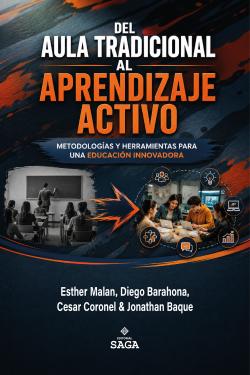
Vol. 3 Núm. 3 (2026)
Vol. 3 Núm. 2 (2026)









 10 de agosto 232 entre Almendros y Mangos, Cdla. Alborada sector 2, Machala, Ecuador
 editorialsaga.ec@gmail.com
 +593962679148