Vol. 3 Núm. 3 (2026) 
Vol. 3 Núm. 2 (2026) 

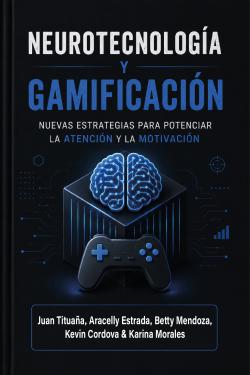
Neurotecnología y gamificación: nuevas estrategias para potenciar la atención y la motivación presenta una aproximación interdisciplinaria a la convergencia entre neurociencia, tecnología educativa, inteligencia artificial y diseño gamificado, con énfasis en los procesos cognitivos que regulan la atención, la motivación, la memoria y el compromiso durante el aprendizaje. La obra analiza las bases neurocognitivas de las experiencias educativas digitales y examina redes atencionales, sistemas de recompensa, carga cognitiva, neuroplasticidad y biomarcadores vinculados con la actividad académica. A partir de tales fundamentos, desarrolla principios para diseñar experiencias neuroadaptativas mediante mecánicas de recompensa, narrativas, personalización algorítmica e interfaces multimodales capaces de responder a diferentes estados cognitivos. También estudia la relación entre curiosidad, flujo, fatiga atencional y permanencia en ecosistemas gamificados, junto con procedimientos de electroencefalografía, seguimiento ocular, biosensores, analítica del aprendizaje e inteligencia artificial orientados a interpretar patrones conductuales y neurofisiológicos. La discusión incorpora una perspectiva ética centrada en privacidad cognitiva, consentimiento informado, equidad neurodigital, persuasión algorítmica y prevención de dinámicas adictivas. La integración de interfaces cerebro-computadora, realidad extendida y aprendizaje adaptativo completa una propuesta académica destinada a comprender y diseñar entornos educativos tecnológicamente avanzados, cognitivamente fundamentados, pedagógicamente pertinentes y responsables con la autonomía del estudiante.
Alsadoon, E., Alkhawajah, A., & Bin Suhaim, A. (2022). Effects of a gamified learning environment on students’ achievement, motivations, and satisfaction. Heliyon, 8(8), e10249. https://doi.org/10.1016/j.heliyon.2022.e10249
Anguera, J. A., Rowe, M. A., Volponi, J. J., et al. (2023). Enhancing attention in children using an integrated cognitive-physical videogame: A pilot study. npj Digital Medicine, 6, 65. https://doi.org/10.1038/s41746-023-00812-z
Coban, M., Bolat, Y. I., & Goksu, I. (2022). The potential of immersive virtual reality to enhance learning: A meta-analysis. Educational Research Review, 36, 100452. https://doi.org/10.1016/j.edurev.2022.100452
de Oliveira, C. F., Sobral, S. R., Ferreira, M. J., & Moreira, F. (2021). How does learning analytics contribute to prevent students’ dropout in higher education: A systematic literature review. Big Data and Cognitive Computing, 5(4), 64. https://doi.org/10.3390/bdcc5040064
González-González, C. S., Muñoz-Cruz, V., Toledo-Delgado, P. A., & Nacimiento-García, E. (2023). Personalized gamification for learning: A reactive chatbot architecture proposal. Sensors, 23(1), 545. https://doi.org/10.3390/s23010545
Hung, J.-L., & Li, H. (2024). An EEG study on college students’ attention levels in a blended computer science class. Innovations in Education and Teaching International, 61(4), 789–801. https://doi.org/10.1080/14703297.2023.2166562
Khosravi, S., Bailey, S. G., Parvizi, H., & Ghannam, R. (2022). Wearable sensors for learning enhancement in higher education. Sensors, 22(19), 7633. https://doi.org/10.3390/s22197633
Lampropoulos, G., & Kinshuk. (2024). Virtual reality and gamification in education: A systematic review. Educational Technology Research and Development, 72, 1691–1785. https://doi.org/10.1007/s11423-024-10351-3
Lavazza, A., & Giorgi, R. (2023). Philosophical foundation of the right to mental integrity in the age of neurotechnologies. Neuroethics, 16, 10. https://doi.org/10.1007/s12152-023-09517-2
Li, L., Hew, K. F., & Du, J. (2024). Gamification enhances student intrinsic motivation, perceptions of autonomy and relatedness, but minimal impact on competency: A meta-analysis and systematic review. Educational Technology Research and Development, 72, 765–796. https://doi.org/10.1007/s11423-023-10337-7
Li, M., Ma, S., & Shi, Y. (2023). Examining the effectiveness of gamification as a tool promoting teaching and learning in educational settings: A meta-analysis. Frontiers in Psychology, 14, 1253549. https://doi.org/10.3389/fpsyg.2023.1253549
Ligthart, S., Ienca, M., Meynen, G., et al. (2023). Minding rights: Mapping ethical and legal foundations of ‘neurorights’. Cambridge Quarterly of Healthcare Ethics, 32(4), 461–481. https://doi.org/10.1017/S0963180123000245
López-Jiménez, J. J., Fernández-Alemán, J. L., García-Berná, J. A., et al. (2021). Effects of gamification on the benefits of student response systems in learning of human anatomy: Three experimental studies. International Journal of Environmental Research and Public Health, 18(24), 13210. https://doi.org/10.3390/ijerph182413210
Ouhaichi, H., Spikol, D., & Vogel, B. (2023). Research trends in multimodal learning analytics: A systematic mapping study. Computers and Education: Artificial Intelligence, 4, 100136. https://doi.org/10.1016/j.caeai.2023.100136
Pattemore, M., & Gilabert, R. (2023). Using eye-tracking to measure cognitive engagement with feedback in a digital literacy game. Language Learning Journal, 51, 472–490. https://doi.org/10.1080/09571736.2023.2207582
Privitera, A. J., & Du, H. (2022). Educational neurotechnology: Where do we go from here? Trends in Neuroscience and Education, 29, 100195. https://doi.org/10.1016/j.tine.2022.100195
Ritzhaupt, A. D., Huang, R., Sommer, M., Zhu, J., Stephen, A., Valle, N., Hampton, J., & Li, J. (2021). A meta-analysis on the influence of gamification in formal educational settings on affective and behavioral outcomes. Educational Technology Research and Development, 69, 2493–2522. https://doi.org/10.1007/s11423-021-10036-1
Sailer, M., & Homner, L. (2020). The gamification of learning: A meta-analysis. Educational Psychology Review, 32, 77–112. https://doi.org/10.1007/s10648-019-09498-w
Scharinger, C., Prislan, L., Bernecker, K., & Ninaus, M. (2023). Gamification of an n-back working memory task—Is it worth the effort? An EEG and eye-tracking study. Biological Psychology, 179, 108545. https://doi.org/10.1016/j.biopsycho.2023.108545
Vidanaralage, A. J., Dharmaratne, A. T., & Haque, S. (2022). AI-based multidisciplinary framework to assess the impact of gamified video-based learning through schema and emotion analysis. Computers and Education: Artificial Intelligence, 3, 100109. https://doi.org/10.1016/j.caeai.2022.100109
Watanabe, H., & Naruse, Y. (2022). P300 as a neural indicator for setting levels of goal scores in educational gamification applications from the perspective of intrinsic motivation: An ERP study. Frontiers in Neuroergonomics, 3, 948080. https://doi.org/10.3389/fnrgo.2022.948080
Xiao, Y., & Hew, K. F. (2024). Personalized gamification versus one-size-fits-all gamification in fully online learning: Effects on student motivational, behavioral and cognitive outcomes. Learning and Individual Differences, 113, 102470. https://doi.org/10.1016/j.lindif.2024.102470
Yuste, R. (2023). Advocating for neurodata privacy and neurotechnology regulation. Nature Protocols, 18, 2869–2875. https://doi.org/10.1038/s41596-023-00873-0
Zorrilla Pantaleón, M. E., García-Saiz, D., & de la Vega, A. (2021). Fostering study time outside class using gamification strategies: An experimental study at tertiary-level database courses. Computer Applications in Engineering Education, 29, 1340–1357. https://doi.org/10.1002/cae.22389
Zourmpakis, A.-I., Kalogiannakis, M., & Papadakis, S. (2023). Adaptive gamification in science education: An analysis of the impact of implementation and adapted game elements on students’ motivation. Computers, 12(7), 143. https://doi.org/10.3390/computers12070143
Vol. 3 Núm. 3 (2026)
Vol. 3 Núm. 2 (2026)










 10 de agosto 232 entre Almendros y Mangos, Cdla. Alborada sector 2, Machala, Ecuador
 editorialsaga.ec@gmail.com
 +593962679148