Vol. 3 Núm. 3 (2026) 
Vol. 3 Núm. 2 (2026) 

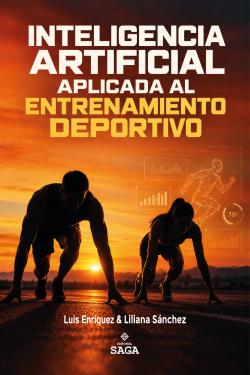
Inteligencia artificial aplicada al entrenamiento deportivo presenta una visión académica y aplicada sobre la incorporación de sistemas inteligentes en la planificación, evaluación y regulación del rendimiento físico, articulando conocimientos procedentes de las ciencias del deporte, la informática y el análisis de datos para fortalecer la toma de decisiones profesionales. La obra examina modelos de aprendizaje automático orientados al procesamiento de indicadores fisiológicos, biomecánicos y perceptivos, junto con técnicas de visión artificial capaces de reconocer patrones de movimiento y variaciones relevantes durante la práctica deportiva. Especial atención recibe la predicción de fatiga y recuperación mediante series temporales, registros de carga interna y externa, datos de sueño y respuestas individuales ante diferentes estímulos. El desarrollo temático aborda la personalización algorítmica del volumen, intensidad, densidad y frecuencia, además del empleo de sistemas de recomendación, aprendizaje por refuerzo y gemelos digitales para simular respuestas adaptativas. También analiza asistentes generativos, modelos explicables y mecanismos de trazabilidad destinados a respaldar el criterio del entrenador. La integración responsable de datos, predicciones y experiencia profesional configura una metodología de trabajo orientada a mejorar la precisión de la planificación, interpretar el rendimiento y favorecer decisiones individualizadas, verificables y sustentadas científicamente en entornos deportivos contemporáneos de diversa exigencia competitiva actual.
Badiola-Bengoa, A., & Mendez-Zorrilla, A. (2021). A systematic review of the application of camera-based human pose estimation in the field of sport and physical exercise. Sensors, 21(18), Article 5996. https://doi.org/10.3390/s21185996
Connor, M., Beato, M., & O’Neill, M. (2022). Adaptive athlete training plan generation: An intelligent control systems approach. Journal of Science and Medicine in Sport, 25(4), 351–355. https://doi.org/10.1016/j.jsams.2021.10.011
Cordeiro, M. C., Cathain, C. O., Daly, L., Kelly, D. T., & Rodrigues, T. B. (2025). A synthetic data-driven machine learning approach for athlete performance attenuation prediction. Frontiers in Sports and Active Living, 7, Article 1607600. https://doi.org/10.3389/fspor.2025.1607600
Cui, J., Du, H., & Wu, X. (2023). Data analysis of physical recovery and injury prevention in sports teaching based on wearable devices. Preventive Medicine, 173, Article 107589. https://doi.org/10.1016/j.ypmed.2023.107589
de Leeuw, A.-W., van der Zwaard, S., van Baar, R., & Knobbe, A. (2022). Personalized machine learning approach to injury monitoring in elite volleyball players. European Journal of Sport Science, 22(4), 511–520. https://doi.org/10.1080/17461391.2021.1887369
Fukushima, T., Blauberger, P., Guedes Russomanno, T., & Lames, M. (2024). The potential of human pose estimation for motion capture in sports: A validation study. Sports Engineering, 27, Article 19. https://doi.org/10.1007/s12283-024-00460-w
Ganaie, M. U. D., Shah, M. M., Awan, A. M., Ganaie, M. M., Kousar, T., Nissa, B., & Tomar, R. (2026). Effect of artificial intelligence-assisted coaching on sports performance: A systematic review and meta-analysis. Journal of Human Sport and Exercise. https://doi.org/10.55860/vjqgvm08
Hliš, T., Fister, I., & Fister, I., Jr. (2024). Digital twins in sport: Concepts, taxonomies, challenges and practical potentials. Expert Systems with Applications, 258, Article 125104. https://doi.org/10.1016/j.eswa.2024.125104
Li, S., & Zhang, W. (2022). Evaluation method of basketball teaching and training effect based on wearable device. Frontiers in Physics, 10, Article 900169. https://doi.org/10.3389/fphy.2022.900169
Lukač, L., Fister, I., Jr., & Fister, I. (2022). Digital twin in sport: From an idea to realization. Applied Sciences, 12(24), Article 12741. https://doi.org/10.3390/app122412741
Majumdar, A., Bakirov, R., Hodges, D., McCullagh, S., & Rees, T. (2024). A multi-season machine learning approach to examine the training load and injury relationship in professional soccer. Journal of Sports Analytics. https://doi.org/10.3233/JSA-240718
Mandorino, M., Tessitore, A., Leduc, C., Persichetti, V., Morabito, M., & Lacome, M. (2023). A new approach to quantify soccer players’ readiness through machine learning techniques. Applied Sciences, 13(15), Article 8808. https://doi.org/10.3390/app13158808
Munoz-Macho, A. A., Domínguez-Morales, M. J., & Sevillano-Ramos, J. L. (2024). Performance and healthcare analysis in elite sports teams using artificial intelligence: A scoping review. Frontiers in Sports and Active Living, 6, Article 1383723. https://doi.org/10.3389/fspor.2024.1383723
Pashaie, S., Mohammadi, S., & Golmohammadi, H. (2026). Unlocking athlete potential: The evolution of coaching strategies through artificial intelligence. Proceedings of the Institution of Mechanical Engineers, Part P: Journal of Sports Engineering and Technology, 240(3), 666–685. https://doi.org/10.1177/17543371241300889
Teixeira, J. E., Encarnação, S., Branquinho, L., Ferraz, R., Portella, D. L., Monteiro, D., Morgans, R., Barbosa, T. M., Monteiro, A. M., & Forte, P. (2024). Classification of recovery states in U15, U17, and U19 sub-elite football players: A machine learning approach. Frontiers in Psychology, 15, Article 1447968. https://doi.org/10.3389/fpsyg.2024.1447968
Xia, X., Chen, Q., & Wang, Z. (2025). Deep reinforcement learning-driven personalized training load control algorithm for competitive sports performance optimization. Scientific Reports, 16, Article 845. https://doi.org/10.1038/s41598-025-30453-z
Vol. 3 Núm. 3 (2026)
Vol. 3 Núm. 2 (2026)










 10 de agosto 232 entre Almendros y Mangos, Cdla. Alborada sector 2, Machala, Ecuador
 editorialsaga.ec@gmail.com
 +593962679148