Vol. 3 Núm. 3 (2026) 
Vol. 3 Núm. 2 (2026) 

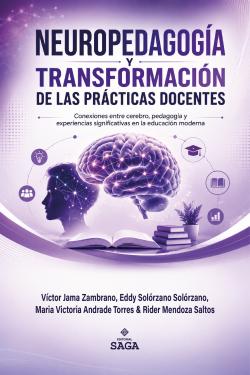
La educación contemporánea demanda prácticas docentes sustentadas en conocimientos provenientes de la neurociencia y de la pedagogía, capaces de fortalecer procesos de aprendizaje mediante experiencias significativas, reflexión profesional y decisiones didácticas orientadas por evidencias científicas. Esta obra presenta una visión integradora que articula los aportes del funcionamiento cerebral con la planificación educativa, la mediación pedagógica, la evaluación formativa y la innovación metodológica, favoreciendo una comprensión amplia de las relaciones entre cognición, emoción, memoria, atención y construcción del conocimiento. A lo largo de sus capítulos se analizan estrategias destinadas a promover la participación activa del estudiantado, el desarrollo de funciones ejecutivas, la autorregulación, la metacognición y la personalización de la enseñanza desde una perspectiva inclusiva y humanista. Asimismo, se examina la contribución de las tecnologías inteligentes, la analítica del aprendizaje y los recursos digitales para enriquecer la práctica profesional del profesorado, manteniendo un equilibrio entre innovación, ética y bienestar educativo. La obra ofrece argumentos sustentados en investigaciones recientes, acompañados por orientaciones aplicables a diversos niveles educativos, favoreciendo la transformación permanente de la enseñanza mediante procesos reflexivos, colaboración académica y cultura institucional orientada al aprendizaje, la calidad educativa y el desarrollo integral de las personas en sociedades caracterizadas por permanentes cambios científicos, tecnológicos y culturales.
Agyapong, B., Obuobi-Donkor, G., Burback, L., & Wei, Y. (2022). Stress, Burnout, Anxiety and Depression among Teachers: A Scoping Review. International Journal of Environmental Research and Public Health, 19(17), 10706. https://doi.org/10.3390/ijerph191710706
Al-Adwan, A. S., Li, N., Al-Adwan, A., Abbasi, G. A., Albelbisi, N. A., & Habibi, A. (2023). “Extending the Technology Acceptance Model (TAM) to Predict University Students’ Intentions to Use Metaverse-Based Learning Platforms”. Education and Information Technologies, 28(11), 15381-15413. https://doi.org/10.1007/s10639-023-11816-3
Al-Ansi, A. M., Jaboob, M., Garad, A., & Al-Ansi, A. (2023). Analyzing augmented reality (AR) and virtual reality (VR) recent development in education. Social Sciences & Humanities Open, 8(1), 100532. https://doi.org/10.1016/j.ssaho.2023.100532
Aldosari, S. A. M. (2020). The Future of Higher Education in the Light of Artificial Intelligence Transformations. International Journal of Higher Education, 9(3), 145. https://doi.org/10.5430/ijhe.v9n3p145
AlGerafi, M. A. M., Zhou, Y., Oubibi, M., & Wijaya, T. T. (2023). Unlocking the Potential: A Comprehensive Evaluation of Augmented Reality and Virtual Reality in Education. Electronics, 12(18), 3953. https://doi.org/10.3390/electronics12183953
Ali, W. (2020). Online and Remote Learning in Higher Education Institutes: A Necessity in light of COVID-19 Pandemic. Higher Education Studies, 10(3), 16. https://doi.org/10.5539/hes.v10n3p16
ALSAMH, M. H., Hawbani, A., Kumar, S., & Hamood Alsamhi, S. (2024). Multisensory Metaverse-6G: A New Paradigm of Commerce and Education. IEEE Access, 12, 75657-75677. https://doi.org/10.1109/access.2024.3392838
Antonopoulou, H., Halkiopoulos, C., Gkintoni, E., & Katsimpelis, A. (2022). Application of Gamification Tools for Identification of Neurocognitive and Social Function in Distance Learning Education. International Journal of Learning, Teaching and Educational Research, 21(5), 367-400. https://doi.org/10.26803/ijlter.21.5.19
Asoodar, M., Janesarvatan, F., Yu, H., & de Jong, N. (2024). Theoretical foundations and implications of augmented reality, virtual reality, and mixed reality for immersive learning in health professions education. Advances in Simulation, 9(1), 36. https://doi.org/10.1186/s41077-024-00311-5
Bakker, A. B., & de Vries, J. D. (2021). Job Demands–Resources theory and self-regulation: new explanations and remedies for job burnout. Anxiety, Stress, & Coping, 34(1), 1-21. https://doi.org/10.1080/10615806.2020.1797695
Basso, J. C., Satyal, M. K., & Rugh, R. (2021). Dance on the Brain: Enhancing Intra- and Inter-Brain Synchrony. Frontiers in Human Neuroscience, 14, 584312. https://doi.org/10.3389/fnhum.2020.584312
Bethlehem, R. A. I., Seidlitz, J., White, S. R., Vogel, J. W., Anderson, K. M., Adamson, C., Adler, S., Alexopoulos, G. S., Anagnostou, E., Areces-Gonzalez, A., Astle, D. E., Auyeung, B., Ayub, M., Bae, J., Ball, G., Baron-Cohen, S., Beare, R., Bedford, S. A., Benegal, V., …, & Alexander-Bloch, A. F. (2022). Brain charts for the human lifespan. Nature, 604(7906), 525-533. https://doi.org/10.1038/s41586-022-04554-y
Botvinik-Nezer, R., Holzmeister, F., Camerer, C. F., Dreber, A., Huber, J., Johannesson, M., Kirchler, M., Iwanir, R., Mumford, J. A., Adcock, R. A., Avesani, P., Baczkowski, B. M., Bajracharya, A., Bakst, L., Ball, S., Barilari, M., Bault, N., Beaton, D., Beitner, J., …, & Schonberg, T. (2020). Variability in the analysis of a single neuroimaging dataset by many teams. Nature, 582(7810), 84-88. https://doi.org/10.1038/s41586-020-2314-9
Carrillo, C., & Flores, M. A. (2020). COVID-19 and teacher education: a literature review of online teaching and learning practices. European Journal of Teacher Education, 43(4), 466-487. https://doi.org/10.1080/02619768.2020.1821184
Chan, C. K. Y. (2023). A comprehensive AI policy education framework for university teaching and learning. International Journal of Educational Technology in Higher Education, 20(1). https://doi.org/10.1186/s41239-023-00408-3
Chang, C., Colón-Berlingeri, M., Mavis, B., Laird-Fick, H. S., Parker, C., & Solomon, D. (2021). Medical Student Progress Examination Performance and Its Relationship With Metacognition, Critical Thinking, and Self-Regulated Learning Strategies. Academic Medicine, 96(2), 278-284. https://doi.org/10.1097/acm.0000000000003766
Chen, L., Chen, P., & Lin, Z. (2020). Artificial Intelligence in Education: A Review. IEEE Access, 8, 75264-75278. https://doi.org/10.1109/access.2020.2988510
Chrysochoou, M., Zaghi, A. E., & Syharat, C. M. (2022). Reframing neurodiversity in engineering education. Frontiers in Education, 7, 995865. https://doi.org/10.3389/feduc.2022.995865
Clouder, L., Karakus, M., Cinotti, A., Ferreyra, M. V., Fierros, G. A., & Rojo, P. (2020). Neurodiversity in higher education: a narrative synthesis. Higher Education, 80(4), 757-778. https://doi.org/10.1007/s10734-020-00513-6
Coman, C., Țîru, L. I. G., Meseșan-Schmitz, L., Stanciu, C., & Bularca, M. C. (2020). Online Teaching and Learning in Higher Education during the Coronavirus Pandemic: Students’ Perspective. Sustainability, 12(24), 10367. https://doi.org/10.3390/su122410367
Dignath, C., & Veenman, M. V. J. (2021). The Role of Direct Strategy Instruction and Indirect Activation of Self-Regulated Learning—Evidence from Classroom Observation Studies. Educational Psychology Review, 33(2), 489-533. https://doi.org/10.1007/s10648-020-09534-0
Dwivedi, Y. K., Kshetri, N., Hughes, L., Slade, E. L., Jeyaraj, A., Kar, A. K., Baabdullah, A. M., Koohang, A., Raghavan, V., Ahuja, M., Albanna, H., Albashrawi, M. A., Al-Busaidi, A. S., Balakrishnan, J., Barlette, Y., Basu, S., Bose, I., Brooks, L., Buhalis, D., …, & Wright, R. (2023). Opinion Paper: “So what if ChatGPT wrote it?” Multidisciplinary perspectives on opportunities, challenges and implications of generative conversational AI for research, practice and policy. International Journal of Information Management, 71, 102642. https://doi.org/10.1016/j.ijinfomgt.2023.102642
El-Sabagh, H. A. (2021). Adaptive e-learning environment based on learning styles and its impact on development students' engagement. International Journal of Educational Technology in Higher Education, 18(1), 53. https://doi.org/10.1186/s41239-021-00289-4
Elendu, C., Amaechi, D. C., Okatta, A. U., Amaechi, E. C., Elendu, T. C., Ezeh, C. P., & Elendu, I. D. (2024). The impact of simulation-based training in medical education: A review. Medicine, 103(27), e38813. https://doi.org/10.1097/md.0000000000038813
Essel, H. B., Vlachopoulos, D., Tachie-Menson, A., Johnson, E. E., & Baah, P. K. (2022). The impact of a virtual teaching assistant (chatbot) on students' learning in Ghanaian higher education. International Journal of Educational Technology in Higher Education, 19(1), 57. https://doi.org/10.1186/s41239-022-00362-6
Falloon, G. (2020). From digital literacy to digital competence: the teacher digital competency (TDC) framework. Educational Technology Research and Development, 68(5), 2449-2472. https://doi.org/10.1007/s11423-020-09767-4
Ferreira, M., Martinsone, B., & Talić, S. (2020). Promoting Sustainable Social Emotional Learning at School through Relationship-Centered Learning Environment, Teaching Methods and Formative Assessment. Journal of Teacher Education for Sustainability, 22(1), 21-36. https://doi.org/10.2478/jtes-2020-0003
Ferri, F., Grifoni, P., & Guzzo, T. (2020). Online Learning and Emergency Remote Teaching: Opportunities and Challenges in Emergency Situations. Societies, 10(4), 86. https://doi.org/10.3390/soc10040086
Fletcher, A., & Benveniste, M. (2022). A new method for training creativity: narrative as an alternative to divergent thinking. Annals of the New York Academy of Sciences, 1512(1), 29-45. https://doi.org/10.1111/nyas.14763
Garzón Artacho, E., Martínez, T. S., Ortega Martín, J. L., Marín Marín, J. A., & Gómez García, G. (2020). Teacher Training in Lifelong Learning—The Importance of Digital Competence in the Encouragement of Teaching Innovation. Sustainability, 12(7), 2852. https://doi.org/10.3390/su12072852
Gkintoni, E., Antonopoulou, H., Sortwell, A., & Halkiopoulos, C. (2025). Challenging Cognitive Load Theory: The Role of Educational Neuroscience and Artificial Intelligence in Redefining Learning Efficacy. Brain Sciences, 15(2), 203. https://doi.org/10.3390/brainsci15020203
Gligorea, I., Cioca, M., Oancea, R., Gorski, A. T., Gorski, H., & Tudorache, P. (2023). Adaptive Learning Using Artificial Intelligence in e-Learning: A Literature Review. Education Sciences, 13(12), 1216. https://doi.org/10.3390/educsci13121216
Goering, S., Klein, E., Specker Sullivan, L., Wexler, A., Agüera y Arcas, B., Bi, G., Carmena, J. M., Fins, J. J., Friesen, P., Gallant, J., Huggins, J. E., Kellmeyer, P., Marblestone, A., Mitchell, C., Parens, E., Pham, M., Rubel, A., Sadato, N., Teicher, M., …, & Yuste, R. (2021). Recommendations for Responsible Development and Application of Neurotechnologies. Neuroethics, 14(3), 365-386. https://doi.org/10.1007/s12152-021-09468-6
Guler, K., & Aydin, A. (2022). Comparing the Working Memory Capacity with Cognitive Flexibility, Cognitive Emotion Regulation, and Learning Styles of University Students: A Domain General View. Dementia and Geriatric Cognitive Disorders Extra, 12(3), 131-149. https://doi.org/10.1159/000526226
Guo, P., Saab, N., Post, L. S., & Admiraal, W. (2020). A review of project-based learning in higher education: Student outcomes and measures. International Journal of Educational Research, 102, 101586. https://doi.org/10.1016/j.ijer.2020.101586
Hachem, M., Daignault, K., & Wilcox, G. (2022). Impact of Educational Neuroscience Teacher Professional Development: Perceptions of School Personnel. Frontiers in Education, 7, 912827. https://doi.org/10.3389/feduc.2022.912827
Haleem, A., Javaid, M., Qadri, M. A., & Suman, R. (2022). Understanding the role of digital technologies in education: A review. Sustainable Operations and Computers, 3, 275-285. https://doi.org/10.1016/j.susoc.2022.05.004
Hayat, A. A., Shateri, K., Amini, M., & Shokrpour, N. (2020). Relationships between academic self-efficacy, learning-related emotions, and metacognitive learning strategies with academic performance in medical students: a structural equation model. BMC Medical Education, 20(1), 76. https://doi.org/10.1186/s12909-020-01995-9
Hertel, S., & Karlen, Y. (2021). Implicit theories of self‐regulated learning: Interplay with students’ achievement goals, learning strategies, and metacognition. British Journal of Educational Psychology, 91(3), 972-996. https://doi.org/10.1111/bjep.12402
Hortobágyi, T., Granacher, U., Fernandez-del-Olmo, M., Howatson, G., Manca, A., Deriu, F., Taube, W., Gruber, M., Márquez, G., Lundbye-Jensen, J., & Colomer-Poveda, D. (2021). Functional relevance of resistance training-induced neuroplasticity in health and disease. Neuroscience & Biobehavioral Reviews, 122, 79-91. https://doi.org/10.1016/j.neubiorev.2020.12.019
Huang, L. (2023). Ethics of Artificial Intelligence in Education: Student Privacy and Data Protection. Science Insights Education Frontiers, 16(2), 2577-2587. https://doi.org/10.15354/sief.23.re202
Hwang, G. J., Xie, H., Wah, B. W., & Gašević, D. (2020). Vision, challenges, roles and research issues of Artificial Intelligence in Education. Computers and Education: Artificial Intelligence, 1, 100001. https://doi.org/10.1016/j.caeai.2020.100001
Janssen, T. W. P., Grammer, J. K., Bleichner, M. G., Bulgarelli, C., Davidesco, I., Dikker, S., Jasińska, K. K., Siugzdaite, R., Vassena, E., Vatakis, A., Zion‐Golumbic, E., & van Atteveldt, N. (2021). Opportunities and Limitations of Mobile Neuroimaging Technologies in Educational Neuroscience. Mind, Brain, and Education, 15(4), 354-370. https://doi.org/10.1111/mbe.12302
Johnson, D. R., Kaufman, J. C., Baker, B. S., Patterson, J., Barbot, B., Green, A. E., van Hell, J., Kennedy, E., Sullivan, G. F., Taylor, C. L., Ward, T. B., & Beaty, R. E. (2022). Divergent semantic integration (DSI): Extracting creativity from narratives with distributional semantic modeling. Behavior Research Methods, 55(7). https://doi.org/10.3758/s13428-022-01986-2
Kasneci, E., Sessler, K., Küchemann, S., Bannert, M., Dementieva, D., Fischer, F., Gasser, U., Groh, G., Günnemann, S., Hüllermeier, E., Krusche, S., Kutyniok, G., Michaeli, T., Nerdel, C., Pfeffer, J., Poquet, O., Sailer, M., Schmidt, A., Seidel, T., …, & Kasneci, G. (2023). ChatGPT for good? On opportunities and challenges of large language models for education. Learning and Individual Differences, 103, 102274. https://doi.org/10.1016/j.lindif.2023.102274
Kim, J., Lee, H., & Cho, Y. H. (2022). Learning design to support student-AI collaboration: perspectives of leading teachers for AI in education. Education and Information Technologies, 27(5), 6069-6104. https://doi.org/10.1007/s10639-021-10831-6
Kong, Y. (2021). The Role of Experiential Learning on Students’ Motivation and Classroom Engagement. Frontiers in Psychology, 12, 771272. https://doi.org/10.3389/fpsyg.2021.771272
Lapitan, L. D., Tiangco, C. E., Sumalinog, D. A. G., Sabarillo, N. S., & Diaz, J. M. (2021). An effective blended online teaching and learning strategy during the COVID-19 pandemic. Education for Chemical Engineers, 35, 116-131. https://doi.org/10.1016/j.ece.2021.01.012
Leithwood, K. (2021). A Review of Evidence about Equitable School Leadership. Education Sciences, 11(8), 377. https://doi.org/10.3390/educsci11080377
Liu, T., Duan, L., Dai, R., Pelowski, M., & Zhu, C. (2021). Team-work, Team-brain: Exploring synchrony and team interdependence in a nine-person drumming task via multiparticipant hyperscanning and inter-brain network topology with fNIRS. NeuroImage, 237, 118147. https://doi.org/10.1016/j.neuroimage.2021.118147
Liu, S., Lu, J., & Yin, H. (2022). Can professional learning communities promote teacher innovation? A multilevel moderated mediation analysis. Teaching and Teacher Education, 109, 103571. https://doi.org/10.1016/j.tate.2021.103571
Lo, C. K. (2023). What Is the Impact of ChatGPT on Education? A Rapid Review of the Literature. Education Sciences, 13(4), 410. https://doi.org/10.3390/educsci13040410
Makransky, G., & Petersen, G. B. (2021). The Cognitive Affective Model of Immersive Learning (CAMIL): a Theoretical Research-Based Model of Learning in Immersive Virtual Reality. Educational Psychology Review, 33(3), 937-958. https://doi.org/10.1007/s10648-020-09586-2
Marzola, P., Melzer, T., Pavesi, E., Gil-Mohapel, J., & Brocardo, P. S. (2023). Exploring the Role of Neuroplasticity in Development, Aging, and Neurodegeneration. Brain Sciences, 13(12), 1610. https://doi.org/10.3390/brainsci13121610
Ng, D. T. K., Leung, J. K. L., Chu, S. K. W., & Qiao, M. S. (2021). Conceptualizing AI literacy: An exploratory review. Computers and Education: Artificial Intelligence, 2, 100041. https://doi.org/10.1016/j.caeai.2021.100041
Nguyen, A., Ngo, H. N., Hong, Y., Dang, B., & Nguyen, B. P. T. (2023). Ethical principles for artificial intelligence in education. Education and Information Technologies, 28(4), 4221-4241. https://doi.org/10.1007/s10639-022-11316-w
Olszewska, A. M., Gaca, M., Herman, A. M., Jednoróg, K., & Marchewka, A. (2021). How Musical Training Shapes the Adult Brain: Predispositions and Neuroplasticity. Frontiers in Neuroscience, 15, 630829. https://doi.org/10.3389/fnins.2021.630829
Pfotenhauer, S. M., Frahm, N., Winickoff, D., Benrimoh, D., Illes, J., & Marchant, G. (2021). Mobilizing the private sector for responsible innovation in neurotechnology. Nature Biotechnology, 39(6), 661-664. https://doi.org/10.1038/s41587-021-00947-y
Pratama, M. P., Sampelolo, R., & Lura, H. (2023). REVOLUTIONIZING EDUCATION: HARNESSING THE POWER OF ARTIFICIAL INTELLIGENCE FOR PERSONALIZED LEARNING. KLASIKAL : JOURNAL OF EDUCATION, LANGUAGE TEACHING AND SCIENCE, 5(2), 350-357. https://doi.org/10.52208/klasikal.v5i2.877
Rapanta, C., Botturi, L., Goodyear, P., Ortiz, L. G., & Koole, M. (2020). Online University Teaching During and After the Covid-19 Crisis: Refocusing Teacher Presence and Learning Activity. Postdigital Science and Education, 2(3). https://doi.org/10.1007/s42438-020-00155-y
Reinero, D. A., Dikker, S., & Van Bavel, J. J. (2021). Inter-brain synchrony in teams predicts collective performance. Social Cognitive and Affective Neuroscience, 16(1-2), 43-57. https://doi.org/10.1093/scan/nsaa135
Romero, C., & Ventura, S. (2020). Educational data mining and learning analytics: An updated survey. WIREs Data Mining and Knowledge Discovery, 10(3), e1355. https://doi.org/10.1002/widm.1355
Rudolph, J., Tan, S., & Tan, S. (2023). ChatGPT: Bullshit spewer or the end of traditional assessments in higher education?. Journal of Applied Learning & Teaching, 6(1). https://doi.org/10.37074/jalt.2023.6.1.9
Sajja, R., Sermet, Y., Cikmaz, M., Cwiertny, D. M., & Demir, B. (2024). Artificial Intelligence-Enabled Intelligent Assistant for Personalized and Adaptive Learning in Higher Education. Information, 15(10). https://doi.org/10.3390/info15100596
Saloviita, T., & Pakarinen, E. (2021). Teacher burnout explained: Teacher-, student-, and organisation-level variables. Teaching and Teacher Education, 97, 103221. https://doi.org/10.1016/j.tate.2020.103221
Scherer, R., Howard, S. K., Tondeur, J., & Siddiq, F. (2021). Profiling teachers' readiness for online teaching and learning in higher education: Who's ready?. Computers in Human Behavior, 118, 106675. https://doi.org/10.1016/j.chb.2020.106675
Schuck, R. K., Tagavi, D. M., Baiden, K. M. P., Dwyer, P., Williams, Z. J., Osuna, A., Ferguson, E. F., Jimenez Muñoz, M., Poyser, S. K., Johnson, J. F., & Vernon, T. W. (2022). Neurodiversity and Autism Intervention: Reconciling Perspectives Through a Naturalistic Developmental Behavioral Intervention Framework. Journal of Autism and Developmental Disorders, 52(10), 4625-4645. https://doi.org/10.1007/s10803-021-05316-x
Shi, Y., Tong, M., & Long, T. (2021). Investigating relationships among blended synchronous learning environments, students’ motivation, and cognitive engagement: A mixed methods study. Computers & Education, 168, 104193. https://doi.org/10.1016/j.compedu.2021.104193
Sims, S., & Fletcher-Wood, H. (2021). Identifying the characteristics of effective teacher professional development: a critical review. School Effectiveness and School Improvement, 32(1), 47-63. https://doi.org/10.1080/09243453.2020.1772841
Skulmowski, A., & Xu, K. M. (2022). Understanding Cognitive Load in Digital and Online Learning: a New Perspective on Extraneous Cognitive Load. Educational Psychology Review, 34(1), 171-196. https://doi.org/10.1007/s10648-021-09624-7
Theobald, E. J., Hill, M. J., Tran, E., Agrawal, S., Arroyo, E. N., Behling, S., Chambwe, N., Cintrón, D. L., Cooper, J. D., Dunster, G., Grummer, J. A., Hennessey, K., Hsiao, J., Iranon, N., Jones, L., Jordt, H., Keller, M., Lacey, M. E., Littlefield, C. E., …, & Freeman, S. (2020). Active learning narrows achievement gaps for underrepresented students in undergraduate science, technology, engineering, and math. Proceedings of the National Academy of Sciences, 117(12), 6476-6483. https://doi.org/10.1073/pnas.1916903117
Tsai, Y. S., Rates, D., Moreno-Marcos, P. M., Muñoz-Merino, P. J., Jivet, I., Scheffel, M., Drachsler, H., Delgado Kloos, C., & Gašević, D. (2020). Learning analytics in European higher education—Trends and barriers. Computers & Education, 155, 103933. https://doi.org/10.1016/j.compedu.2020.103933
Tuma, F. (2021). The use of educational technology for interactive teaching in lectures. Annals of Medicine and Surgery, 62, 231-235. https://doi.org/10.1016/j.amsu.2021.01.051
Vansteenkiste, M., Ryan, R. M., & Soenens, B. (2020). Basic psychological need theory: Advancements, critical themes, and future directions. Motivation and Emotion, 44(1), 1-31. https://doi.org/10.1007/s11031-019-09818-1
Versteeg, M., Bressers, G., Wijnen-Meijer, M., Ommering, B. W. C., de Beaufort, A. J., & Steendijk, P. (2021). What Were You Thinking? Medical Students’ Metacognition and Perceptions of Self-Regulated Learning. Teaching and Learning in Medicine, 33(5), 473-482. https://doi.org/10.1080/10401334.2021.1889559
Wilcox, G., Morett, L. M., Hawes, Z., & Dommett, E. J. (2021). Why Educational Neuroscience Needs Educational and School Psychology to Effectively Translate Neuroscience to Educational Practice. Frontiers in Psychology, 11, 618449. https://doi.org/10.3389/fpsyg.2020.618449
Yan, L., Greiff, S., Teuber, Z., & Gašević, D. (2024). Promises and challenges of generative artificial intelligence for human learning. Nature Human Behaviour, 8(10), 1839-1850. https://doi.org/10.1038/s41562-024-02004-5
Zhai, X., Chu, X., Chai, C. S., Jong, M. S. Y., Istenic, A., Spector, M., Liu, J. B., Yuan, J., & Li, Y. (2021). A Review of Artificial Intelligence (AI) in Education from 2010 to 2020. Complexity, 2021(1), 8812542. https://doi.org/10.1155/2021/8812542
Zhang, W., Sjoerds, Z., & Hommel, B. (2020). Metacontrol of human creativity: The neurocognitive mechanisms of convergent and divergent thinking. NeuroImage, 210. https://doi.org/10.1016/j.neuroimage.2020.116572
Vol. 3 Núm. 3 (2026)
Vol. 3 Núm. 2 (2026)










 10 de agosto 232 entre Almendros y Mangos, Cdla. Alborada sector 2, Machala, Ecuador
 editorialsaga.ec@gmail.com
 +593962679148