Vol. 3 Núm. 3 (2026) 
Vol. 3 Núm. 2 (2026) 

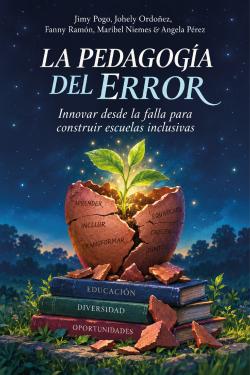
La pedagogía del error: Innovar desde la falla para construir escuelas inclusivas propone una lectura pedagógica de la equivocación como fuente de conocimiento, reflexión y transformación educativa. La obra cuestiona prácticas escolares centradas en penalizar respuestas incorrectas y plantea una cultura del aprendizaje donde fallar permite reconocer procesos cognitivos, revisar decisiones y construir nuevas rutas de comprensión. A lo largo de cinco capítulos, el análisis vincula error, metacognición, retroalimentación, evaluación formativa, neurodiversidad e innovación pedagógica desde una perspectiva orientada a la equidad. El profesorado encuentra criterios para interpretar las producciones estudiantiles sin reducirlas a calificaciones o déficits. También se presentan alternativas para diseñar experiencias de aprendizaje que favorezcan la experimentación responsable y la autorregulación. La evaluación adquiere un sentido reconstructivo al valorar trayectorias, progresos y formas diversas de aprender. Desde una mirada institucional, el libro aborda el liderazgo pedagógico, la investigación docente, la inteligencia artificial y los ciclos de prueba y ajuste como vías para renovar la escuela. Su propuesta invita a reconocer la diversidad humana sin convertir la diferencia en carencia. Equivocarse adquiere valor educativo cuando genera preguntas, diálogo y revisión consciente. Aprender del error permite formar comunidades escolares más reflexivas, flexibles, justas y abiertas al cambio pedagógico compartido.
Agarwal, P. K., Nunes, L. D., & Blunt, J. R. (2021). Retrieval practice consistently benefits student learning: A systematic review of applied research in schools and classrooms. Educational Psychology Review, 33, 1409–1453. https://doi.org/10.1007/s10648-021-09595-9
Almeqdad, Q. I., Alodat, A. M., Alquraan, M. F., Mohaidat, M. A., & Al-Makhzoomy, A. K. (2023). The effectiveness of universal design for learning: A systematic review of the literature and meta-analysis. Cogent Education, 10(1), 2218191. https://doi.org/10.1080/2331186X.2023.2218191
Amador Fierros, G., Clouder, L., Karakus, M., Alvarado, I. U., Cinotti, A., Ferreyra, M. V., & Rojo, P. (2022). Neurodiversidad en la educación superior: La experiencia de los estudiantes. Revista de la Educación Superior, 50(200), 129–151. https://doi.org/10.36857/resu.2021.200.1893
Bain, K. (2023). Inclusive assessment in higher education: What does the literature tell us on how to define and design inclusive assessments? Journal of Learning Development in Higher Education, 27, 1–23. https://doi.org/10.47408/jldhe.vi27.1014
Banihashem, S. K., Noroozi, O., van Ginkel, S., Macfadyen, L. P., & Biemans, H. J. A. (2022). A systematic review of the role of learning analytics in enhancing feedback practices in higher education. Educational Research Review, 37, 100489. https://doi.org/10.1016/j.edurev.2022.100489
Bellhäuser, H., Liborius, P., & Schmitz, B. (2022). Fostering self-regulated learning in online environments: Positive effects of a web-based training with peer feedback on learning behavior. Frontiers in Psychology, 13, 813381. https://doi.org/10.3389/fpsyg.2022.813381
Bischoff, C. S., Ejrnæs, A., & Rubin, O. (2021). A quasi-experimental study of ethnic and gender bias in university grading. PLOS ONE, 16(7), e0254422. https://doi.org/10.1371/journal.pone.0254422
Bond, M., Khosravi, H., De Laat, M., Bergdahl, N., Negrea, V., Oxley, E., et al. (2024). A meta systematic review of artificial intelligence in higher education: A call for increased ethics, collaboration, and rigour. International Journal of Educational Technology in Higher Education, 21, 4. https://doi.org/10.1186/s41239-023-00436-z
Burnette, J. L., Billingsley, J., Banks, G. C., Knouse, L. E., Hoyt, C. L., Pollack, J. M., & Simon, S. (2022). A systematic review and meta-analysis of growth mindset interventions: For whom, how, and why might such interventions work? Psychological Bulletin, 149(3–4), 174–205. https://doi.org/10.1037/bul0000368
Corwin, L. A., Ramsey, M. E., Vance, E. A., & Couch, B. A. (2022). Students’ emotions, perceived coping, and outcomes in response to research-based challenges and failures in two sequential CUREs. CBE—Life Sciences Education, 21(2), ar23. https://doi.org/10.1187/cbe.21-05-0131
Creely, E., Henriksen, D., & Henderson, M. (2021). Exploring creative risk-taking and productive failure in classroom practice: A case study of the perceived self-efficacy and agency of teachers at one school. Thinking Skills and Creativity, 42, 100951. https://doi.org/10.1016/j.tsc.2021.100951
de Bruin, A. B. H., Biwer, F., Hui, L., Onan, E., David, L., & Wiradhany, W. (2023). Worth the effort: The Start and Stick to Desirable Difficulties (S2D2) framework. Educational Psychology Review, 35, 41. https://doi.org/10.1007/s10648-023-09766-w
Dian, M., & Triventi, M. (2021). The weight of school grades: Evidence of biased teachers’ evaluations against overweight students in Germany. PLOS ONE, 16(2), e0245972. https://doi.org/10.1371/journal.pone.0245972
Eskreis-Winkler, L., & Fishbach, A. (2022). You think failure is hard? So is learning from it. Perspectives on Psychological Science, 17(6), 1511–1524. https://doi.org/10.1177/17456916211059817
Fang, J., Brown, G. T. L., & Hamilton, R. (2022). Changes in Chinese students' academic emotions after examinations: Pride in success, shame in failure, and self-loathing in comparison. British Journal of Educational Psychology, 93(1), 245–261. https://doi.org/10.1111/bjep.12552
Fleur, D. S., Bredeweg, B., & van den Bos, W. (2021). Metacognition: Ideas and insights from neuro- and educational sciences. npj Science of Learning, 6, 13. https://doi.org/10.1038/s41539-021-00089-5
Fu, Z., Sajad, A., Errington, S. P., Schall, J. D., & Rutishauser, U. (2023). Neurophysiological mechanisms of error monitoring in human and non-human primates. Nature Reviews Neuroscience, 24, 153–172. https://doi.org/10.1038/s41583-022-00670-w
Gambi, C., Pickering, M. J., & Rabagliati, H. (2021). Prediction error boosts retention of novel words in adults but not in children. Cognition, 211, 104650. https://doi.org/10.1016/j.cognition.2021.104650
Henriksen, D., Mishra, P., Creely, E., & Henderson, M. (2021). The role of creative risk taking and productive failure in education and technology futures. TechTrends, 65(4), 602–605. https://doi.org/10.1007/s11528-021-00622-8
Huijboom, F., Van Meeuwen, P., Rusman, E., & Vermeulen, M. (2021). Professional learning communities (PLCs) as learning environments for teachers: An in-depth examination of the development of seven PLCs and influencing factors. Learning, Culture and Social Interaction, 31, 100566. https://doi.org/10.1016/j.lcsi.2021.100566
Hänze, M., & Leiss, D. (2022). Using heuristic worked examples to promote solving of reality-based tasks in mathematics in lower secondary school. Instructional Science, 50, 529–549. https://doi.org/10.1007/s11251-022-09583-8
Kapur, M., & Bielaczyc, K. (2021). Robust effects of the efficacy of explicit failure-driven scaffolding in problem-solving prior to instruction: A replication and extension. Learning and Instruction, 75, 101488. https://doi.org/10.1016/j.learninstruc.2021.101488
Karaman, P. (2021). The effect of formative assessment practices on student learning: A meta-analysis study. International Journal of Assessment Tools in Education, 8(4), 801–817. https://doi.org/10.21449/ijate.870300
Kemp, K. (2021). Test corrections appear to benefit lower-achieving students in an introduction to biology major course: Results of a single-site, one-semester study. Journal of Microbiology & Biology Education, 22(2), e00122-21. https://doi.org/10.1128/jmbe.00122-21
King-Sears, M. E., Stefanidis, A., Evmenova, A. S., Rao, K., Mergen, R. L., Sanborn Owen, L., & Strimel, M. M. (2023). Achievement of learners receiving UDL instruction: A meta-analysis. Teaching and Teacher Education, 122, 103956. https://doi.org/10.1016/j.tate.2022.103956
Krieglstein, F., Beege, M., Rey, G. D., Ginns, P., & Schneider, S. (2021). Learning programming from erroneous worked-examples: Which type of error is beneficial for learning? Learning and Instruction, 75, 101497. https://doi.org/10.1016/j.learninstruc.2021.101497
Kritikou, M., & Giovazolias, T. (2022). Emotion regulation, academic buoyancy, and academic adjustment of university students within a self-determination theory framework: A systematic review. Frontiers in Psychology, 13, 1057697. https://doi.org/10.3389/fpsyg.2022.1057697
Kyne, S. H., Lee, M. M. H., & Reyes, C. T. (2023). Enhancing academic performance and student success through learning analytics-based personalised feedback emails in first-year chemistry. Chemistry Education Research and Practice, 24, 971–983. https://doi.org/10.1039/D3RP00032J
Lipnevich, A. A., Panadero, E., Gjicali, K., & Fraile, J. (2022). What’s in a rubric? Effects of instructional rubrics on learning outcomes: A meta-analysis. Educational Research Review, 36, 100428. https://doi.org/10.1016/j.edurev.2022.100428
Little, W. B., Hervé-Claude, L. P., French, H., Bradtke, J., & Artemiou, E. (2023). Veterinary students' sense of belonging: Growing community with small group academic enhancement. Medical Science Educator, 33(5), 1165–1174. https://doi.org/10.1007/s40670-023-01857-1
Liu, S., Wang, Y., & Yin, H. (2024). A meta-analysis of the correlation between professional learning communities and teachers’ efficacy beliefs. Educational Research Review, 45, 100660. https://doi.org/10.1016/j.edurev.2024.100660
Lu, S., Cheng, L., & Chahine, S. (2022). Chinese university students’ conceptions of feedback and the relationships with self-regulated learning, self-efficacy, and English language achievement. Frontiers in Psychology, 13, 1047323. https://doi.org/10.3389/fpsyg.2022.1047323
Macnamara, B. N., & Burgoyne, A. P. (2023). Do growth mindset interventions impact students’ academic achievement? A systematic review and meta-analysis with recommendations for best practices. Psychological Bulletin, 149(3–4), 133–173. https://doi.org/10.1037/bul0000352
Meritet, D., Townsend, K. L., Gorman, E., Chappell, P., Kelly, L., & Russell, D. S. (2021). Investigating the effects of error management training versus error avoidance training on the performance of veterinary students learning to tie surgical knots. Journal of Veterinary Medical Education, 48(2), 228–238. https://doi.org/10.3138/jvme.2019-0012
Middleton, E. L., Schwartz, M. F., Dell, G. S., & Brecher, A. (2022). Learning from errors: Exploration of the monitoring learning effect. Cognition, 224, 105057. https://doi.org/10.1016/j.cognition.2022.105057
Morris, R., Perry, T., & Wardle, L. (2021). Formative assessment and feedback for learning in higher education: A systematic review. Review of Education, 9(3), e3292. https://doi.org/10.1002/rev3.3292
Muncer, G., Higham, P. A., Gosling, C. J., Cortese, S., Wood-Downie, H., & Hadwin, J. A. (2022). A meta-analysis investigating the association between metacognition and math performance in adolescence. Educational Psychology Review, 34, 301–334. https://doi.org/10.1007/s10648-021-09620-x
Nelson, A., & Eliasz, K. L. (2023). Desirable difficulty: Theory and application of intentionally challenging learning. Medical Education, 57(2), 123–130. https://doi.org/10.1111/medu.14916
Nieminen, J. H., Moriña, A., & Biagiotti, G. (2024). Assessment as a matter of inclusion: A meta-ethnographic review of the assessment experiences of students with disabilities in higher education. Educational Research Review, 42, 100582. https://doi.org/10.1016/j.edurev.2023.100582
Palominos, E., Levett-Jones, T., Power, T., Alcorn, N., & Martinez-Maldonado, R. (2021). Measuring the impact of productive failure on nursing students' learning in healthcare simulation: A quasi-experimental study. Nurse Education Today, 101, 104871. https://doi.org/10.1016/j.nedt.2021.104871
Puusepp, I., Linnavalli, T., Huuskonen, M., Kukkonen, K., Huotilainen, M., Kujala, T., Laine, S., Kuusisto, E., & Tirri, K. (2021). Mindsets and neural mechanisms of automatic reactions to negative feedback in mathematics in elementary school students. Frontiers in Psychology, 12, 635972. https://doi.org/10.3389/fpsyg.2021.635972
Rezai, A. (2022). Fairness in classroom assessment: Development and validation of a questionnaire. Language Testing in Asia, 12, 17. https://doi.org/10.1186/s40468-022-00162-9
Rezai, A., Namaziandost, E., Miri, M., & Kumar, T. (2022). Demographic biases and assessment fairness in classroom: Insights from Iranian university teachers. Language Testing in Asia, 12, 8. https://doi.org/10.1186/s40468-022-00157-6
Sethares, K. A., & Asselin, M. E. (2022). Use of exam wrapper metacognitive strategy to promote student self-assessment of learning: An integrative review. Nurse Educator, 47(1), 37–41. https://doi.org/10.1097/NNE.0000000000001026
Sinclair, A. H., Manalili, G. M., Brunec, I. K., Adcock, R. A., & Barense, M. D. (2021). Prediction errors disrupt hippocampal representations and update episodic memories. Proceedings of the National Academy of Sciences, 118(51), e2117625118. https://doi.org/10.1073/pnas.2117625118
Soncini, A., Matteucci, M. C., & Butera, F. (2021). Error handling in the classroom: An experimental study of teachers’ strategies to foster positive error climate. European Journal of Psychology of Education, 36, 719–738. https://doi.org/10.1007/s10212-020-00494-1
Soncini, A., Matteucci, M. C., & Butera, F. (2022). Positive error climate promotes learning outcomes through students’ adaptive reactions towards errors. Learning and Instruction, 80, 101627. https://doi.org/10.1016/j.learninstruc.2022.101627
Spooner, M., Duane, C., Uygur, J., Smyth, E., Marron, B., Murphy, P. J., & Pawlikowska, T. (2022). Self-regulatory learning theory as a lens on how undergraduate and postgraduate learners respond to feedback: A BEME scoping review. Medical Teacher, 44(1), 3–18. https://doi.org/10.1080/0142159X.2021.1970732
Stanton, J. D., Sebesta, A. J., & Dunlosky, J. (2021). Fostering metacognition to support student learning and performance. CBE—Life Sciences Education, 20(2), fe3. https://doi.org/10.1187/cbe.20-12-0289
Stebick, D., Hart, J., Glick, L., Kindervatter, J., Nagel, J., & Patrick, C. (2023). Teacher inquiry: A catalyst for professional development. Networks: An Online Journal for Teacher Research, 24(1). https://doi.org/10.4148/2470-6353.1350
Strzelecki, A., & ElArabawy, S. (2024). Investigation of the moderation effect of gender and study level on the acceptance and use of generative AI by higher education students: Comparative evidence from Poland and Egypt. British Journal of Educational Technology, 55(3), 1209–1230. https://doi.org/10.1111/bjet.13425
Tai, J., Mahoney, P., Ajjawi, R., & Bearman, M. (2023). How are examinations inclusive for students with disabilities in higher education? A sociomaterial analysis. Assessment & Evaluation in Higher Education, 48(3), 390–403. https://doi.org/10.1080/02602938.2022.2077910
Tao, W., Zhao, D., Yue, H., & Horton, I. (2022). The influence of growth mindset on the mental health and life events of college students. Frontiers in Psychology, 13, 821206. https://doi.org/10.3389/fpsyg.2022.821206
Utamachant, P., Anutariya, C., & Pongnumkul, S. (2023). i-Ntervene: Applying an evidence-based learning analytics intervention to support computer programming instruction. Smart Learning Environments, 10, 37. https://doi.org/10.1186/s40561-023-00257-7
Van Orman, D. S. J., Wong, R. M., Carbonneau, K. J., & Adesope, O. O. (2022). Effects of concept maps and worked examples in learning skills in mathematics. School Science and Mathematics, 122(4), 183–194. https://doi.org/10.1111/ssm.12524
Walton, G. M., Murphy, M. C., Logel, C., Yeager, D. S., Goyer, J. P., Brady, S. T., et al. (2023). Where and with whom does a brief social-belonging intervention promote progress in college? Science, 380(6644), 499–505. https://doi.org/10.1126/science.ade4420
Wang, Y., et al. (2022). Learning from errors? The impact of erroneous example elaboration on learning outcomes of medical statistics in Chinese medical students. BMC Medical Education, 22, 469. https://doi.org/10.1186/s12909-022-03460-1
Wesenberg, L., Krieglstein, F., Jansen, S., Rey, G. D., Beege, M., & Schneider, S. (2022). The influence of the order and congruency of correct and erroneous worked examples on learning and (meta-)cognitive load. Frontiers in Psychology, 13, 1032003. https://doi.org/10.3389/fpsyg.2022.1032003
Wu, R., & Yu, Z. (2024). Do AI chatbots improve students learning outcomes? Evidence from a meta-analysis. British Journal of Educational Technology, 55, 10–33. https://doi.org/10.1111/bjet.13334
Zhang, Q., & Fiorella, L. (2023). An integrated model of learning from errors. Educational Psychologist, 58(1), 18–34. https://doi.org/10.1080/00461520.2022.2149525
Zheng, J., Lajoie, S., & Li, S. (2023). Emotions in self-regulated learning: A critical literature review and meta-analysis. Frontiers in Psychology, 14, 1137010. https://doi.org/10.3389/fpsyg.2023.1137010
Ziegler, E., Trninic, D., & Kapur, M. (2021). Micro productive failure and the acquisition of algebraic procedural knowledge. Instructional Science, 49, 313–336. https://doi.org/10.1007/s11251-021-09544-7
Vol. 3 Núm. 3 (2026)
Vol. 3 Núm. 2 (2026)








 10 de agosto 232 entre Almendros y Mangos, Cdla. Alborada sector 2, Machala, Ecuador
 editorialsaga.ec@gmail.com
 +593962679148