Vol. 3 Núm. 3 (2026) 
Vol. 3 Núm. 2 (2026) 

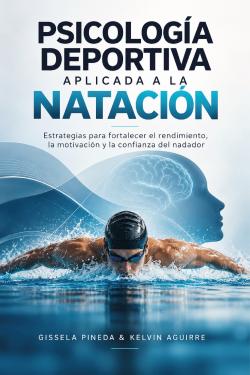
El libro Psicología deportiva aplicada a la natación: estrategias para fortalecer el rendimiento, la motivación y la confianza del nadador examina los procesos psicológicos que intervienen en la preparación deportiva y su relación con el desempeño en el medio acuático. Desde una perspectiva científica y aplicada, la obra analiza la influencia de la atención y la autorregulación emocional sobre la ejecución técnica y la adaptación a las exigencias del entrenamiento. Se estudian los mecanismos motivacionales que favorecen la permanencia deportiva y el compromiso con objetivos progresivos. La autoconfianza ocupa un lugar central mediante el análisis de la autoeficacia y las estrategias cognitivas que permiten afrontar la presión competitiva. Asimismo, se abordan procedimientos de entrenamiento mental vinculados con la visualización motora y la regulación psicofisiológica para mejorar la preparación del nadador. La obra también examina la intervención psicológica individualizada y la comunicación entre entrenadores y deportistas como componentes del desarrollo integral. Su orientación académica articula conocimientos de la psicología deportiva con aplicaciones prácticas susceptibles de evaluación sistemática. A través de cinco capítulos, proporciona criterios para comprender las diferencias individuales y diseñar intervenciones orientadas al bienestar psicológico y al rendimiento deportivo sostenible en distintas etapas de formación y competición.
Alawamleh, T., Alkasasbeh, W. J., Orhan, B. E., Alfaouri, H., & Hasan, S. O. (2026). Impact of assistive tool-based training on anxiety, mental focus, and self-confidence among university swimming students. https://pubmed.ncbi.nlm.nih.gov/42245082/
Aouani, H., Amara, S., Sahli, F., Barbosa, T. M., Souissi, N., & van den Tillaar, R. (2024). Effect of intensity training block on anxiety state and performance in competitive swimmers. https://pmc.ncbi.nlm.nih.gov/articles/PMC11246617/
Belalcazar, C., Callary, B., & Young, B. W. (2026). Sense of community narratives in Colombian masters swimming. https://pmc.ncbi.nlm.nih.gov/articles/PMC13354301/
Brat, V., Bota, A., & Teodorescu, S. (2025). The motivational level of performance swimmers and its impact on the risk of sports dropout. Sports. https://pmc.ncbi.nlm.nih.gov/articles/PMC12031003/
Chen, B., Li, H., & Zhang, R. (2025a). Effects of mental fatigue on perception of effort and performance in national level swimmers. https://pmc.ncbi.nlm.nih.gov/articles/PMC12014620/
Chen, B., Li, H., & Zhang, R. (2025b). The mechanism of peer support on the mental toughness of adolescent swimmers: The mediating role of self-efficacy. https://pmc.ncbi.nlm.nih.gov/articles/PMC12598006/
Chortane, O. G., Amara, S., Barbosa, T. M., Hammami, R., Khalifa, R., Chortane, S. G., & van den Tillaar, R. (2022). Effect of high-volume training on psychological state and performance in competitive swimmers. https://pmc.ncbi.nlm.nih.gov/articles/PMC9266180/
Clemente-Suárez, V. J., Fuentes-García, J. P., Fernandes, R. J., & Vilas-Boas, J. P. (2021). Psychological and physiological features associated with swimming performance. International Journal of Environmental Research and Public Health, 18(9), Article 4561. https://doi.org/10.3390/ijerph18094561
Dhaouadi, Y., Khalifa, R., & Muscella, A. (2025). The impact of psyching-up and cognitive challenges on cognitive performance and well-being in adolescent swimmers: A randomized controlled trial. Children. https://doi.org/10.3390/children12121591
Ferchichi, N., Amara, S., Aouani, H., Bouassida, A., & van den Tillaar, R. (2026). Effects of personalized time-trial goal setting on swimming performance and psychological profiles in competitive swimmers. Frontiers in Sports and Active Living. https://pmc.ncbi.nlm.nih.gov/articles/PMC13013445/
Galanis, E., Mylonopoulos, A., Comoutos, N., Theodorakis, Y., & Hatzigeorgiadis, A. (2022). From training to competition: The effects of a strategic self-talk intervention on pre-competition anxiety and self-confidence in young swimmers. Inquiries in Physical Education and Sport. https://doi.org/10.26253/heal.uth.ojs.ispe.2022.1670
Gkintoni, E., Sortwell, A., & Vantarakis, A. (2026). Neural efficiency and sensorimotor adaptations in swimming athletes: A systematic review of neuroimaging and cognitive–behavioral evidence for performance and wellbeing. Brain Sciences. https://doi.org/10.3390/brainsci16010116
Gozlukaya Girginer, F., Kaya Besler, H., Seyhan, S., Soylu, C., Jourkesh, M., & Acar, G. (2026). Imagery and breathing exercises improve swimming performance, mental toughness, and coherence. https://pubmed.ncbi.nlm.nih.gov/41807478/
Khacharem, A. (2026). Talk yourself back on track: Motivational self-talk reverses ego depletion in endurance swimming. Journal of Science and Medicine in Sport. https://doi.org/10.1016/j.jsams.2026.06.016
Lin, H.-H., Lin, T.-Y., Ling, Y., & Lo, C.-C. (2021). Influence of imagery training on adjusting the pressure of fin swimmers, improving sports performance and stabilizing psychological quality. International Journal of Environmental Research and Public Health, 18(22), Article 11767. https://doi.org/10.3390/ijerph182211767
López-Hernández, A., Simón-Piqueras, J. Á., & González Ravé, J. M. (2026). Self-confidence and perceived fatigue as predictors of performance satisfaction in trained swimmers. https://pmc.ncbi.nlm.nih.gov/articles/PMC13153061/
López-Hernández, A., Simón-Piqueras, J. Á., Zamorano-García, D., Pyne, D. B., & González Ravé, J. M. (2025). Impact of psychosocial intervention on performance determinants in competitive swimmers: Roles of coach, family, environment, and athlete characteristics. Sports, 13(9), Article 314. https://doi.org/10.3390/sports13090314
Merlin, Q., Vacher, P., Mourot, L., Levillain, G., Martinent, G., & Nicolas, M. (2024). Psychophysiological effects of slow-paced breathing on adolescent swimmers’ subjective performance, recovery states, and control perception. Journal of Functional Morphology and Kinesiology, 9(1), Article 23. https://doi.org/10.3390/jfmk9010023
Mirmoezzi, M., Sayyah, M., Taheri, M., Irandoust, K., Sangari, M., Mirakhori, F., Seghatoleslami, A., Hill, L., Weiss, K., Knechtle, B., & Ghram, A. (2023). Effect of self-modeling and self-controlled feedback on the performance of professional swimmers and waterpolo players. Sports Medicine and Health Science. https://doi.org/10.1016/j.smhs.2023.08.001
Moulds, K., Abbott, S., & Cobley, S. (2026). The effect of a coach motivational micro-climate intervention in swimming: A mixed-method evaluation. Frontiers in Psychology. https://doi.org/10.3389/fpsyg.2026.1771962
Moulds, K., Fraser, K. K., Karp, J., Kapocius, O., Heathcote, M., Appleton, P. R., & Cobley, S. (2023). Coach-created motivational climate ratings differentiate between dropout and continuation in Australian youth swimming. International Journal of Sports Science & Coaching. https://doi.org/10.1177/17479541231174806
Murdoch, E. M. (2024). Stepping back or stepping in: A qualitative investigation of self-distanced versus self-immersed stressor reflections with competitive swimmers. Stress and Health. https://doi.org/10.1002/smi.3434
Perrone, S., Rinaldi, L., Gatti, D., & Girelli, L. (2023). Temporal perception in closed-skill sports: An experimental study on expert swimmers and runners. Psychology of Sport and Exercise. https://doi.org/10.1016/j.psychsport.2023.102500
Sifi, M. A., Marzouki, H., Selmi, O., Sdira, B., Cherni, B., Hagan, J. E., Alexe, D. I., Băltean, A. I., Geantă, V. A., Douzi, W., & Bouassida, A. (2026). A three-week mindfulness intervention on mental skills, internal-load regulation, and performance in youth swimmers: A randomized controlled trial. Scientific Reports. https://doi.org/10.1038/s41598-026-48457-8
Su, N., Zhang, B., Zhou, X., Hu, J., Liang, W., & Wang, D. (2026). Effects of mindfulness–acceptance–insight–commitment (MAIC) training on stress and sleep quality in elite swimmers: A randomized controlled mixed-methods trial. Behavioral Sciences, 16(7), Article 1068. https://doi.org/10.3390/bs16071068
Surała, O., Malczewska-Lenczowska, J., Turowski, D., Słomiński, P., Certa, M., & Crewther, B. T. (2024). Effects of a 12-week training programme on selected hormonal and psychological parameters and their interrelationships in highly-trained male and female swimmers. https://pmc.ncbi.nlm.nih.gov/articles/PMC11963123/
Trinidad, A. (2023). Variables and instruments for assessing mental health in competitive swimmers: A narrative review. https://pmc.ncbi.nlm.nih.gov/articles/PMC11116940/
Vacher, P., Merlin, Q., Levillain, G., Mourot, L., Martinent, G., & Nicolas, M. (2023). Asynchronous heart rate variability biofeedback protocol effects on adolescent athletes’ cognitive appraisals and recovery-stress states. https://pmc.ncbi.nlm.nih.gov/articles/PMC11340662/
Wang, Z., Wang, J., Ma, J., Chen, T., Yang, H., & Liu, J. (2025). Psychological mechanism of character strengths and psychological stress affecting the athletic performance in swimmers. Scientific Reports. https://doi.org/10.1038/s41598-025-11936-5
Yan, Z., Guo, Y., & Wang, L. (2026). The relationship between diet, sleep, screen time, stress coping strategies with psychological strain and athlete burnout in Chinese competitive swimmers: A cross-sectional study. BMC Sports Science, Medicine and Rehabilitation. https://doi.org/10.1186/s13102-026-01695-9
Zhou, Y., Jin, Z., & Wen, Y. (2024). The influence of competitive anxiety of Chinese elite swimmers. Frontiers in Psychology. https://doi.org/10.3389/fpsyg.2024.1392137
Vol. 3 Núm. 3 (2026)
Vol. 3 Núm. 2 (2026)






 10 de agosto 232 entre Almendros y Mangos, Cdla. Alborada sector 2, Machala, Ecuador
 editorialsaga.ec@gmail.com
 +593962679148
