Vol. 3 Núm. 3 (2026) 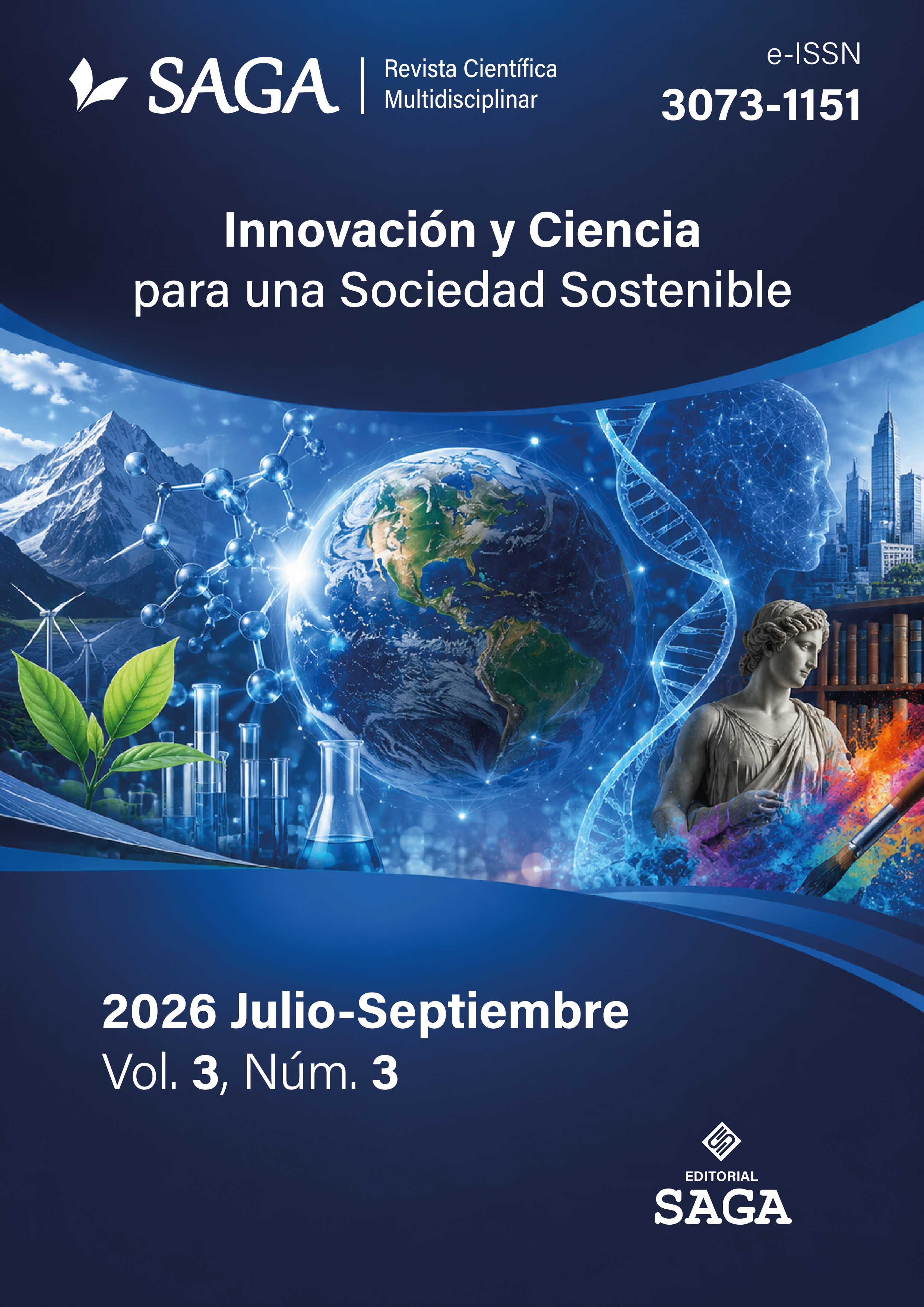
Vol. 3 Núm. 2 (2026) 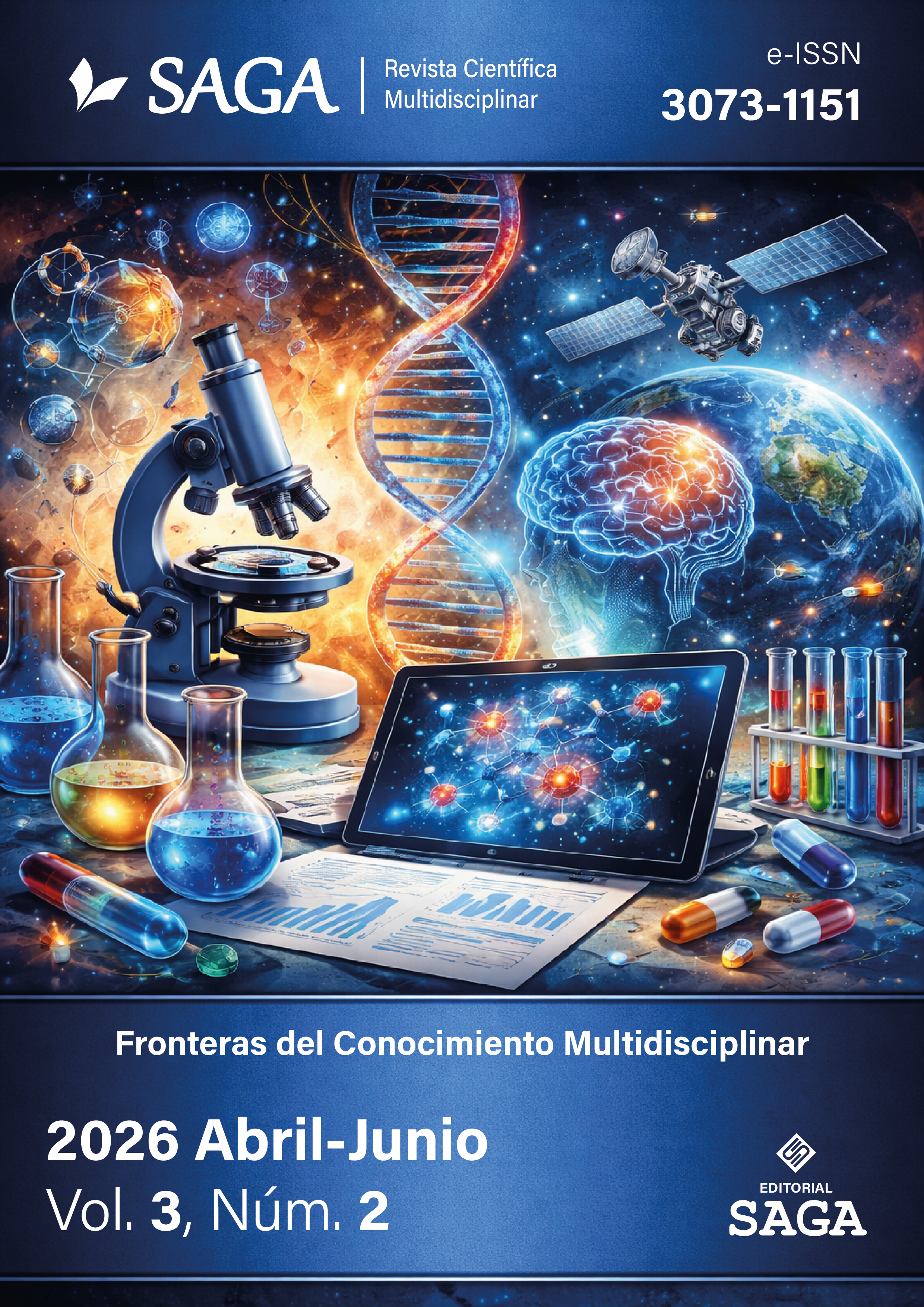

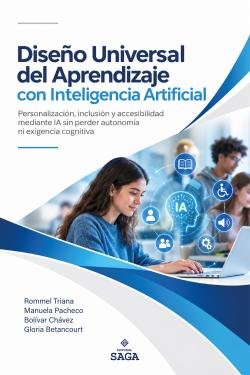
El libro Diseño Universal del Aprendizaje con Inteligencia Artificial: Personalización, inclusión y accesibilidad mediante IA sin perder autonomía ni exigencia cognitiva examina las relaciones entre diversidad humana y tecnologías inteligentes desde una perspectiva pedagógica orientada a la equidad educativa. Su planteamiento articula los principios del Diseño Universal para el Aprendizaje con las capacidades de la inteligencia artificial para configurar experiencias formativas accesibles que reconozcan la variabilidad cognitiva sin debilitar el rigor académico. La obra analiza la personalización algorítmica y la accesibilidad multimodal como procesos que requieren decisiones didácticas sustentadas en evidencias. También estudia las implicaciones de la mediación tecnológica sobre la autorregulación y la construcción autónoma del conocimiento. Particular atención recibe la preservación del esfuerzo intelectual frente a sistemas generativos capaces de intervenir en tareas complejas. Desde una perspectiva crítica se examinan los sesgos algorítmicos y las condiciones éticas necesarias para garantizar una participación educativa equitativa. El texto propone criterios para diseñar intervenciones pedagógicas que integren apoyos adaptativos con evaluación auténtica y supervisión docente. Su contribución reside en una arquitectura conceptual y metodológica destinada a orientar prácticas educativas inclusivas mediante inteligencia artificial sin desplazar la responsabilidad humana ni reducir las demandas cognitivas del aprendizaje.
Almeqdad, Q. I., Alodat, A. M., Alquraan, M. F., Mohaidat, M. A., & Al-Makhzoomy, A. K. (2023). The effectiveness of universal design for learning: A systematic review of the literature and meta-analysis. Cogent Education, 10(1), Article 2218191. https://doi.org/10.1080/2331186X.2023.2218191
Ateeq, A., Alzoraiki, M., Milhem, M., & Ateeq, R. A. (2024). Artificial intelligence in education: Implications for academic integrity and the shift toward holistic assessment. Frontiers in Education, 9, Article 1470979. https://doi.org/10.3389/feduc.2024.1470979
Barcaui, A. (2025). ChatGPT as a cognitive crutch: Evidence from a randomized controlled trial on knowledge retention. Social Sciences & Humanities Open, 12, Article 102287. https://doi.org/10.1016/j.ssaho.2025.102287
Borup, J., Graham, C. R., Archambault, L., Woo, L., Barbour, M. K., Shin, J. K., & Evmenova, A. S. (2026). Online learner engagement and academic support in the age of generative AI. Computers & Education, Article 105763. https://doi.org/10.1016/j.compedu.2026.105763
Durgungoz, F. C., & Durgungoz, A. (2026). “Interactive lessons are great, but too much is too much”: Hearing out neurodivergent students, Universal Design for Learning and the case for integrating more anonymous technology in higher education. Higher Education, 92, 691–710. https://doi.org/10.1007/s10734-024-01389-6
Fischer, I., Sweeney, S., Lucas, M., & Gupta, N. (2024). Making sense of generative AI for assessments: Contrasting student claims and assessor evaluations. The International Journal of Management Education, 22(3), Article 101081. https://doi.org/10.1016/j.ijme.2024.101081
Fitas, R. (2025). Inclusive education with AI: Supporting special needs and tackling language barriers. AI and Ethics, 5, 5729–5757. https://doi.org/10.1007/s43681-025-00824-3
Gutierrez, R., Mera-Navarrete, A., Villegas, A. C., Guevara, V., & Villegas-Ch, W. (2026). Privacy-aware learning analytics for exploratory behavior through federated and explainable AI. Frontiers in Artificial Intelligence, 9, Article 1898699. https://doi.org/10.3389/frai.2026.1898699
Han, Z., Ying, R., Huang, C., Tsai, C.-C., Wang, X., & He, T. (2025). Identifying students’ metacognition patterns by their needs for cognitive closure in human-GenAI collaboration. Computers & Education, 239, Article 105422. https://doi.org/10.1016/j.compedu.2025.105422
Hariyanto, Kristianingsih, F. X. D., & Maharani, R. (2025). Artificial intelligence in adaptive education: A systematic review of techniques for personalized learning. Discover Education, 4, Article 458. https://doi.org/10.1007/s44217-025-00908-6
Jiang, Y., & Chen, H. (2026). AI-based cognitive offloading by students in higher education in China. Computers in Human Behavior: Artificial Humans, 8, Article 100327. https://doi.org/10.1016/j.chbah.2026.100327
Jin, F., Lin, C.-H., & Lai, C. (2025). Modeling AI-assisted writing: How self-regulated learning influences writing outcomes. Computers in Human Behavior, Article 108538. https://doi.org/10.1016/j.chb.2024.108538
Jin, Y. (2025). Bridging the knowledge-skill gap: The role of large language model and critical thinking in education. Computers & Education, 235, Article 105357. https://doi.org/10.1016/j.compedu.2025.105357
Jones, K. M. L., Asher, A., Goben, A., et al. (2020). “We’re being tracked at all times”: Student perspectives of their privacy in relation to learning analytics in higher education. Journal of the Association for Information Science and Technology, 71(9), 1044–1059. https://doi.org/10.1002/asi.24358
Lee, D., & Palmer, E. (2025). Prompt engineering in higher education: A systematic review to help inform curricula. International Journal of Educational Technology in Higher Education, 22, Article 7. https://doi.org/10.1186/s41239-025-00503-7
Li, W., Sun, K., Schaub, F., & Brooks, C. (2022). Disparities in students’ propensity to consent to learning analytics. International Journal of Artificial Intelligence in Education, 32(3), 564–608. https://doi.org/10.1007/s40593-021-00254-2
Liu, M., Zhang, L. J., & Zhang, D. (2025). Enhancing student GAI literacy in digital multimodal composing through development and validation of a scale. Computers in Human Behavior, 166, Article 108569. https://doi.org/10.1016/j.chb.2025.108569
Lluch Molins, L., & Lindín Soriano, C. (2026). The self-regulatory paradox of learning analytics: Student expectations and the conditions for fair algorithmic assessment in higher education. Frontiers in Education, 11, Article 1913278. https://doi.org/10.3389/feduc.2026.1913278
Luo, X., Wang, S., & Hew, K. F. (2026). Development and implementation of a generative AI-based personalized recommender system to improve students’ self-regulated learning and academic performance. Computers & Education, 241, Article 105486. https://doi.org/10.1016/j.compedu.2025.105486
Nikolic, S., Sandison, C., Haque, R., & Neal, P. (2024). ChatGPT, Copilot, Gemini, SciSpace and Wolfram versus higher education assessments: An updated multi-institutional study of the academic integrity impacts of generative artificial intelligence (GenAI) on assessment, teaching and learning in engineering. Australasian Journal of Engineering Education, 29(2), 126–153. https://doi.org/10.1080/22054952.2024.2372154
Pelánek, R. (2025). Adaptive learning is hard: Challenges, nuances, and trade-offs in modeling. International Journal of Artificial Intelligence in Education, 35, 304–329. https://doi.org/10.1007/s40593-024-00400-6
Qian, K., Liu, S., Li, T., Raković, M., Li, X., Guan, R., Molenaar, I., Nawaz, S., Swiecki, Z., Yan, L., & Gašević, D. (2026). Towards reliable generative AI-driven scaffolding: Reducing hallucinations and enhancing quality in self-regulated learning support. Computers & Education, 240, Article 105448. https://doi.org/10.1016/j.compedu.2025.105448
Sandoval Perdomo, K., & Juárez Hernández, L. G. (2026). Designing an instrument to evaluate critical thinking in generative AI-mediated higher education. RELIEVE, 32(1). https://doi.org/10.30827/relieve.v32i1.36950
Tian, J., & Zhang, R. (2025). Learners’ AI dependence and critical thinking: The psychological mechanism of fatigue and the social buffering role of AI literacy. Acta Psychologica, 260, Article 105725. https://doi.org/10.1016/j.actpsy.2025.105725
Vendrell, M., & Johnston, S.-K. (2026). Scaffolding critical thinking with generative AI: Design principles for integrating large language models in higher education. Computers and Education: Artificial Intelligence, 10, Article 100572. https://doi.org/10.1016/j.caeai.2026.100572
Vetter, M. A., Lucia, B., Jiang, J., & Othman, M. (2024). Towards a framework for local interrogation of AI ethics: A case study on text generators, academic integrity, and composing with ChatGPT. Computers and Composition, 71, Article 102831. https://doi.org/10.1016/j.compcom.2024.102831
Wu, H., Yang, H., Chang, F., Zhu, D., & Liu, Z. (2025). AI-generated tactile graphics for visually impaired children: A usability study of a multimodal educational product. International Journal of Human-Computer Studies, 200, Article 103525. https://doi.org/10.1016/j.ijhcs.2025.103525
Xia, Q., Liu, Q., Tlili, A., & Chiu, T. K. F. (2026). A systematic literature review on designing self-regulated learning using generative artificial intelligence and its future research directions. Computers & Education, 240, Article 105465. https://doi.org/10.1016/j.compedu.2025.105465
Zawacki-Richter, O., Marín, V. I., Bond, M., & Gouverneur, F. (2019). Systematic review of research on artificial intelligence applications in higher education – Where are the educators? International Journal of Educational Technology in Higher Education, 16, Article 39. https://doi.org/10.1186/s41239-019-0171-0
Zhao, X., Cox, A., & Chen, X. (2025). The use of generative AI by students with disabilities in higher education. The Internet and Higher Education, 66, Article 101014. https://doi.org/10.1016/j.iheduc.2025.101014
Vol. 3 Núm. 3 (2026)
Vol. 3 Núm. 2 (2026)










 10 de agosto 232 entre Almendros y Mangos, Cdla. Alborada sector 2, Machala, Ecuador
 editorialsaga.ec@gmail.com
 +593962679148
