Vol. 3 Núm. 3 (2026) 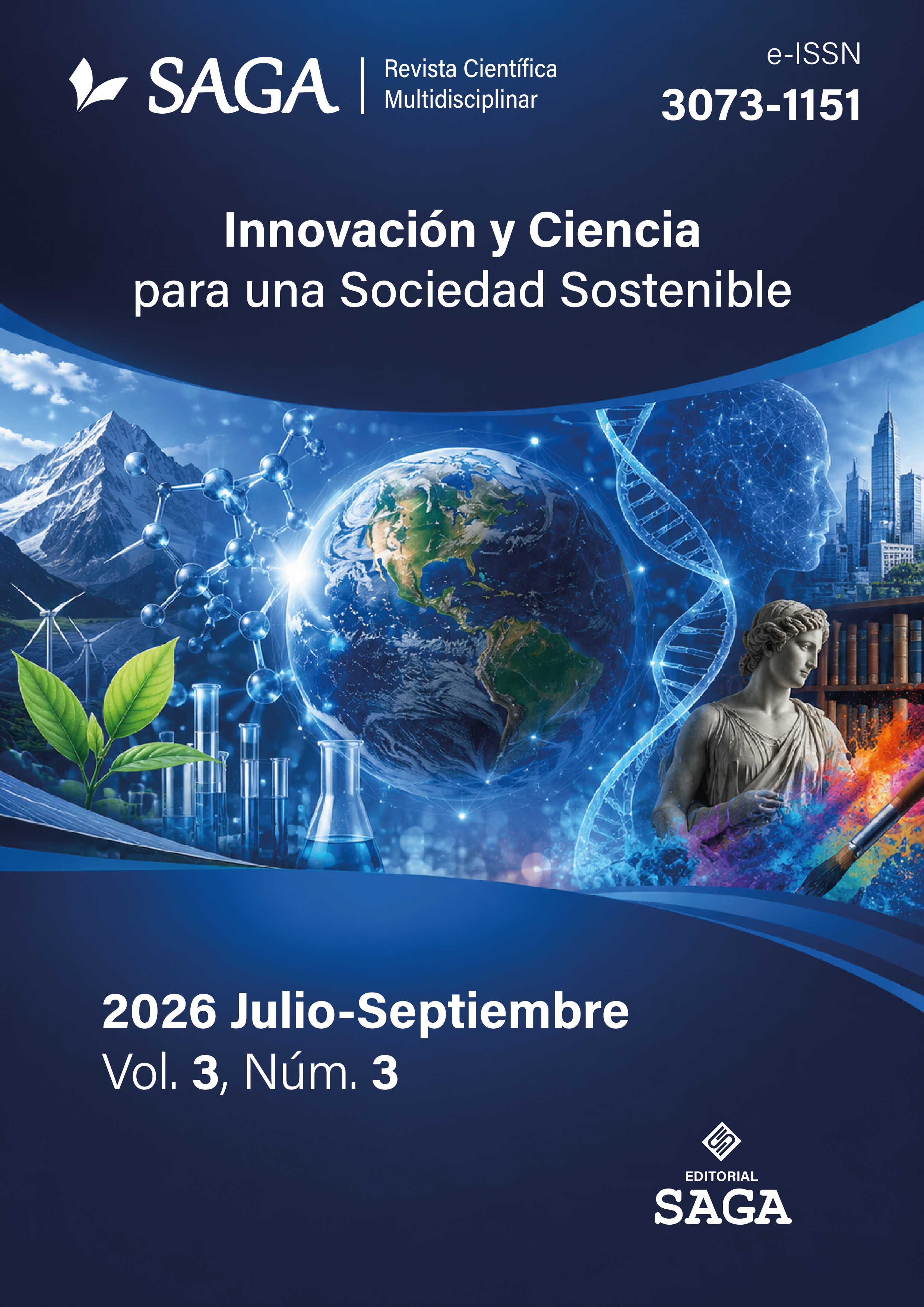
Vol. 3 Núm. 2 (2026) 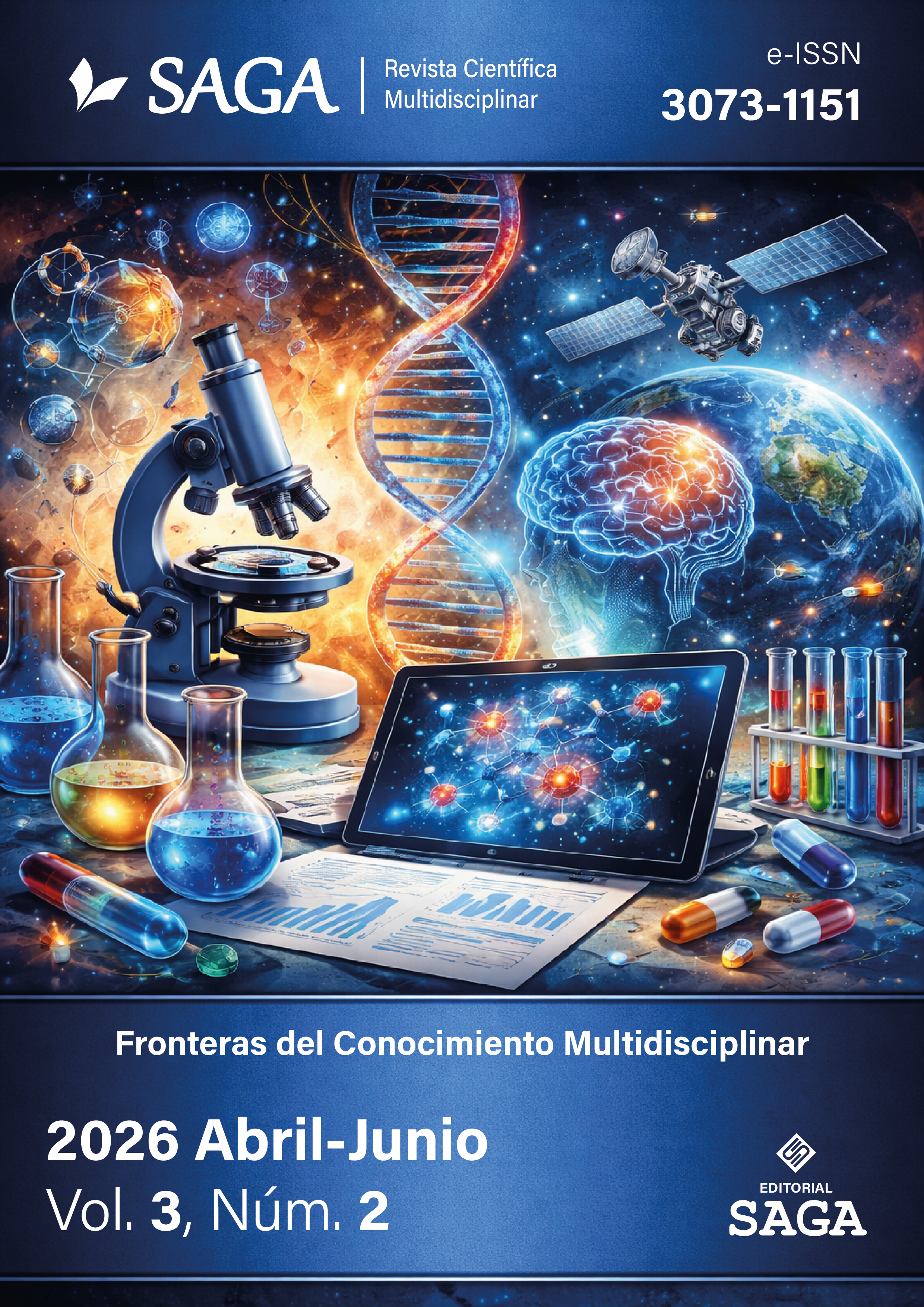

El libro Código de honor: Mentalidad, evolución e identidad docente examina la transformación del ejercicio educativo desde una perspectiva humanista que articula el desarrollo profesional con la responsabilidad ética y el compromiso social. La obra aborda la mentalidad del educador como fundamento de una práctica pedagógica reflexiva orientada al aprendizaje autónomo y al reconocimiento de las capacidades individuales. Analiza la neuroplasticidad y la resiliencia como elementos vinculados con la adaptación a escenarios educativos cambiantes. Asimismo, estudia la incorporación responsable de tecnologías digitales e inteligencia artificial para fortalecer la personalización del aprendizaje sin debilitar las relaciones humanas. La identidad docente ocupa un lugar central mediante el análisis de los valores profesionales y la coherencia pedagógica como principios que orientan las decisiones educativas. Desde una perspectiva inclusiva, plantea la necesidad de atender las desigualdades y promover oportunidades de aprendizaje equitativas. También examina la formación ciudadana mediante el pensamiento crítico y la participación en proyectos sociales vinculados con el desarrollo sostenible. Su planteamiento reconoce al profesorado como agente de transformación educativa cuya influencia trasciende el espacio escolar. En conjunto, propone una reflexión sobre el sentido de enseñar y la construcción de un legado profesional comprometido con la dignidad humana.
Alfredo, R., Echeverria, V., Jin, Y., Yan, L., Swiecki, Z., Gašević, D., & Martinez-Maldonado, R. (2024). Human-centred learning analytics and AI in education: A systematic literature review. Computers and Education: Artificial Intelligence, 6, 100215. https://doi.org/10.1016/j.caeai.2024.100215
Aljemely, Y. (2024). Challenges and best practices in training teachers to utilize artificial intelligence: A systematic review. Frontiers in Education, 9, 1470853. https://doi.org/10.3389/feduc.2024.1470853
Almasri, F. (2024). Exploring the impact of artificial intelligence in teaching and learning of science: A systematic review of empirical research. Research in Science Education, 54, 977–997. https://doi.org/10.1007/s11165-024-10176-3
Børte, K., Lillejord, S., Chan, J., Wasson, B., & Greiff, S. (2023). Prerequisites for teachers’ technology use in formative assessment practices: A systematic review. Educational Research Review, 41, 100568. https://doi.org/10.1016/j.edurev.2023.100568
Calcagni, E., Ahmed, F., Trigo-Clapés, A. L., Kershner, R., & Hennessy, S. (2023). Developing dialogic classroom practices through supporting professional agency: Teachers’ experiences of using the T-SEDA practitioner-led inquiry approach. Teaching and Teacher Education, 126, 104067. https://doi.org/10.1016/j.tate.2023.104067
Chatham-Carpenter, A., & Malone, M. (2023). “Wait, I can’t do that anymore!”: Pandemic teacher immediacy in college communication classes. Frontiers in Education, 8, 1271078. https://doi.org/10.3389/feduc.2023.1271078
Cheah, Y. H., Oliveri, A. R., & Hughes, J. E. (2023). Unpacking K-12 teachers’ technology-supported, equitable practices: A mixed-methods systematic review. Teaching and Teacher Education, 125, 103984. https://doi.org/10.1016/j.tate.2022.103984
Conde, M. Á., & Rodríguez-Sedano, F. J. (2024). Is learning analytics applicable and applied to education of students with intellectual/developmental disabilities? A systematic literature review. Computers in Human Behavior, 155, 108184. https://doi.org/10.1016/j.chb.2024.108184
D’Angelo, S., & Singal, N. (2024). Inclusive education in the Dominican Republic: Teachers’ perceptions of and practices towards students with diverse learning needs. Frontiers in Education, 9, 1387110. https://doi.org/10.3389/feduc.2024.1387110
Farshad, S., & Fortin, C. (2026). An umbrella review of meta-analyses on project-based learning: Effects on academic achievement, higher-order thinking, and 21st-century skills. Educational Research Review, 52, 100809. https://doi.org/10.1016/j.edurev.2026.100809
Fernando, A. R. R., & Tajan, G. P. (2024). Education for sustainable development (ESD) through participatory research (PR): A systematic review. Journal of Cleaner Production, 482, 144237. https://doi.org/10.1016/j.jclepro.2024.144237
Fischer, D., King, J., Rieckmann, M., Barth, M., Büssing, A., Hemmer, I., & Lindau-Bank, D. (2022). Teacher education for sustainable development: A review of an emerging research field. Journal of Teacher Education, 73(5). https://doi.org/10.1177/00224871221105784
Khor, E. T., How, Z. J., Koh, E., Looi, C. K., & Lok, C. (2025). Learning analytics techniques: An overview and future research possibilities. International Journal of Information and Learning Technology, 42(3), 269–295. https://doi.org/10.1108/IJILT-02-2024-0020
Kreijns, K., Yau, J., Weidlich, J., & Weinberger, A. (2023). Towards a comprehensive framework of social presence for online, hybrid, and blended learning. Frontiers in Education, 8, 1286594. https://doi.org/10.3389/feduc.2023.1286594
Kulju, P., Hämäläinen, E. K., Mäkinen, M., Räikkönen, E., & Kiili, C. (2024). Pre-service teachers evaluating online texts about learning styles: There is room for improvement in justifying the credibility. Frontiers in Education, 9, 1451002. https://doi.org/10.3389/feduc.2024.1451002
Laine, S., & Tirri, K. (2023). Literature review on teachers’ mindsets, growth-oriented practices and why they matter. Frontiers in Education, 8, 1275126. https://doi.org/10.3389/feduc.2023.1275126
Lee, D., Arnold, M., Srivastava, A., Plastow, K., Strelan, P., Ploeckl, F., Lekkas, D., & Palmer, E. (2024). The impact of generative AI on higher education learning and teaching: A study of educators’ perspectives. Computers and Education: Artificial Intelligence, 6, 100221. https://doi.org/10.1016/j.caeai.2024.100221
Lee, S. J., & Kwon, K. (2024). A systematic review of AI education in K-12 classrooms from 2018 to 2023: Topics, strategies, and learning outcomes. Computers and Education: Artificial Intelligence, 6, 100211. https://doi.org/10.1016/j.caeai.2024.100211
Liao, W., Li, X., Dong, Q., & Wang, Z. (2023). Non-university-based teacher educators’ professional learning: A systematic review. Teaching and Teacher Education, 136, 104374. https://doi.org/10.1016/j.tate.2023.104374
Liu, X., & Zhong, B. (2024). A systematic review on how educators teach AI in K-12 education. Educational Research Review, 45, 100642. https://doi.org/10.1016/j.edurev.2024.100642
McNeill, L., & Bushaala, S. (2023). Meaningful connection in virtual classrooms: Graduate students’ perspectives on effective instructor presence in blended courses. Frontiers in Education, 8, 1271245. https://doi.org/10.3389/feduc.2023.1271245
Nagel, I., Guðmundsdóttir, G. B., & Afdal, H. W. (2023). Teacher educators’ professional agency in facilitating professional digital competence. Teaching and Teacher Education, 132, 104238. https://doi.org/10.1016/j.tate.2023.104238
Neira, A., Fuentes-Riffo, K., Vine, A., García, F., & Naranjo, G. (2024). Development and validation of a self-perception instrument for critical media literacy in Chilean pre-service teachers. Frontiers in Education, 9, 1476500. https://doi.org/10.3389/feduc.2024.1476500
Orozco Buele, N. de J., Rosero Morales, A. de los Á., Guallpa Caguana, J. M., & Rubin Ramirez, R. O. (2023). Las competencias digitales para el buen desempeño docente en Latinoamérica: Una revisión sistémica. LATAM Revista Latinoamericana de Ciencias Sociales y Humanidades, 4(2), 553–568. https://doi.org/10.56712/latam.v4i2.631
Ouyang, F., & Zhang, L. (2024). AI-driven learning analytics applications and tools in computer-supported collaborative learning: A systematic review. Educational Research Review, 44, 100616. https://doi.org/10.1016/j.edurev.2024.100616
Paolucci, C., Vancini, S., Bex, R. T., II, Cavanaugh, C., Salama, C., & de Araujo, Z. (2024). A review of learning analytics opportunities and challenges for K-12 education. Heliyon, 10, e25767. https://doi.org/10.1016/j.heliyon.2024.e25767
Pegalajar-Palomino, M. del C., Burgos-García, A., & Martínez-Valdivia, E. (2021). What does education for sustainable development offer in initial teacher training? A systematic review. Journal of Teacher Education for Sustainability, 23(1), 99–114. https://doi.org/10.2478/jtes-2021-0008
Rushton, E. A. C., Rawlings Smith, E., Steadman, S., & Towers, E. (2023). Understanding teacher identity in teachers’ professional lives: A systematic review of the literature. Review of Education, 11(2), e3417. https://doi.org/10.1002/rev3.3417
Sacré, M., & Ries, N. (2023). Teachers’ well-being and their teaching quality during the COVID-19 pandemic: A retrospective study. Frontiers in Education, 8, 1136940. https://doi.org/10.3389/feduc.2023.1136940
Scheirlinckx, J. (2023). Social–emotional skills of teachers: Mapping the content space and defining taxonomy requirements. Frontiers in Education, 8, 1094888. https://doi.org/10.3389/feduc.2023.1094888
Selisko, T. J., Eckert, C., & Perels, F. (2024). The who and what of inclusive education—Profiles of student teachers’ attitudes toward inclusive education. Frontiers in Education, 9, 1433739. https://doi.org/10.3389/feduc.2024.1433739
Surahman, E., & Wang, T.-H. (2023). In-service STEM teachers professional development programmes: A systematic literature review 2018–2022. Teaching and Teacher Education, 135, 104326. https://doi.org/10.1016/j.tate.2023.104326
Tan, X., Cheng, G., & Ling, M. H. (2025). Artificial intelligence in teaching and teacher professional development: A systematic review. Computers and Education: Artificial Intelligence, 8, 100355. https://doi.org/10.1016/j.caeai.2024.100355
Ulla, T., & Poom-Valickis, K. (2023). Program support matters: A systematic review on teacher- and school related contextual factors facilitating the implementation of social-emotional learning programs. Frontiers in Education, 7, 965538. https://doi.org/10.3389/feduc.2022.965538
Vargas-Merino, J. A., Rios-Lama, C. A., & Panez-Bendezú, M. H. (2024). Critical implications of education for sustainable development in HEIs—A systematic review through the lens of the business science literature. The International Journal of Management Education, 22(1), 100904. https://doi.org/10.1016/j.ijme.2023.100904
Ventista, O. M., & Brown, C. (2023). Teachers’ professional learning and its impact on students’ learning outcomes: Findings from a systematic review. Social Sciences & Humanities Open, 8(1), 100565. https://doi.org/10.1016/j.ssaho.2023.100565
Wang, S., Wang, F., Zhu, Z., Wang, J., Tran, T., & Du, Z. (2024). Artificial intelligence in education: A systematic literature review. Expert Systems with Applications, 252, 124167. https://doi.org/10.1016/j.eswa.2024.124167
Zhang, H., Ge, S., & Mohd Saad, M. R. B. (2024). Formative assessment in K-12 English as a foreign language education: A systematic review. Heliyon, 10(10), e31367. https://doi.org/10.1016/j.heliyon.2024.e31367
Zhang, K., & He, W. (2024a). Does teachers’ self-reported growth mindset ensure growth mindset-oriented feedback practices in the classroom? Frontiers in Education, 9, 1471518. https://doi.org/10.3389/feduc.2024.1471518
Zhang, K., & He, W. (2024b). The predictive effect of cultural orientation and perceived school climate on the formation of teachers’ growth mindsets. Frontiers in Education, 9, 1428890. https://doi.org/10.3389/feduc.2024.1428890
Zhou, N., Tigelaar, D. E. H., & Admiraal, W. (2022). Vocational teachers’ professional learning: A systematic literature review of the past decade. Teaching and Teacher Education, 119, 103856. https://doi.org/10.1016/j.tate.2022.103856
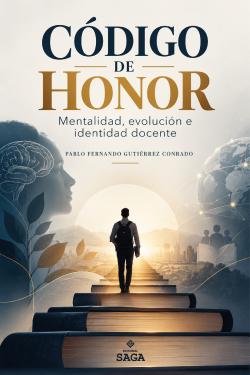
Vol. 3 Núm. 3 (2026)
Vol. 3 Núm. 2 (2026)









 10 de agosto 232 entre Almendros y Mangos, Cdla. Alborada sector 2, Machala, Ecuador
 editorialsaga.ec@gmail.com
 +593962679148
