Vol. 3 Núm. 3 (2026) 
Vol. 3 Núm. 2 (2026) 

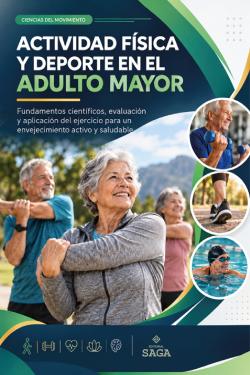
El libro Actividad física y deporte en el adulto mayor: Fundamentos científicos, evaluación funcional y prescripción del ejercicio para un envejecimiento activo aborda los fundamentos científicos y metodológicos que orientan la práctica del ejercicio físico durante el envejecimiento, mediante una perspectiva integral centrada en la salud y la autonomía funcional. La obra examina las transformaciones fisiológicas asociadas con la edad y sus repercusiones sobre los sistemas cardiovascular y respiratorio. También analiza las modificaciones musculoesqueléticas y neuromotoras que condicionan el desempeño cotidiano. Desde una perspectiva aplicada, desarrolla procedimientos para evaluar la fuerza muscular y la resistencia cardiorrespiratoria junto con la flexibilidad y el equilibrio. Asimismo, presenta criterios para diseñar programas individualizados mediante la regulación progresiva de las cargas y la adaptación de las actividades deportivas a diferentes capacidades funcionales. Se estudian estrategias para prevenir caídas y reducir la fragilidad mediante intervenciones multicomponentes fundamentadas en evidencia científica. La obra también examina los factores que influyen en la adherencia al ejercicio y la participación comunitaria. Su orientación pedagógica integra instrumentos de evaluación y casos prácticos destinados a fortalecer las competencias profesionales. El contenido proporciona fundamentos para planificar intervenciones seguras que favorezcan la independencia personal y promuevan un envejecimiento activo con mayor bienestar físico y social.
ATS Committee on Proficiency Standards for Clinical Pulmonary Function Laboratories. (2002). ATS statement: Guidelines for the six-minute walk test. American Journal of Respiratory and Critical Care Medicine, 166(1), 111–117. https://doi.org/10.1164/ajrccm.166.1.at1102
Bauer, J., Biolo, G., Cederholm, T., Cesari, M., Cruz-Jentoft, A. J., Morley, J. E., Phillips, S. M., Sieber, C., Stehle, P., Teta, D., Visvanathan, R., Volpi, E., y Boirie, Y. (2013). Evidence-based recommendations for optimal dietary protein intake in older people: A position paper from the PROT-AGE Study Group. Journal of the American Medical Directors Association, 14(8), 542–559. https://doi.org/10.1016/j.jamda.2013.05.021
Beck, B. R., Daly, R. M., Singh, M. A. F., y Taaffe, D. R. (2017). Exercise and Sports Science Australia (ESSA) position statement on exercise prescription for the prevention and management of osteoporosis. Journal of Science and Medicine in Sport, 20(5), 438–445. https://doi.org/10.1016/j.jsams.2016.10.001
Berg, K., Wood-Dauphinee, S., Williams, J. I., y Maki, B. (1992). Measuring balance in the elderly: Validation of an instrument. Canadian Journal of Public Health, 83(Supl. 2), S7–S11.
Bohannon, R. W. (2006). Reference values for the five-repetition sit-to-stand test: A descriptive meta-analysis of data from elders. Perceptual and Motor Skills, 103(1), 215–222. https://doi.org/10.2466/pms.103.1.215-222
Bohannon, R. W. (2019). Grip strength: An indispensable biomarker for older adults. Clinical Interventions in Aging, 14, 1681–1691. https://doi.org/10.2147/CIA.S194543
Borg, G. A. V. (1982). Psychophysical bases of perceived exertion. Medicine & Science in Sports & Exercise, 14(5), 377–381. https://doi.org/10.1249/00005768-198205000-00012
Brooke-Wavell, K., Skelton, D. A., Barker, K. L., Clark, E. M., De Biase, S., Arnold, S., Paskins, Z., Robinson, K. R., Lewis, R. M., Tobias, J. H., Ward, K. A., Whitney, J., y Leyland, S. (2022). Strong, steady and straight: UK consensus statement on physical activity and exercise for osteoporosis. British Journal of Sports Medicine, 56(15), 837–846. https://doi.org/10.1136/bjsports-2021-104634
Bull, F. C., Al-Ansari, S. S., Biddle, S., Borodulin, K., Buman, M. P., Cardon, G., Carty, C., Chaput, J.-P., Chastin, S., Chou, R., Dempsey, P. C., DiPietro, L., Ekelund, U., Firth, J., Friedenreich, C. M., Garcia, L., Gichu, M., Jago, R., Katzmarzyk, P. T., … Willumsen, J. F. (2020). World Health Organization 2020 guidelines on physical activity and sedentary behaviour. British Journal of Sports Medicine, 54(24), 1451–1462. https://doi.org/10.1136/bjsports-2020-102955
Casas-Herrero, Á., Sáez de Asteasu, M. L., Antón-Rodrigo, I., Sánchez-Sánchez, J. L., Montero-Odasso, M., Marín-Epelde, I., Ramón-Espinoza, F., Zambom-Ferraresi, F., Petidier-Torregrosa, R., Elexpuru-Estomba, J., Álvarez-Bustos, A., Galbete, A., Martínez-Velilla, N., y Izquierdo, M. (2022). Effects of Vivifrail multicomponent intervention on functional capacity: A multicentre, randomized controlled trial. Journal of Cachexia, Sarcopenia and Muscle, 13(2), 884–893. https://doi.org/10.1002/jcsm.12925
Cermak, N. M., Res, P. T., de Groot, L. C. P. G. M., Saris, W. H. M., y van Loon, L. J. C. (2012). Protein supplementation augments the adaptive response of skeletal muscle to resistance-type exercise training: A meta-analysis. The American Journal of Clinical Nutrition, 96(6), 1454–1464. https://doi.org/10.3945/ajcn.112.037556
Chang, A. M., y Halter, J. B. (2003). Aging and insulin secretion. American Journal of Physiology-Endocrinology and Metabolism, 284(1), E7–E12. https://doi.org/10.1152/ajpendo.00366.2002
Chastin, S., Gardiner, P. A., Harvey, J. A., Leask, C. F., Jerez-Roig, J., Rosenberg, D., Ashe, M. C., Helbostad, J. L., y Skelton, D. A. (2021). Interventions for reducing sedentary behaviour in community-dwelling older adults. Cochrane Database of Systematic Reviews, (6), Artículo CD012784. https://doi.org/10.1002/14651858.CD012784.pub2
Chodzko-Zajko, W. J., Proctor, D. N., Fiatarone Singh, M. A., Minson, C. T., Nigg, C. R., Salem, G. J., y Skinner, J. S. (2009). American College of Sports Medicine position stand: Exercise and physical activity for older adults. Medicine & Science in Sports & Exercise, 41(7), 1510–1530. https://doi.org/10.1249/MSS.0b013e3181a0c95c
Colberg, S. R., Sigal, R. J., Yardley, J. E., Riddell, M. C., Dunstan, D. W., Dempsey, P. C., Horton, E. S., Castorino, K., y Tate, D. F. (2016). Physical activity/exercise and diabetes: A position statement of the American Diabetes Association. Diabetes Care, 39(11), 2065–2079. https://doi.org/10.2337/dc16-1728
Colcombe, S., y Kramer, A. F. (2003). Fitness effects on the cognitive function of older adults: A meta-analytic study. Psychological Science, 14(2), 125–130. https://doi.org/10.1111/1467-9280.t01-1-01430
Cornelissen, V. A., y Smart, N. A. (2013). Exercise training for blood pressure: A systematic review and meta-analysis. Journal of the American Heart Association, 2(1), Artículo e004473. https://doi.org/10.1161/JAHA.112.004473
Cruz-Jentoft, A. J., Bahat, G., Bauer, J., Boirie, Y., Bruyère, O., Cederholm, T., Cooper, C., Landi, F., Rolland, Y., Sayer, A. A., Schneider, S. M., Sieber, C. C., Topinkova, E., Vandewoude, M., Visser, M., Zamboni, M., y Writing Group for the European Working Group on Sarcopenia in Older People 2 (EWGSOP2), and the Extended Group for EWGSOP2. (2019). Sarcopenia: Revised European consensus on definition and diagnosis. Age and Ageing, 48(1), 16–31. https://doi.org/10.1093/ageing/afy169
Daly, R. M., Dalla Via, J., Duckham, R. L., Fraser, S. F., y Helge, E. W. (2019). Exercise for the prevention of osteoporosis in postmenopausal women: An evidence-based guide to the optimal prescription. Brazilian Journal of Physical Therapy, 23(2), 170–180. https://doi.org/10.1016/j.bjpt.2018.11.011
de Rezende, L. F. M., Rey-López, J. P., Matsudo, V. K. R., y do Carmo Luiz, O. (2014). Sedentary behavior and health outcomes among older adults: A systematic review. BMC Public Health, 14, Artículo 333. https://doi.org/10.1186/1471-2458-14-333
Duncan, P. W., Weiner, D. K., Chandler, J., y Studenski, S. (1990). Functional reach: A new clinical measure of balance. Journal of Gerontology, 45(6), M192–M197. https://doi.org/10.1093/geronj/45.6.M192
EFSA Panel on Dietetic Products, Nutrition, and Allergies (NDA). (2010). Scientific opinion on dietary reference values for water. EFSA Journal, 8(3), Artículo 1459. https://doi.org/10.2903/j.efsa.2010.1459
Ekelund, U., Steene-Johannessen, J., Brown, W. J., Fagerland, M. W., Owen, N., Powell, K. E., Bauman, A., Lee, I.-M., Lancet Physical Activity Series 2 Executive Committee, y Lancet Sedentary Behaviour Working Group. (2016). Does physical activity attenuate, or even eliminate, the detrimental association of sitting time with mortality? A harmonised meta-analysis of data from more than 1 million men and women. The Lancet, 388(10051), 1302–1310. https://doi.org/10.1016/S0140-6736(16)30370-1
Erickson, K. I., Voss, M. W., Prakash, R. S., Basak, C., Szabo, A., Chaddock, L., Kim, J. S., Heo, S., Alves, H., White, S. M., Wojcicki, T. R., Mailey, E., Vieira, V. J., Martin, S. A., Pence, B. D., Woods, J. A., McAuley, E., y Kramer, A. F. (2011). Exercise training increases size of hippocampus and improves memory. Proceedings of the National Academy of Sciences, 108(7), 3017–3022. https://doi.org/10.1073/pnas.1015950108
Fleg, J. L., Morrell, C. H., Bos, A. G., Brant, L. J., Talbot, L. A., Wright, J. G., y Lakatta, E. G. (2005). Accelerated longitudinal decline of aerobic capacity in healthy older adults. Circulation, 112(5), 674–682. https://doi.org/10.1161/CIRCULATIONAHA.105.545459
Fong Yan, A., Cobley, S., Chan, C., Pappas, E., Nicholson, L. L., Ward, R. E., Murdoch, R. E., Gu, Y., Trevor, B. L., Vassallo, A. J., Wewege, M. A., y Hiller, C. E. (2018). The effectiveness of dance interventions on physical health outcomes compared to other forms of physical activity: A systematic review and meta-analysis. Sports Medicine, 48(4), 933–951. https://doi.org/10.1007/s40279-017-0853-5
Fragala, M. S., Cadore, E. L., Dorgo, S., Izquierdo, M., Kraemer, W. J., Peterson, M. D., y Ryan, E. D. (2019). Resistance training for older adults: Position statement from the National Strength and Conditioning Association. Journal of Strength and Conditioning Research, 33(8), 2019–2052. https://doi.org/10.1519/JSC.0000000000003230
Fransen, M., McConnell, S., Harmer, A. R., Van der Esch, M., Simic, M., y Bennell, K. L. (2015). Exercise for osteoarthritis of the knee. Cochrane Database of Systematic Reviews, (1), Artículo CD004376. https://doi.org/10.1002/14651858.CD004376.pub3
Garber, C. E., Blissmer, B., Deschenes, M. R., Franklin, B. A., Lamonte, M. J., Lee, I.-M., Nieman, D. C., y Swain, D. P. (2011). Quantity and quality of exercise for developing and maintaining cardiorespiratory, musculoskeletal, and neuromotor fitness in apparently healthy adults: Guidance for prescribing exercise. Medicine & Science in Sports & Exercise, 43(7), 1334–1359. https://doi.org/10.1249/MSS.0b013e318213fefb
Harvey, J. A., Chastin, S. F. M., y Skelton, D. A. (2013). Prevalence of sedentary behavior in older adults: A systematic review. International Journal of Environmental Research and Public Health, 10(12), 6645–6661. https://doi.org/10.3390/ijerph10126645
Hawkins, S., y Wiswell, R. (2003). Rate and mechanism of maximal oxygen consumption decline with aging: Implications for exercise training. Sports Medicine, 33(12), 877–888. https://doi.org/10.2165/00007256-200333120-00002
Iso-Markku, P., Aaltonen, S., Kujala, U. M., Halme, H.-L., Phipps, D., Knittle, K., Vuoksimaa, E., y Waller, K. (2024). Physical activity and cognitive decline among older adults: A systematic review and meta-analysis. JAMA Network Open, 7(2), e2354285. https://doi.org/10.1001/jamanetworkopen.2023.54285
Izquierdo, M., Merchant, R. A., Morley, J. E., Anker, S. D., Aprahamian, I., Arai, H., Aubertin-Leheudre, M., Bernabei, R., Cadore, E. L., Cesari, M., Chen, L.-K., de Souto Barreto, P., Duque, G., Ferrucci, L., Fielding, R. A., García-Hermoso, A., Gutiérrez-Robledo, L. M., Harridge, S. D. R., Kirk, B., … Fiatarone Singh, M. (2021). International exercise recommendations in older adults (ICFSR): Expert consensus guidelines. The Journal of Nutrition, Health & Aging, 25(7), 824–853. https://doi.org/10.1007/s12603-021-1665-8
Janssens, J.-P., Pache, J.-C., y Nicod, L. P. (1999). Physiological changes in respiratory function associated with ageing. European Respiratory Journal, 13(1), 197–205. https://doi.org/10.1183/09031936.99.14614549
Jones, C. J., Rikli, R. E., y Beam, W. C. (1999). A 30-s chair-stand test as a measure of lower body strength in community-residing older adults. Research Quarterly for Exercise and Sport, 70(2), 113–119. https://doi.org/10.1080/02701367.1999.10608028
Kanaley, J. A., Colberg, S. R., Corcoran, M. H., Malin, S. K., Rodriguez, N. R., Crespo, C. J., Kirwan, J. P., y Zierath, J. R. (2022). Exercise/physical activity in individuals with type 2 diabetes: A consensus statement from the American College of Sports Medicine. Medicine & Science in Sports & Exercise, 54(2), 353–368. https://doi.org/10.1249/MSS.0000000000002800
Karvonen, M. J., Kentala, E., y Mustala, O. (1957). The effects of training on heart rate: A longitudinal study. Annales Medicinae Experimentalis et Biologiae Fenniae, 35(3), 307–315.
Kenney, W. L., y Chiu, P. (2001). Influence of age on thirst and fluid intake. Medicine & Science in Sports & Exercise, 33(9), 1524–1532. https://doi.org/10.1097/00005768-200109000-00016
Lakatta, E. G., y Levy, D. (2003). Arterial and cardiac aging: Major shareholders in cardiovascular disease enterprises: Part I: Aging arteries: A “set up” for vascular disease. Circulation, 107(1), 139–146. https://doi.org/10.1161/01.CIR.0000048892.83521.58
Lesinski, M., Hortobágyi, T., Muehlbauer, T., Gollhofer, A., y Granacher, U. (2015). Effects of balance training on balance performance in healthy older adults: A systematic review and meta-analysis. Sports Medicine, 45(12), 1721–1738. https://doi.org/10.1007/s40279-015-0375-y
Liguori, G., Feito, Y., Fountaine, C., y Roy, B. A. (Eds.). (2021). ACSM’s guidelines for exercise testing and prescription (11.ª ed.). Wolters Kluwer.
Livingston, G., Huntley, J., Liu, K. Y., Costafreda, S. G., Selbæk, G., Alladi, S., Ames, D., Banerjee, S., Burns, A., Brayne, C., Fox, N. C., Ferri, C. P., Gitlin, L. N., Howard, R., Kales, H. C., Kivimäki, M., Larson, E. B., Nakasujja, N., Rockwood, K., … Mukadam, N. (2024). Dementia prevention, intervention, and care: 2024 report of the Lancet standing Commission. The Lancet, 404(10452), 572–628. https://doi.org/10.1016/S0140-6736(24)01296-0
López-Otín, C., Blasco, M. A., Partridge, L., Serrano, M., y Kroemer, G. (2013). The hallmarks of aging. Cell, 153(6), 1194–1217. https://doi.org/10.1016/j.cell.2013.05.039
López-Otín, C., Blasco, M. A., Partridge, L., Serrano, M., y Kroemer, G. (2023). Hallmarks of aging: An expanding universe. Cell, 186(2), 243–278. https://doi.org/10.1016/j.cell.2022.11.001
Lowery, E. M., Brubaker, A. L., Kuhlmann, E., y Kovacs, E. J. (2013). The aging lung. Clinical Interventions in Aging, 8, 1489–1496. https://doi.org/10.2147/CIA.S51152
Mansfield, A., Wong, J. S., Bryce, J., Knorr, S., y Patterson, K. K. (2015). Does perturbation-based balance training prevent falls? Systematic review and meta-analysis of preliminary randomized controlled trials. Physical Therapy, 95(5), 700–709. https://doi.org/10.2522/ptj.20140090
McCarthy, B., Casey, D., Devane, D., Murphy, K., Murphy, E., y Lacasse, Y. (2015). Pulmonary rehabilitation for chronic obstructive pulmonary disease. Cochrane Database of Systematic Reviews, (2), Artículo CD003793. https://doi.org/10.1002/14651858.CD003793.pub3
Meredith, S. J., Cox, N. J., Ibrahim, K., Higson, J., McNiff, J., Mitchell, S., Rutherford, M., Wijayendran, A., Shenkin, S. D., Kilgour, A. H. M., y Lim, S. E. R. (2023). Factors that influence older adults’ participation in physical activity: A systematic review of qualitative studies. Age and Ageing, 52(8), afad145. https://doi.org/10.1093/ageing/afad145
Montero-Odasso, M., van der Velde, N., Martin, F. C., Petrovic, M., Tan, M. P., Ryg, J., Aguilar-Navarro, S., Alexander, N. B., Becker, C., Blain, H., Bourke, R., Cameron, I. D., Camicioli, R., Clemson, L., Close, J., Delbaere, K., Duan, L., Duque, G., Dyer, S. M., … Masud, T. (2022). World guidelines for falls prevention and management for older adults: A global initiative. Age and Ageing, 51(9), Artículo afac205. https://doi.org/10.1093/ageing/afac205
National Institute on Aging. (s. f.). Four types of exercise can improve your health and physical ability. https://go4life.nia.nih.gov/4-types-of-exercise
Nemoto, K., Gen-no, H., Masuki, S., Okazaki, K., y Nose, H. (2007). Effects of high-intensity interval walking training on physical fitness and blood pressure in middle-aged and older people. Mayo Clinic Proceedings, 82(7), 803–811. https://doi.org/10.4065/82.7.803
Northey, J. M., Cherbuin, N., Pumpa, K. L., Smee, D. J., y Rattray, B. (2018). Exercise interventions for cognitive function in adults older than 50: A systematic review with meta-analysis. British Journal of Sports Medicine, 52(3), 154–160. https://doi.org/10.1136/bjsports-2016-096587
Officer, A., Thiyagarajan, J. A., Schneiders, M. L., Nash, P., y de la Fuente-Núñez, V. (2020). Ageism, healthy life expectancy and population ageing: How are they related? International Journal of Environmental Research and Public Health, 17(9), Artículo 3159. https://doi.org/10.3390/ijerph17093159
Pescatello, L. S., Buchner, D. M., Jakicic, J. M., Powell, K. E., Kraus, W. E., Bloodgood, B., Campbell, W. W., Dietz, S., DiPietro, L., George, S. M., Macko, R. F., McTiernan, A., Pate, R. R., Piercy, K. L., y 2018 Physical Activity Guidelines Advisory Committee. (2019). Physical activity to prevent and treat hypertension: A systematic review. Medicine & Science in Sports & Exercise, 51(6), 1314–1323. https://doi.org/10.1249/MSS.0000000000001943
Petersen, R. C., Lopez, O., Armstrong, M. J., Getchius, T. S. D., Ganguli, M., Gloss, D., Gronseth, G. S., Marson, D., Pringsheim, T., Day, G. S., Sager, M., Stevens, J., y Rae-Grant, A. (2018). Practice guideline update summary: Mild cognitive impairment. Neurology, 90(3), 126–135. https://doi.org/10.1212/WNL.0000000000004826
Peterson, M. D., Rhea, M. R., Sen, A., y Gordon, P. M. (2010). Resistance exercise for muscular strength in older adults: A meta-analysis. Ageing Research Reviews, 9(3), 226–237. https://doi.org/10.1016/j.arr.2010.03.004
Podsiadlo, D., y Richardson, S. (1991). The timed “Up & Go”: A test of basic functional mobility for frail elderly persons. Journal of the American Geriatrics Society, 39(2), 142–148. https://doi.org/10.1111/j.1532-5415.1991.tb01616.x
Raz, N., Lindenberger, U., Rodrigue, K. M., Kennedy, K. M., Head, D., Williamson, A., Dahle, C., Gerstorf, D., y Acker, J. D. (2005). Regional brain changes in aging healthy adults: General trends, individual differences and modifiers. Cerebral Cortex, 15(11), 1676–1689. https://doi.org/10.1093/cercor/bhi044
Reed, J. L., y Pipe, A. L. (2014). The talk test: A useful tool for prescribing and monitoring exercise intensity. Current Opinion in Cardiology, 29(5), 475–480. https://doi.org/10.1097/HCO.0000000000000097
Riebe, D., Franklin, B. A., Thompson, P. D., Garber, C. E., Whitfield, G. P., Magal, M., y Pescatello, L. S. (2015). Updating ACSM’s recommendations for exercise preparticipation health screening. Medicine & Science in Sports & Exercise, 47(11), 2473–2479. https://doi.org/10.1249/MSS.0000000000000664
Rikli, R. E., y Jones, C. J. (1999a). Development and validation of a functional fitness test for community-residing older adults. Journal of Aging and Physical Activity, 7(2), 129–161. https://doi.org/10.1123/japa.7.2.129
Rikli, R. E., y Jones, C. J. (1999b). Functional fitness normative scores for community-residing older adults, ages 60–94. Journal of Aging and Physical Activity, 7(2), 162–181. https://doi.org/10.1123/japa.7.2.162
Rikli, R. E., y Jones, C. J. (2013). Development and validation of criterion-referenced clinically relevant fitness standards for maintaining physical independence in later years. The Gerontologist, 53(2), 255–267. https://doi.org/10.1093/geront/gns071
Ross, A. C., Manson, J. E., Abrams, S. A., Aloia, J. F., Brannon, P. M., Clinton, S. K., Durazo-Arvizu, R. A., Gallagher, J. C., Gallo, R. L., Jones, G., Kovacs, C. S., Mayne, S. T., Rosen, C. J., y Shapses, S. A. (2011). The 2011 report on dietary reference intakes for calcium and vitamin D from the Institute of Medicine: What clinicians need to know. The Journal of Clinical Endocrinology & Metabolism, 96(1), 53–58. https://doi.org/10.1210/jc.2010-2704
Rowe, J. W., y Kahn, R. L. (1987). Human aging: Usual and successful. Science, 237(4811), 143–149. https://doi.org/10.1126/science.3299702
Schuch, F. B., Vancampfort, D., Richards, J., Rosenbaum, S., Ward, P. B., y Stubbs, B. (2016). Exercise as a treatment for depression: A meta-analysis adjusting for publication bias. Journal of Psychiatric Research, 77, 42–51. https://doi.org/10.1016/j.jpsychires.2016.02.023
Sherrington, C., Fairhall, N. J., Wallbank, G. K., Tiedemann, A., Michaleff, Z. A., Howard, K., Clemson, L., Hopewell, S., y Lamb, S. E. (2019). Exercise for preventing falls in older people living in the community. Cochrane Database of Systematic Reviews, (1), Artículo CD012424. https://doi.org/10.1002/14651858.CD012424.pub2
Sherrington, C., Michaleff, Z. A., Fairhall, N., Paul, S. S., Tiedemann, A., Whitney, J., Cumming, R. G., Herbert, R. D., Close, J. C. T., y Lord, S. R. (2017). Exercise to prevent falls in older adults: An updated systematic review and meta-analysis. British Journal of Sports Medicine, 51(24), 1750–1758. https://doi.org/10.1136/bjsports-2016-096547
Springer, B. A., Marin, R., Cyhan, T., Roberts, H., y Gill, N. W. (2007). Normative values for the unipedal stance test with eyes open and closed. Journal of Geriatric Physical Therapy, 30(1), 8–15. https://doi.org/10.1519/00139143-200704000-00003
Stathokostas, L., McDonald, M. W., Little, R. M. D., y Paterson, D. H. (2013). Flexibility of older adults aged 55–86 years and the influence of physical activity. Journal of Aging Research, 2013, Artículo 743843. https://doi.org/10.1155/2013/743843
Tanaka, H., Monahan, K. D., y Seals, D. R. (2001). Age-predicted maximal heart rate revisited. Journal of the American College of Cardiology, 37(1), 153–156. https://doi.org/10.1016/S0735-1097(00)01054-8
Tremblay, M. S., Aubert, S., Barnes, J. D., Saunders, T. J., Carson, V., Latimer-Cheung, A. E., Chastin, S. F. M., Altenburg, T. M., Chinapaw, M. J. M., y SBRN Terminology Consensus Project Participants. (2017). Sedentary Behavior Research Network (SBRN) – Terminology Consensus Project process and outcome. International Journal of Behavioral Nutrition and Physical Activity, 14, Artículo 75. https://doi.org/10.1186/s12966-017-0525-8
Vieira, A. F., Santos, J. S., Costa, R. R., Cadore, E. L., y Macedo, R. C. O. (2022). Effects of protein supplementation associated with resistance training on body composition and muscle strength in older adults: A systematic review of systematic reviews with meta-analyses. Sports Medicine, 52(10), 2511–2522. https://doi.org/10.1007/s40279-022-01704-0
Voelcker-Rehage, C., Godde, B., y Staudinger, U. M. (2011). Cardiovascular and coordination training differentially improve cognitive performance and neural processing in older adults. Frontiers in Human Neuroscience, 5, Artículo 26. https://doi.org/10.3389/fnhum.2011.00026
Volkert, D., Beck, A. M., Cederholm, T., Cruz-Jentoft, A., Hooper, L., Kiesswetter, E., Maggio, M., Raynaud-Simon, A., Sieber, C., Sobotka, L., van Asselt, D., Wirth, R., y Bischoff, S. C. (2022). ESPEN practical guideline: Clinical nutrition and hydration in geriatrics. Clinical Nutrition, 41(4), 958–989. https://doi.org/10.1016/j.clnu.2022.01.024
Warburton, D. E. R., Jamnik, V. K., Bredin, S. S. D., y Gledhill, N. (2011). The Physical Activity Readiness Questionnaire for Everyone (PAR-Q+) and Electronic Physical Activity Readiness Medical Examination (ePARmed-X+). The Health & Fitness Journal of Canada, 4(2), 3–17. https://doi.org/10.14288/hfjc.v4i2.103
World Health Organization. (2015). World report on ageing and health. https://www.who.int/publications/i/item/9789241565042
World Health Organization. (2019). Risk reduction of cognitive decline and dementia: WHO guidelines. https://www.who.int/publications/i/item/9789241550543
World Health Organization. (2020). WHO guidelines on physical activity and sedentary behaviour. https://www.who.int/publications/i/item/9789240015128
World Health Organization. (2021). Global report on ageism. https://www.who.int/publications/i/item/9789240016866
World Health Organization. (s. f.). Cardiovascular diseases (CVDs) [Hoja informativa]. https://www.who.int/news-room/fact-sheets/detail/cardiovascular-diseases-(cvds)
Vol. 3 Núm. 3 (2026)
Vol. 3 Núm. 2 (2026)










 10 de agosto 232 entre Almendros y Mangos, Cdla. Alborada sector 2, Machala, Ecuador
 editorialsaga.ec@gmail.com
 +593962679148
