Vol. 3 Núm. 3 (2026) 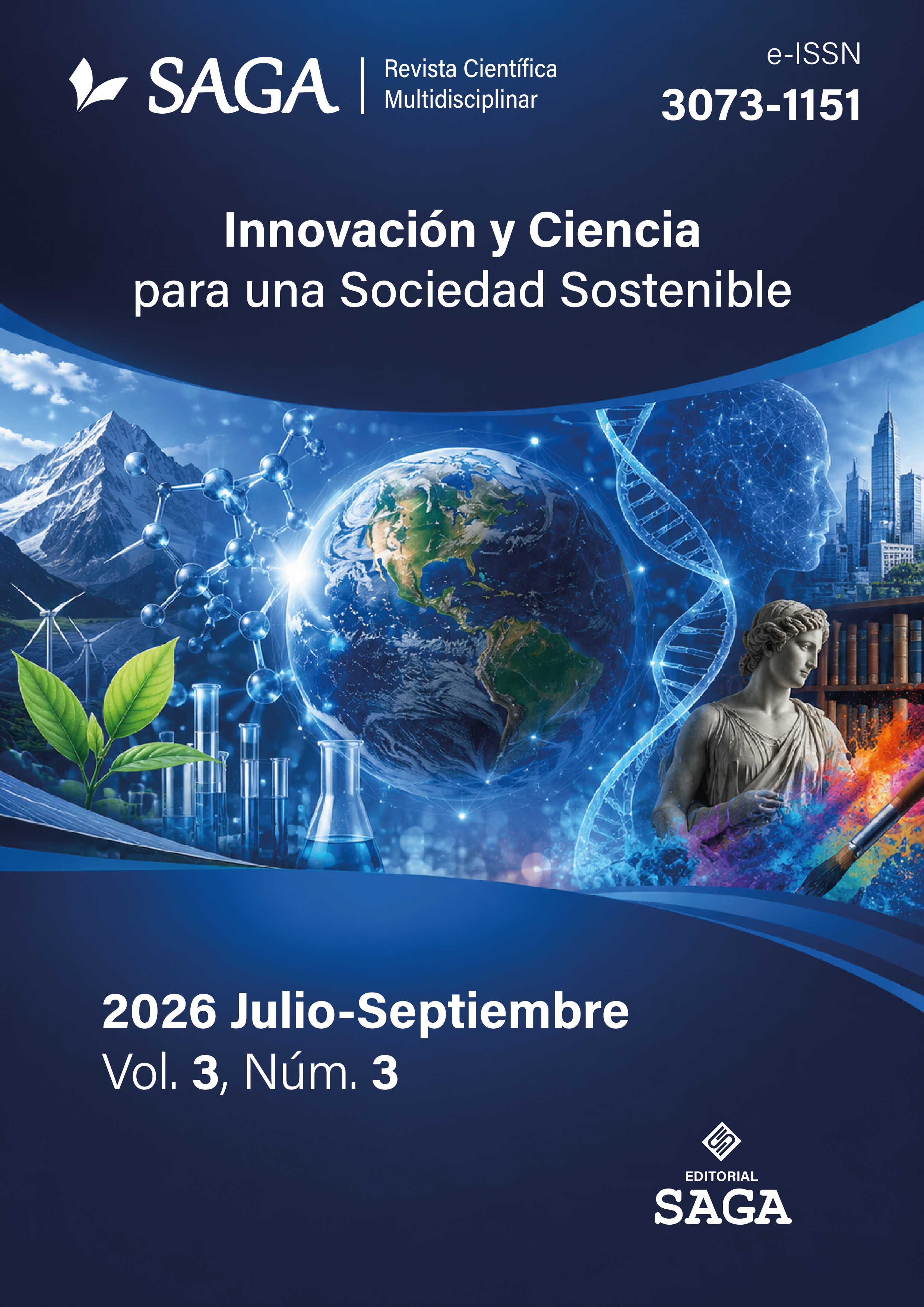
Vol. 3 Núm. 2 (2026) 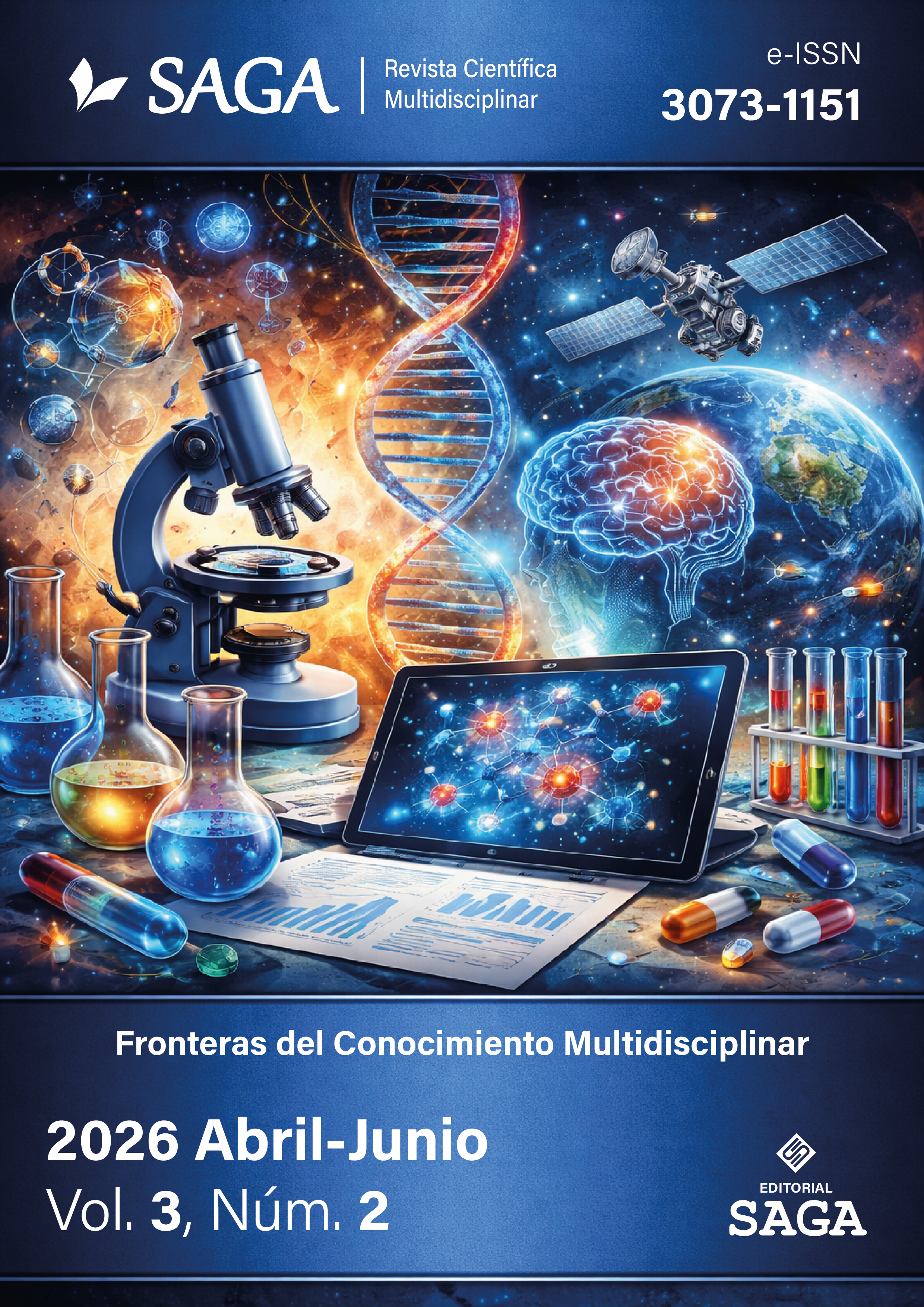

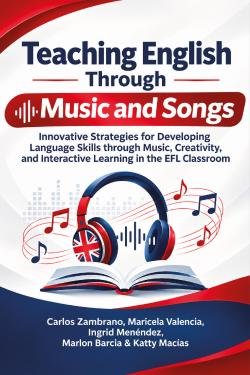
The book Teaching English Through Music and Songs: Innovative Strategies for Developing Language Skills through Music, Creativity, and Interactive Learning in the EFL Classroom presents a pedagogical approach aimed at strengthening English language teaching through musical experiences in Ecuador’s General Basic Education and Baccalaureate levels. The publication examines the relationship between music and language learning from cognitive and pedagogical perspectives that contribute to understanding its role in developing communicative competence. Across five chapters, it addresses strategies for expanding vocabulary and improving listening comprehension through songs selected according to students’ ages and language proficiency levels. It also examines instructional procedures for developing pronunciation and oral fluency through rhythmic activities that encourage active classroom participation. The proposed approach incorporates digital resources and creative projects that connect English language learning with cultural experiences familiar to Ecuadorian students. Furthermore, it presents formative assessment procedures for monitoring linguistic progress and academic motivation. Its practical orientation provides teachers with instructional resources for designing inclusive learning experiences that address educational diversity and promote meaningful English language acquisition. Particular attention is given to classroom applications that support student engagement and strengthen communicative skills across different educational stages within Ecuador's national school system.
Allan, A. A. (2022). Singing world music: Issues and ideas for culturally responsive teaching. Journal of General Music Education, 36(1), 32–38. https://eric.ed.gov/?id=EJ1355417
Babayev, J. (2025). How music makes you fluent: Learning English through songs. Acta Globalis Humanitatis et Linguarum. https://doi.org/10.69760/aghel.0250050008
Busse, V., Hennies, C., Kreutz, G., & Roden, I. (2021). Learning grammar through singing? An intervention with EFL primary school learners. Learning and Instruction, 71, Article 101372. https://doi.org/10.1016/j.learninstruc.2020.101372
Chang, A. C.-S. (2024). The effects of varying practice modes on L2 learners’ vocabulary retention through songs: Listening, singing, and oral reading. TESL-EJ, 28(3). https://doi.org/10.55593/ej.28111a9
Choi, W., Lai, V. K. W., Kong, S.-H., & Bautista, A. (2025). Examining the cognitive and perceptual perspectives of music-to-language transfer: A study of Cantonese–English bilingual children. Journal of Experimental Child Psychology. https://doi.org/10.1016/j.jecp.2024.106069
Chust-Pérez, V., Esteve-Faubel, R. P., Fernández-Morante, M. C., & Esteve-Faubel, J. M. (2026). Integrating music, gamification, and acoustic visualization enhances prosody and comprehensibility in secondary EFL classrooms. Frontiers in Education, 11, Article 1788875. https://doi.org/10.3389/feduc.2026.1788875
Fündeling, O., & Stadler Elmer, S. (2025). Teaching song leading – A conceptualization of strategies. Frontiers in Education, 10, Article 1444445. https://doi.org/10.3389/feduc.2025.1444445
He, C., Zeng, J., & Chen, J. (2022). Students’ motivation for rubric use in the EFL classroom assessment environment. Frontiers in Psychology, 13, Article 895952. https://doi.org/10.3389/fpsyg.2022.895952
Ju, P., Zhou, Z., Xie, Y., Hui, J., & Yang, X. (2024). Music training is associated with better audio-visual integration in Chinese language. International Journal of Psychophysiology, 203, Article 112414. https://doi.org/10.1016/j.ijpsycho.2024.112414
Kim, H.-J., Chong, H. J., & Lee, M. (2024). Music listening in foreign language learning: Perceptions, attitudes, and its impact on language anxiety. Frontiers in Education, 9, Article 1372786. https://doi.org/10.3389/feduc.2024.1372786
Kitjaroonchai, T., & Sukman, K. (2025). Effects of English songs on EFL learners’ speaking performance: Lexical complexity, accuracy, and fluency. Arab World English Journal, 16(3), 129–143. https://doi.org/10.24093/awej/vol16no3.7
Liu, G.-Z., Fathi, J., & Rahimi, M. (2024). Using digital gamification to improve language achievement, foreign language enjoyment, and ideal L2 self: A case of English as a foreign language learners. Journal of Computer Assisted Learning, 40(4), 1347–1364. https://doi.org/10.1111/jcal.12954
Lu, J., & Murao, R. (2023). The effect of working memory and English proficiency on Chinese EFL learners’ vocabulary learning with background music. Ampersand, 10, Article 100126. https://doi.org/10.1016/j.amper.2023.100126
Mannarelli, P., & Serrano, R. (2024). “Thank you for the music”: Examining how songs can promote vocabulary learning in an EFL class. The Language Learning Journal, 52(1), 1–15. https://doi.org/10.1080/09571736.2022.2092198
Murphy Odo, D. (2022). Examining the influence of English songs on English L2 lexical learning: A quantitative meta-analytic review. Language, Culture and Curriculum, 35(4), 386–403. https://doi.org/10.1080/07908318.2021.2022684
Palmer, E. S., Vodicka, J., Huynh, T., D’Alexander, C., & Crawford, L. (2022). Grounded framework for culturally relevant and responsive music teaching. Update: Applications of Research in Music Education, 41(1), 24–33. https://eric.ed.gov/?id=EJ1350136
Pitychoutis, K. M., Spathopoulou, F., & Scurtu, B. (2026). Music as pedagogy in ELT: Mechanisms, micro-sequences, and measured gains—A mini-review. Frontiers in Education, 11, Article 1731546. https://doi.org/10.3389/feduc.2026.1731546
Pratiwi, Y. H. I., & Yaw-kan, J. P. (2025). When music meets learning: How 7th graders improved their English skills through songs. Indonesian Teaching English to Speakers of Other Languages Journal, 2(1). https://doi.org/10.30587/inatesol.v2i1.9813
Renihan, [autoría completa pendiente de verificación]. (2024). Investigating the substantive linguistic effects of using songs for teaching second or foreign languages to preschool, primary and secondary school learners: A systematic review of intervention research. System, 124, Article 103350. https://doi.org/10.1016/j.system.2024.103350
Sugiura, K., & Hori, T. (2025). The effect of auditory musical rhythm as a cue on L2 pronunciation learning and its relationship to individual differences. Journal of Asia TEFL, 22(1), 84–102. https://doi.org/10.18823/asiatefl.2025.22.1.5.84
Sun, M., Xing, W., Yu, W., Slevc, L. R., & Li, W. (2024). ERP evidence for cross-domain prosodic priming from music to speech. Brain and Language, 254, Article 105439. https://doi.org/10.1016/j.bandl.2024.105439
Sun, Y., Sun, C., Li, C., Shao, X., Liu, Q., & Liu, H. (2024). Impact of background music on reading comprehension: Influence of lyrics language and study habits. Frontiers in Psychology, 15, Article 1363562. https://doi.org/10.3389/fpsyg.2024.1363562
Temel, T., & Cesur, K. (2024). The effect of gamification with Web 2.0 tools on EFL learners’ motivation and academic achievement in online learning environments. SAGE Open, 14(2). https://doi.org/10.1177/21582440241247928
Tilwani, S. A., MosaAbadi, F. A., Shafiee, S., & Azizi, Z. (2022). Effects of songs on implicit vocabulary learning: Spoken-form recognition, form-meaning connection, and collocation recognition of Iranian English as a foreign language learners. Frontiers in Education, 7, Article 797344. https://doi.org/10.3389/feduc.2022.797344
Tobias, E. S., Campbell, M. R., & Greco, P. (2015). Bringing curriculum to life: Enacting project-based learning in music programs. Music Educators Journal, 102(2), 39–47. https://eric.ed.gov/?id=EJ1082813
Wang, S. I.-C., & Liu, E. Z.-F. (2025). English song lyrics in EFL underachievers’ phoneme categorization. SAGE Open, 15(2). https://doi.org/10.1177/21582440251330350
Wang, Y., Jabrealy, M., & Izadpanah, S. (2026). Immediate and sustained effects of song-based language learning on English as a foreign language learners’ academic development, cognitive engagement, and motivation. Brain and Behavior, 16(6), Article e71532. https://doi.org/10.1002/brb3.71532
Xing, J. (2023). How do EFL learners process oral tasks with different complexity: An exploratory study. Frontiers in Psychology, 14, Article 1241964. https://doi.org/10.3389/fpsyg.2023.1241964
Zhang, S., & Hasim, Z. (2023). Gamification in EFL/ESL instruction: A systematic review of empirical research. Frontiers in Psychology, 13, Article 1030790. https://doi.org/10.3389/fpsyg.2022.1030790
Zhang, Y., Baills, F., & Prieto, P. (2023). Singing songs facilitates L2 pronunciation and vocabulary learning: A study with Chinese adolescent ESL learners. Languages, 8(3), Article 219. https://doi.org/10.3390/languages8030219
Vol. 3 Núm. 3 (2026)
Vol. 3 Núm. 2 (2026)










 10 de agosto 232 entre Almendros y Mangos, Cdla. Alborada sector 2, Machala, Ecuador
 editorialsaga.ec@gmail.com
 +593962679148
