Vol. 3 Núm. 3 (2026) 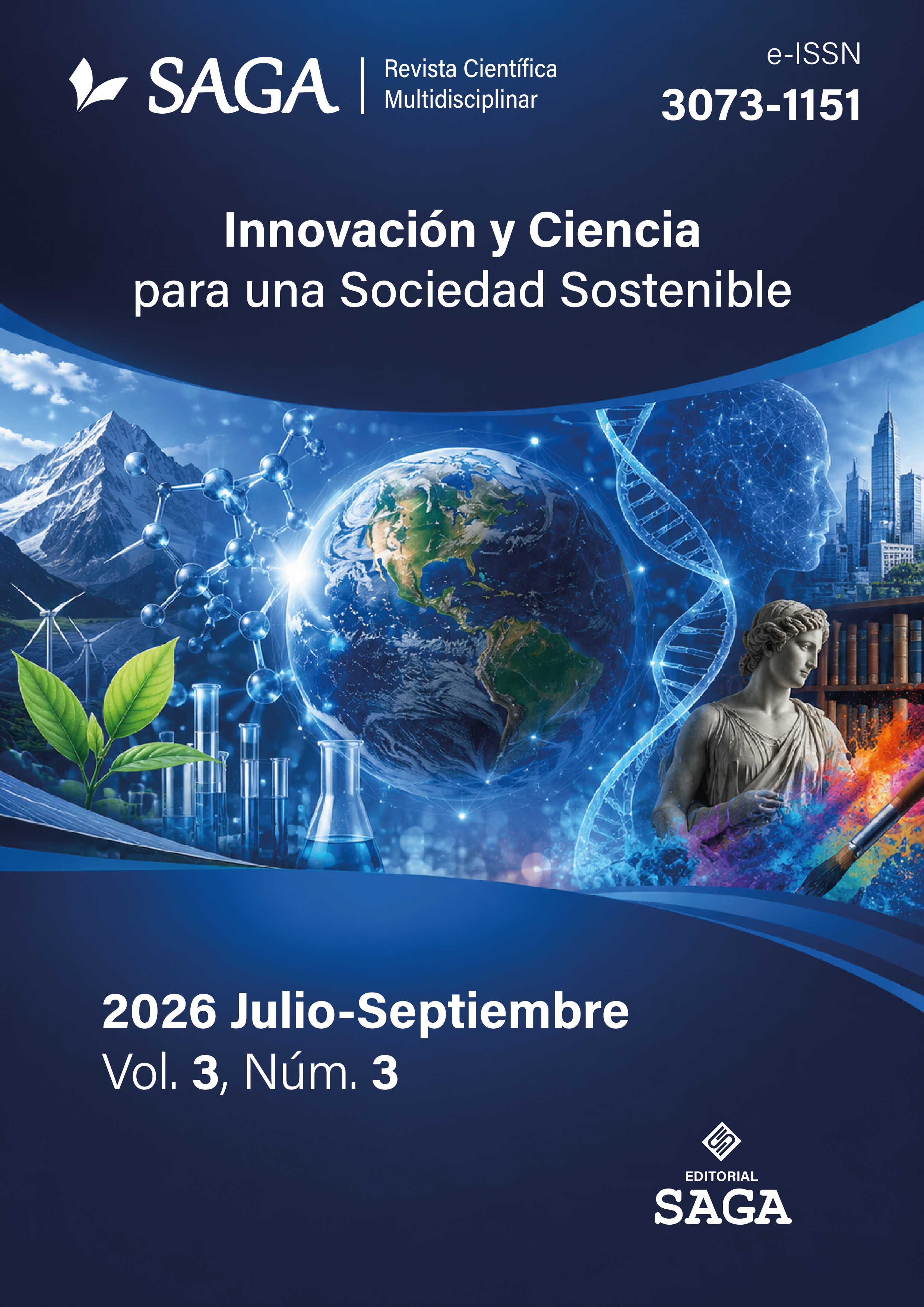
Vol. 3 Núm. 2 (2026) 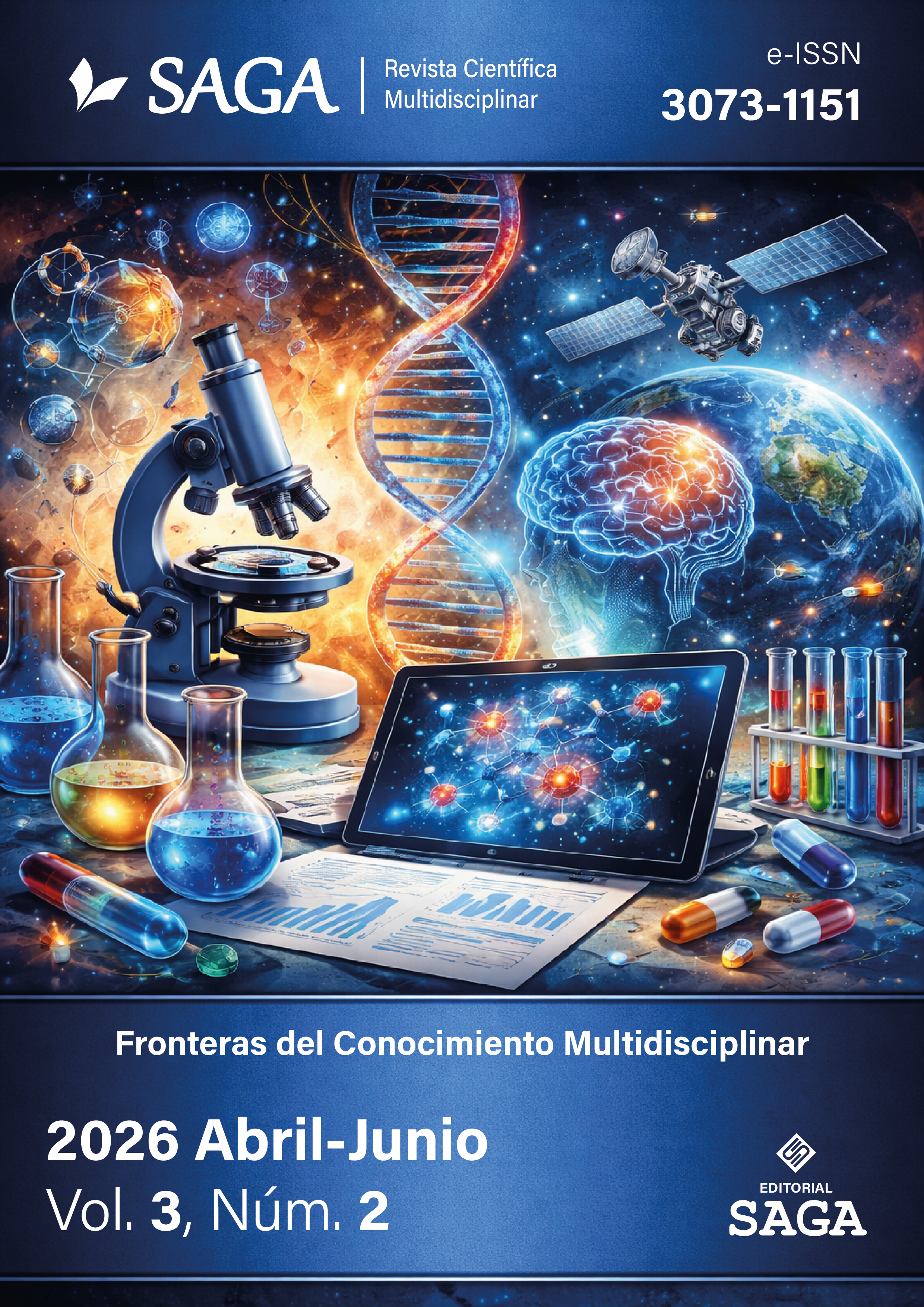

Educación Inicial Innovadora: Montessori, Juego Activo y Tecnología en el Currículo Priorizado presenta una propuesta pedagógica orientada a transformar las experiencias de aprendizaje durante la primera infancia mediante la articulación de enfoques educativos contemporáneos. La obra examina la relación entre el desarrollo infantil y la organización curricular desde una perspectiva científica que reconoce la autonomía y la participación activa como condiciones del aprendizaje significativo. Profundiza en la pedagogía Montessori mediante el análisis de ambientes preparados y materiales sensoriales que favorecen la independencia progresiva. Asimismo, estudia el juego activo como estrategia didáctica para fortalecer las capacidades cognitivas y motrices mediante experiencias corporales vinculadas con la exploración del entorno. La incorporación de tecnologías educativas amplía las posibilidades de interacción y creación pedagógica bajo criterios de pertinencia evolutiva y mediación docente. Desde una perspectiva integradora, el libro desarrolla orientaciones para diseñar experiencias que relacionan recursos manipulativos con actividades lúdicas y herramientas digitales. También aborda la evaluación auténtica mediante procesos de observación y documentación del aprendizaje infantil. Su planteamiento académico contribuye a la construcción de prácticas educativas inclusivas que responden a las particularidades del desarrollo temprano y promueven una aplicación reflexiva del Currículo Priorizado en ambientes de aprendizaje dinámicos y participativos.
Alonso-García, S., Rodríguez Fuentes, A.-V., Ramos Navas-Parejo, M., & Victoria-Maldonado, J.-J. (2024). Enhancing computational thinking in early childhood education with educational robotics: A meta-analysis. Heliyon, 10(13), Article e33249. https://doi.org/10.1016/j.heliyon.2024.e33249
Arizmendi Sueiro, I., & Rico-González, M. (2026). The effects of family-based programs on preschool children’s screen time: A systematic review. Children, 13(4), Article 446. https://doi.org/10.3390/children13040446
Benavides-Varela, S., Laurillard, D., Piperno, G., Fava Minor, D., Lucangeli, D., & Butterworth, B. (2023). Digital games for learning basic arithmetic at home. https://pubmed.ncbi.nlm.nih.gov/37061293/
Bower, C. A., Zimmermann, L., Verdine, B. N., Spiewak Toub, T., Hirsh-Pasek, K., & Michnick Golinkoff, R. (2025). What does play have to do with it? A concrete and digital spatial intervention with 3-year-olds predicts spatial and math learning. Developmental Psychology, 61(3), 461–481. https://doi.org/10.1037/dev0001904
Casasola, M., Wei, W. S., Suh, D. D., Donskoy, P., & Ransom, A. (2020). Children’s exposure to spatial language promotes their spatial thinking. Journal of Experimental Psychology: General, 149(6), 1116–1136. https://doi.org/10.1037/xge0000699
Cecic-Mladinic, D., Carcelén-Fraile, M. D. C., Aristizábal-García, D. M., & Vigil-Torres, N. (2026). Physical activity and the development of self-regulation in early childhood: A systematic review and meta-analysis. https://pubmed.ncbi.nlm.nih.gov/42505932/
Ching, Y.-H., & Hsu, Y.-C. (2023). Educational robotics for developing computational thinking in young learners: A systematic review. TechTrends. https://doi.org/10.1007/s11528-023-00841-1
Gerholm, T., Kallioinen, P., Tonér, S., Frankenberg, S., Kjällander, S., Palmer, A., & Lenz-Taguchi, H. (2019). A randomized controlled trial to examine the effect of two teaching methods on preschool children’s language and communication, executive functions, socioemotional comprehension, and early math skills. BMC Psychology, 7, Article 59. https://doi.org/10.1186/s40359-019-0325-9
Gomariz-Martínez, M., Gil-Madrona, P., & Losada-Puente, L. (2026). Screen use, child development and family involvement in children aged 2–7 years: A systematic review. https://pubmed.ncbi.nlm.nih.gov/42576667/
Lakicevic, N., Manojlovic, M., Chichinina, E., Chursina, A., Tarasova, K., Thomas, E., Zhong, Y., Bianco, A., & Drid, P. (2026). Physical fitness and executive functions in early childhood: A systematic review of recent evidence. Complementary Therapies in Medicine. https://doi.org/10.1016/j.ctim.2026.103321
Lillard, A. S., Heise, M. J., Richey, E. M., Tong, X., Hart, A., & Bray, P. M. (2017). Montessori preschool elevates and equalizes child outcomes: A longitudinal study. Frontiers in Psychology, 8, Article 1783. https://doi.org/10.3389/fpsyg.2017.01783
Lillard, A. S., Loeb, D., Berg, J., Escueta, M., Manship, K., Hauser, A., & Daggett, E. D. (2025). A national randomized controlled trial of the impact of public Montessori preschool at the end of kindergarten. Proceedings of the National Academy of Sciences, 122(43), Article e2506130122. https://doi.org/10.1073/pnas.2506130122
Liu, W., Wang, Z., Yi, J., & Li, X. (2026). The effects of physical activity on executive function in preschool children: A meta-analysis of randomized controlled trials. Frontiers in Psychology, 17, Article 1882118. https://doi.org/10.3389/fpsyg.2026.1882118
Malambo, C., Nová, A., Clark, C., & Musálek, M. (2022). Associations between fundamental movement skills, physical fitness, motor competency, physical activity, and executive functions in pre-school age children: A systematic review. Children, 9(7), Article 1059. https://doi.org/10.3390/children9071059
Mallawaarachchi, S., Burley, J., Mavilidi, M., Howard, S. J., Straker, L., Kervin, L., Staton, S., Hayes, N., Machell, A., Torjinski, M., Brady, B., Thomas, G., Horwood, S., White, S. L. J., Zabatiero, J., Rivera, C., & Cliff, D. (2024). Early childhood screen use contexts and cognitive and psychosocial outcomes: A systematic review and meta-analysis. JAMA Pediatrics, 178(10), 1017–1026. https://doi.org/10.1001/jamapediatrics.2024.2620
Mera, C., Delgado, C., Aragón, E., Menacho, I., Canto, M. D. C., & Navarro, J. I. (2022). Contributions of the psychology of mathematical cognition in early childhood education using apps. https://pubmed.ncbi.nlm.nih.gov/36148131/
Miller, A. L., Palmer, K. K., Wang, L., Wang, C., Riley, H. O., McClelland, M. M., & Robinson, L. E. (2023). Mastery-oriented motor competence intervention improves behavioral but not cognitive self-regulation in Head Start preschoolers: Randomized controlled trial results. Scandinavian Journal of Medicine & Science in Sports. https://pubmed.ncbi.nlm.nih.gov/36577657/
Ministerio de Educación del Ecuador. (2014). Currículo de Educación Inicial. https://www.educacion.gob.ec/wp-content/uploads/downloads/2014/06/curriculo-educacion-inicial-lowres.pdf
Ministerio de Educación del Ecuador. (2015). Guía metodológica para la implementación del Currículo de Educación Inicial. https://siteal.iiep.unesco.org/bdnp/270/guia-metodologica-implementacion-curriculo-educacion-inicial
Ministerio de Educación del Ecuador. (2025). Currículo priorizado de atención y educación de la primera infancia con énfasis en habilidades comunicacionales, lógico matemáticas, digitales y socioemocionales para el nivel de educación inicial (3–5 años). https://educacion.gob.ec/wp-content/uploads/downloads/2025/07/Curriculo-priorizado-inicial.pdf
Morales, J. S., Alberquilla Del Río, E., Valenzuela, P. L., & Martínez-de-Quel, Ó. (2024). Physical activity and cognitive performance in early childhood: A systematic review and meta-analysis of randomized controlled trials. Sports Medicine, 54(7), 1835–1850. https://doi.org/10.1007/s40279-024-02020-5
Pacheco, C., Culkin, V., Putkaradze, A., & Zeng, N. (2025). Effects of movement behaviors on preschoolers’ cognition: A systematic review of randomized controlled trials. International Journal of Behavioral Nutrition and Physical Activity, 22, Article 12. https://doi.org/10.1186/s12966-025-01705-y
Paschall, K. W., Barnett, M. A., Mastergeorge, A. M., Li, X., & Vasquez, M. B. (2023). A new look at teacher interactional quality: Profiles of individual teacher-child relationship and classroom teaching quality among Head Start students. Early Education and Development, 34(5), 1172–1190. https://doi.org/10.1080/10409289.2022.2094159
Pianta, R. C., & Hofkens, T. (2023). Defining early education quality using CLASS-observed teacher-student interaction. Frontiers in Psychology, 14, Article 1110419. https://doi.org/10.3389/fpsyg.2023.1110419
Randolph, J. J., Bryson, A., Menon, L., Henderson, D. K., Manuel, A. K., Michaels, S., Rosenstein, D. L. W., McPherson, W., O’Grady, R., & Lillard, A. S. (2023). Montessori education’s impact on academic and nonacademic outcomes: A systematic review. Campbell Systematic Reviews, 19(3), Article e1330. https://doi.org/10.1002/cl2.1330
Rojas, N. M., & Abenavoli, R. M. (2023). Problem behaviors at the classroom-level and teacher-child interaction quality in Head Start programs: Moderation by age composition. Journal of School Psychology, 99, Article 101225. https://doi.org/10.1016/j.jsp.2023.101225
Rüdisüli, C., Duss, I., Lannen, P., & Wustmann Seiler, C. (2024). Relations between teacher-child interaction quality and children’s playfulness. Early Child Development and Care, 194(7–8), 883–897. https://doi.org/10.1080/03004430.2024.2356242
Silva, C., Sousa-Gomes, V., Fávero, M., Oliveira-Lopes, S., Merendeiro, C. S., Oliveira, J., & Moreira, D. (2022). Assessment of preschool-age executive functions: A systematic review. Clinical Psychology & Psychotherapy. https://doi.org/10.1002/cpp.2718
Skene, K., O’Farrelly, C. M., Byrne, E. M., Kirby, N., Stevens, E. C., & Ramchandani, P. G. (2022). Can guidance during play enhance children’s learning and development in educational contexts? A systematic review and meta-analysis. Child Development, 93(4), 1162–1180. https://doi.org/10.1111/cdev.13730
Trujillo-Trujillo, C. C., Cadavid Ruiz, N., & Sanabria-Mazo, J. P. (2026). Effectiveness of executive function interventions in typically developing preschool children: A systematic review and meta-analysis. https://pubmed.ncbi.nlm.nih.gov/41491942/
Vol. 3 Núm. 3 (2026)
Vol. 3 Núm. 2 (2026)










 10 de agosto 232 entre Almendros y Mangos, Cdla. Alborada sector 2, Machala, Ecuador
 editorialsaga.ec@gmail.com
 +593962679148
