Vol. 3 Núm. 3 (2026) 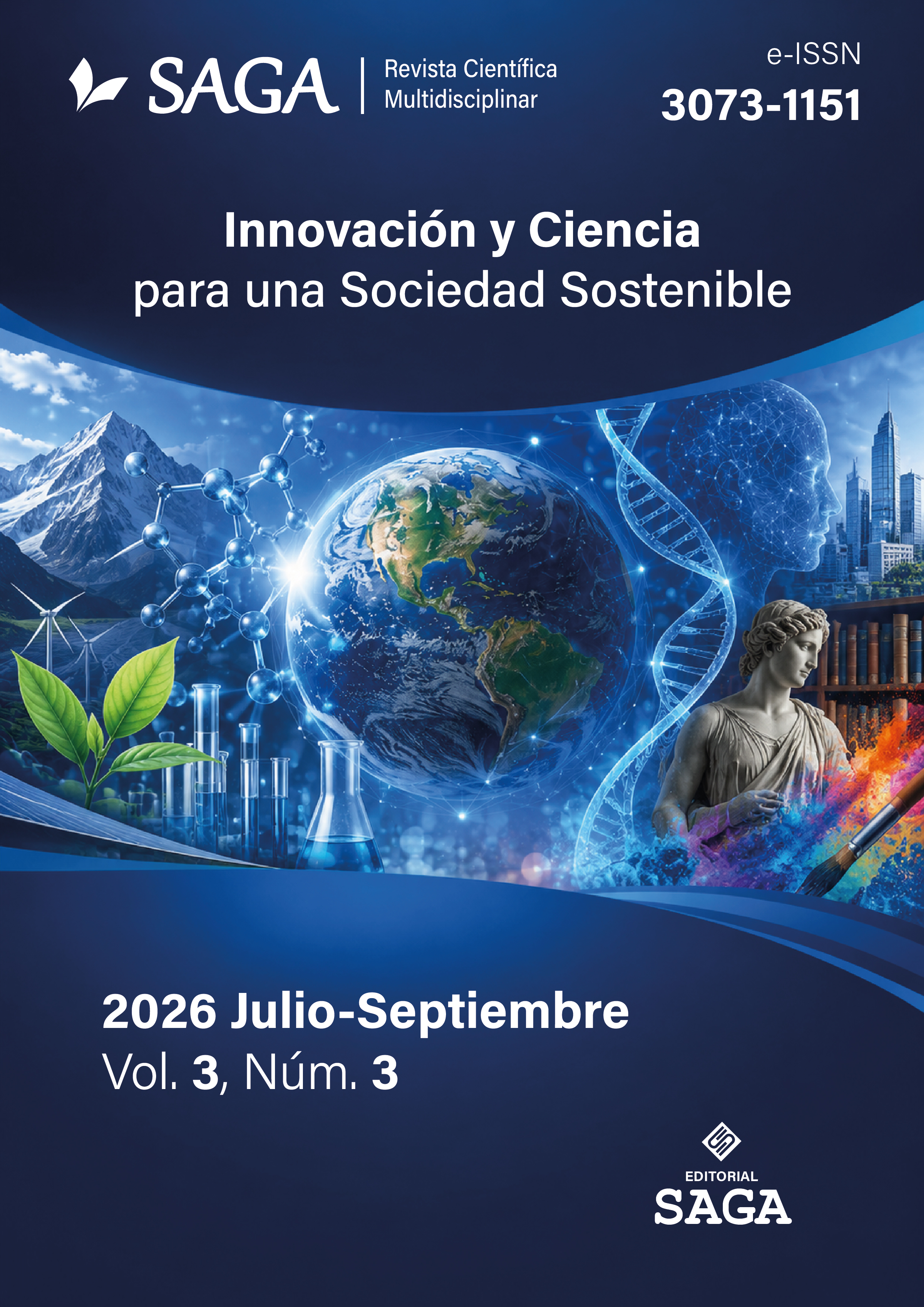
Vol. 3 Núm. 2 (2026) 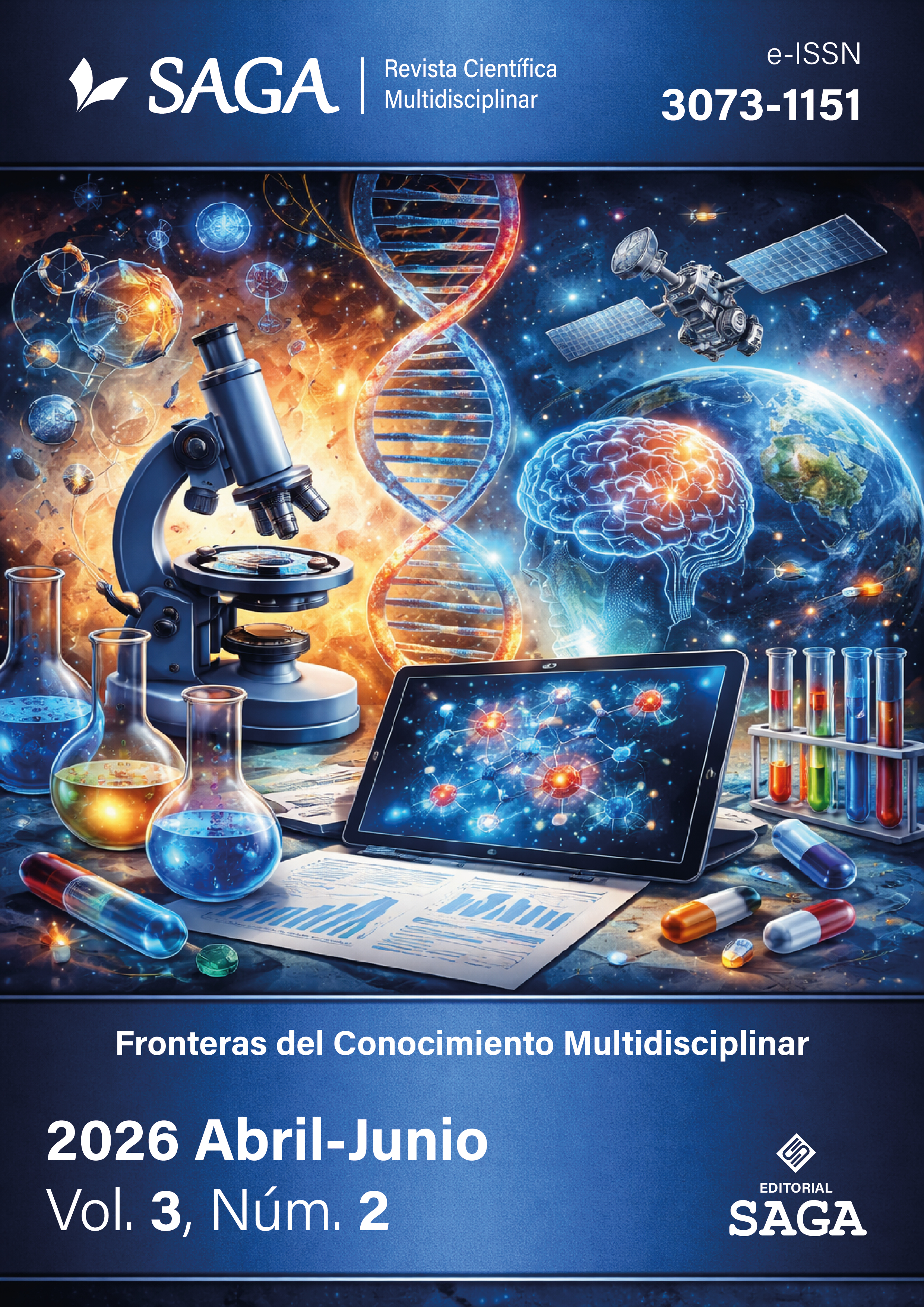

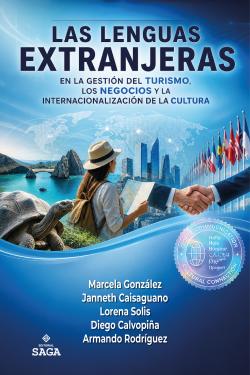
La obra presenta un recorrido riguroso y aplicado sobre el papel de las lenguas extranjeras en la gestión del turismo, los negocios y la proyección cultural en escenarios globales, articulando teoría y práctica con énfasis en la realidad ecuatoriana y su diversidad territorial, donde la comunicación multilingüe transforma la experiencia del visitante, fortalece la competitividad empresarial y posiciona la identidad nacional en circuitos internacionales de alto valor; a través de enfoques como el eTourism, la inteligencia comunicativa, la mediación cultural, la negociación bilingüe y la localización digital, el libro demuestra que el dominio lingüístico no es accesorio, sino un activo estratégico que reduce fricciones cognitivas, incrementa la confianza del usuario y eleva los estándares de calidad en servicios, gobernanza y producción académica, integrando además perspectivas innovadoras como el neuroturismo, la accesibilidad universal y la gestión de crisis, con el fin de consolidar destinos sostenibles, empresas globalmente articuladas y procesos de internacionalización cultural capaces de dialogar con múltiples audiencias sin perder autenticidad ni rigor técnico.
Adler, N. J., & Gundersen, A. (2020). International Dimensions of Organizational Behavior (7.ª ed.). Cengage Learning. https://www.cengage.com/c/international-dimensions-of-organizational-behavior-7e-adler/
Altbach, P. G. (2016). Global Perspectives on Higher Education. Johns Hopkins University Press. https://doi.org/10.1353/book.47213
Anholt, S. (2016). Places: Identity, Image and Reputation. Palgrave Macmillan. https://www.palgrave.com/gp/book/9780230239777
Arizpe, L. (2015). Culture, Management and Development: Anthropological Perspectives. Springer. https://doi.org/10.1007/978-3-319-14508-2
Baños-Piñero, R., & Sánchez-Gutiérrez, B. (2022). Localization and Digital Marketing: Strategies for Global Expansion. Routledge. https://doi.org/10.4324/9781003123456
Bargiela-Chiappini, F. (2009). The Handbook of Business Discourse. Edinburgh University Press. https://www.edinburghuniversitypress.com/book-the-handbook-of-business-discourse.html
Baum, T., & Hai, N. T. (2020). Hospitality, tourism and the SDGs: A review. Journal of Hospitality and Tourism Management, 43, 347-355. https://doi.org/10.1016/j.jhtm.2020.02.004
Beeler, B. (2015). Communication in the Hospitality Industry: A Guide for Specialized Services. Routledge. https://www.routledge.com/9781138855427
Bielsa, E., & Bassnett, S. (2018). Translation in Global News. Routledge. https://doi.org/10.4324/9780203874011
Bobanovic, M. K., & Grzinic, J. (2011). The Importance of Foreign Languages in Tourism Researches. Journal of Tourism and Hospitality Management, 17(1), 125-140. https://doi.org/10.20867/thm.17.1.9
Bridgewater, S. (2017). International Business Etiquette: A Guide to Global Success. Palgrave Macmillan. https://www.palgrave.com/gp/book/9781137537362
Brynjolfsson, E., & McAfee, A. (2014). The Second Machine Age: Work, Progress, and Prosperity in a Time of Brilliant Technologies. W. W. Norton & Company. https://wwnorton.com/books/The-Second-Machine-Age/
Buhalis, D. (2020). Strategic Management in Tourism: Technology and Language in eTourism. CABI Tourism Texts. https://doi.org/10.1079/9781786390240.0000
Byram, M. (2014). Teaching and Assessing Intercultural Communicative Competence. Multilingual Matters. https://doi.org/10.21832/9781847699312
Cascio, W. F. (2018). Managing Human Resources: Productivity, Quality of Work Life, Profits (11.ª ed.). McGraw-Hill Education. https://www.mheducation.com/9781259911927.html
Christians, C. G., Fackler, M., Richardson, K., Kreshel, P., & Woods, R. H. (2020). Media Ethics: Cases and Moral Reasoning (11.ª ed.). Routledge. https://doi.org/10.4324/9781003009580
Cormier, K. (2018). Translation and Localization in the Digital Age. University of Ottawa Press. https://doi.org/10.2307/j.ctv5vdcw0
Covey, S. R. (2013). The 7 Habits of Highly Effective People: Powerful Lessons in Personal Change. Simon & Schuster. https://www.simonandschuster.com/9781451639612
Crystal, D. (2012). English as a Global Language (2.ª ed.). Cambridge University Press. https://doi.org/10.1017/CBO9781139166690
Crystal, D. (2014). Language Death. Cambridge University Press. https://doi.org/10.1017/CBO9781139106856
Cull, N. J. (2019). Public Diplomacy: Global Engagement in the Digital Age. Polity Press. https://www.wiley.com/en-us/9780745691206
Davenport, T. H. (2014). Big Data at Work: Dispelling the Myths, Uncovering the Opportunities. Harvard Business Review Press. https://hbr.org/books/big-data-at-work
Earley, P. C., & Ang, S. (2003). Cultural Intelligence: Individual Interactions Across Cultures. Stanford Business Books. https://www.sup.org/books/title/?id=5035
Falk, J. H., & Dierking, L. D. (2016). The Museum Experience Revisited. Routledge. https://doi.org/10.4324/9781315445670
Faulkner, B. (2001). Towards a framework for tourism disaster management. Tourism Management, 22(2), 135-147. https://doi.org/10.1016/S0261-5177(00)00048-0
Faure, G. O. (2012). Unfinished Business: Why International Negotiations Fail. University of Georgia Press. https://ugapress.org/9780820337685/
Femenia-Serra, F., & Neuhofer, B. (2021). Smart tourism experiences: Conceptualisation, key elements and research agenda. Journal of Heritage Tourism, 16(4), 1-18. https://doi.org/10.1080/1743873X.2020.1852417
Filep, S. (2012). Positive Psychology and Tourism. En The Routledge Handbook of Tourism and the Tourist Experience (pp. 31-40). Routledge. https://doi.org/10.4324/9780203074565
Fishman, J. A. (2013). Language and Ethnicity in Minority Sociolinguistic Perspective. Multilingual Matters. https://www.multilingual-matters.com/9781853594199
Garavan, T. N., & Morley, M. J. (2016). International Human Resource Development: Contexts, Processes and Outcomes. Routledge. https://doi.org/10.4324/9781315668901
Glaesser, D. (2006). Crisis Management in the Tourism Industry. Elsevier Butterworth-Heinemann. https://doi.org/10.4324/9780080464596
Goleman, D. (2015). Emotional Intelligence: Why It Can Matter More Than IQ. Bantam Books. https://www.danielgoleman.info/topics/emotional-intelligence/
Gotti, M. (2011). Investigating Specialized Discourse (3.ª ed.). Peter Lang Publishing. https://www.peterlang.com/view/title/11054
Gretzel, U. (2021). Artificial Intelligence in Tourism: A State-of-the-Art Review. Journal of Tourism Futures, 7(3), 1-15. https://doi.org/10.1108/JTF-05-2021-0130
Habermas, J. (2015). The Theory of Communicative Action: Reason and the Rationalization of Society. Polity Press. https://www.politybooks.com/9780745603865
Hein, G. E. (2012). Learning in the Museum. Routledge. https://doi.org/10.4324/9780203028322
Hofstede, G. (2011). Dimensionalizing Cultures: The Hofstede Model in Context. Online Readings in Psychology and Culture, 2(1). https://doi.org/10.9707/2307-0919.1014
Hooper-Greenhill, E. (2007). Museums and Education: Purpose, Pedagogy, Performance. Routledge. https://doi.org/10.4324/9780203937525
Hyland, K. (2015). Academic Publishing: Issues and Challenges in the Construction of Knowledge. Oxford University Press. https://global.oup.com/academic/product/9780199661237
Jiménez-Crespo, M. A. (2013). Translation and Web Localization. Routledge. https://doi.org/10.4324/9780203584347
Johanson, J., & Vahlne, J. E. (2009). The Uppsala internationalization process model revisited: From liability of foreignness to liability of outsidership. Journal of International Business Studies, 40(9), 1411-1431. https://doi.org/10.1057/jibs.2009.24
Jovicic, Z. (2019). From functional to experiential: The role of neuro-communication in modern tourism. Journal of Tourism and Hospitality Management, 7(2), 1-15. https://doi.org/10.15640/jthm.v7n2a1
Kerzner, H. (2022). Project Management: A Systems Approach to Planning, Scheduling, and Controlling (13.ª ed.). Wiley. https://www.wiley.com/en-us/9781119805373
Knight, J. (2012). Internationalization of Higher Education: Concepts and Conceptions. En Higher Education: Handbook of Theory and Research. Springer. https://doi.org/10.1007/978-94-007-1902-6
Martin, J. S., & Chaney, L. H. (2012). Global Business Etiquette: A Guide to International Communication and Customs (2.ª ed.). Praeger. https://www.abc-clio.com/products/a3430c/
Mayer-Schönberger, V., & Cukier, K. (2014). Big Data: A Revolution That Will Transform How We Live, Work, and Think. Eamon Dolan/Mariner Books. https://doi.org/10.1017/CBO9781107415324
Morrison, T., & Conaway, W. A. (2011). Kiss, Bow, or Shake Hands. Adams Media. https://www.simonandschuster.com/9781440532276
Mufwene, S. S. (2016). The Ecology of Language Evolution. Cambridge University Press. https://doi.org/10.1017/CBO9780511612862
Neeley, T. (2017). The Language of Global Success: How a Common Tongue Transforms Multinational Organizations. Princeton University Press. https://doi.org/10.2307/j.ctvc777m5
Nic Craith, M. (2012). Narratives of Place, Culture and Identity. Berghahn Books. https://www.berghahnbooks.com/title/NicCraithNarratives
Nickerson, C. (2015). The role of English as a lingua franca in business communication. English for Specific Purposes, 24(3), 367-380. https://doi.org/10.1016/j.esp.2004.04.002
Noe, R. A. (2020). Employee Training and Development (8.ª ed.). McGraw-Hill Education. https://www.mheducation.com/9781260043747.html
Nye, J. S. (2004). Soft Power: The Means To Success In World Politics. PublicAffairs. https://www.publicaffairsbooks.com/9781586482251/
Project Management Institute. (2021). A Guide to the Project Management Body of Knowledge (PMBOK® Guide) (7.ª ed.). PMI Publications. https://www.pmi.org/pmbok-guide-standards
Ritchie, B. W. (2009). Crisis and Disaster Management for Tourism. Channel View Publications. https://doi.org/10.21832/9781845411077
Salacuse, J. W. (2015). The Global Negotiator: Making, Managing and Mending Deals Around the World in the Twenty-First Century. St. Martin's Press. https://doi.org/10.1007/978-1-137-51261-1
Schneider, C. P. (2014). Cultural Diplomacy and the United States Government: A Survey. Netherlands Institute of International Relations. https://www.clingendael.org/publication/cultural-diplomacy-and-united-states-government-survey
Schulz, B. (2018). The Importance of Soft Skills: Education beyond academic knowledge. NAWA Journal of Communication. https://doi.org/10.1080/02500167.2018.1432567
Stepanova, S. (2019). Linguistic mediation in tourism: The role of the tour guide in cross-cultural communication. Journal of Tourism and Hospitality Management, 17(1), 25-39. https://doi.org/10.20867/thm.17.1.9
Swales, J. M., & Feak, C. B. (2012). Academic Writing for Graduate Students: Essential Tasks and Skills (3.ª ed.). University of Michigan Press. https://doi.org/10.3998/mpub.2173292
Throsby, D. (2010). The Economics of Cultural Policy. Cambridge University Press. https://doi.org/10.1017/CBO9780511845253
Tussyadiah, I. (2020). A Review of Artificial Intelligence in Travel and Tourism. Journal of Travel Research, 59(3), 443-466. https://doi.org/10.1177/0047287519832359
Ury, W. (2012). Getting to Yes with Yourself: And Other Worthy Opponents. HarperOne. https://www.harpercollins.com/9780062333339
Venuti, L. (2017). The Translator's Invisibility: A History of Translation (3.ª ed.). Routledge. https://doi.org/10.4324/9781315098746
Viglia, G., & Dann, G. (2021). Neuroscience in Tourism: Methods, Challenges, and Foundations. Emerald Publishing. https://doi.org/10.1108/9781800438125
Waddock, S., & Rasche, A. (2012). Building the Responsible Enterprise: Nine Verbs that Can Make a Difference. Stanford University Press. https://www.sup.org/books/title/?id=20818
Wysocki, R. K. (2019). Effective Project Management: Traditional, Agile, Extreme, Hybrid (8.ª ed.). Wiley. https://doi.org/10.1002/9781119562801
Xiang, Z., Du, Q., Ma, Y., & Fesenmaier, D. R. (2017). A comparative analysis of major online review platforms: Implications for social media analytics in hospitality and tourism. Tourism Management, 58, 340-365. https://doi.org/10.1016/j.tourman.2016.08.018
Vol. 3 Núm. 3 (2026)
Vol. 3 Núm. 2 (2026)









 10 de agosto 232 entre Almendros y Mangos, Cdla. Alborada sector 2, Machala, Ecuador
 editorialsaga.ec@gmail.com
 +593962679148